
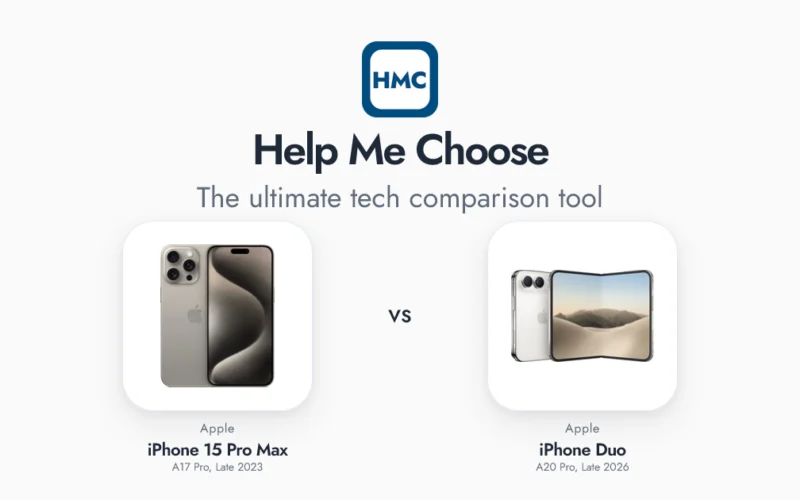
In-depth testing of Apple’s $1,999 foldable smartphone shows distinctive wide displays and multi-day battery life alongside camera compromises and interface changes.
Apple’s first folding smartphone, the iPhone Duo, marks the company’s most expensive handset to date, selling for $1,999 as reviews reveal its practical strengths and design compromises. According to The Guardian’s review, the squat, wide device departs from tall Android foldables by using matching 1.4:1 aspect ratios on both its 5.4-inch outer display and 7.6-inch folding internal OLED screen.
The device weighs 254 grams and measures 84.1 millimeters wide when closed, making it 6.1 millimeters wider than the iPhone 18 Pro Max. While earlier first Apple iPhone Duo reviews noted the weight of the hardware, hands-on tests show the wide build makes typing or reaching across the cover screen primarily a two-handed task. The interior display uses a matte finish that cuts reflections and obscures the center crease, though its soft surface remains vulnerable to fingernail marks.
Interface changes and multitasking
Because the closed screen is relatively short, Apple altered iOS 27.2 to maximize vertical space by shifting standard navigation items. The status bar is condensed into a circular bubble beneath the selfie camera, while the dock, tab bars, and back buttons sit in a dedicated right-hand column. This arrangement pushes application content to the left, which can make one-handed reach difficult for right-handed users, while the side-mounted Touch ID sensor creates challenges for left-handed people.
Software compatibility remains mixed across three distinct groups of applications. Unmodified software sits centered on the screen, while simply updated apps stretch across the display but leave the right column blank. Fully adapted software uses dual-panel views, including updated layouts in Google Maps. However, other platforms continue adjusting to the layout. Instagram head Adam Mosseri noted on Threads that “it’s a bit of a tricky form factor” and that optimizing for the device remains “pretty challenging”. For productivity, the internal display allows two apps to run side by side horizontally, and the folding hinge supports a laptop mode with an on-screen keyboard below.
Cameras and battery performance
To accommodate the folding design, Apple omitted a telephoto lens, equipping the Duo with 48-megapixel main and ultra-wide rear sensors. Tests indicate the rear cameras take quality images in daylight but fall behind the iPhone 18 Pro in dark settings. For selfies and video calls, the phone has a 12-megapixel camera on the cover with Center Stage tracking and a 4-megapixel camera beneath the folding display.
Battery performance drew positive marks across multiple tests, though runtime estimates varied slightly between outlets. TechRadar reported that the 4,883mAh battery delivers about a day and a half of use, while The Guardian found it lasted nearly two days when each screen was used for about 3.5 hours. For charging speeds, TechRadar noted the device reaches a 50% charge in 20 minutes, whereas The Guardian recorded reaching 60% in 30 minutes and a full charge in 82 minutes with a 60-watt or larger USB-C adapter.
Pricing and repair considerations
At $1,999 in the United States, £1,999 in the United Kingdom, €2,299 in Europe, and AU$3,499 in Australia, the Duo costs roughly as much as an iPhone 18 Pro Max and an iPad mini combined. Beyond the purchase price, maintaining the device can be costly. Out-of-warranty repairs run £389 for the cover display and £999 for the folding interior screen, while replacing the matte display layer costs £49 and a battery replacement is £209. Repair specialist iFixit gave the Duo a repairability score of five out of 10, the highest yet for a foldable phone.