
Negotiators in Antalya are reviewing a last-minute draft agreement after talks blew past Friday’s deadline. The revised text attempts to resolve an impasse over fossil fuels and climate funding.
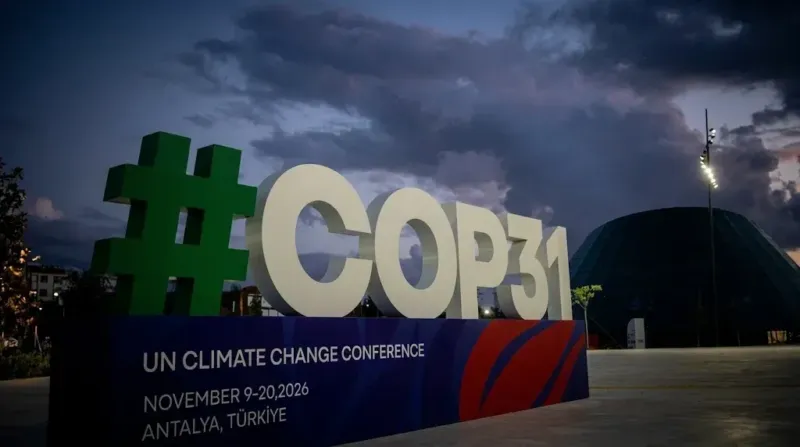
Negotiators at the COP31 climate summit in Antalya, Turkey, worked into a second day of overtime on Sunday to review a fresh draft agreement after deep divisions over fossil fuels stalled the conference. Turkish Environment Minister and COP31 President Murat Kurum presented the revised compromise proposal to delegations in the early morning hours in an effort to break the deadlock.
The summit was originally scheduled to conclude on Friday, but talks dragged on as countries clashed over the future of coal, oil and gas, according to BBC News. Delegations were given until 06:00 local time, or 03:00 GMT, on Sunday to submit objections before a meeting scheduled for 09:00 local time to approve the deal, Al Jazeera reported.
The fight over fossil fuels
A draft deal presented on Monday called for a faster phase-out of fossil fuels. That proposal sparked sharp resistance from major oil and gas producers led by Saudi Arabia. A second, scaled-back draft released on Thursday removed every direct mention of coal, oil and gas, triggering immediate threats of a walkout from nations demanding stronger climate action.
Ministers from Panama, the Solomon Islands, Cote d’Ivoire and the European Union insisted that commitments to shift away from fossil fuels had to be restored to the text. Panama’s environment minister, Juan Carlos Navarro, said his country would not accept an outcome that omitted fossil fuels entirely. Tuvalu’s climate minister, Maina Talia, called the language a red line, pointing to fossil fuels as the primary cause of global warming.
Australia and Turkey co-hosted the conference, with Australia leading the negotiations. Australia’s Climate Change and Energy Minister, Chris Bowen, argued against including specific fossil fuel wording, saying the summit was intended to focus on implementation and expanding clean energy sources. Negotiators brought the European Union and Saudi Arabia together on Saturday in an attempt to reach a compromise on the issue.
Disputes over adaptation funds and technology
Funding for developing nations facing climate impacts proved to be another major sticking point. Negotiators from the African Group pressed for concrete financial commitments to help their countries adapt to climate disasters. An earlier draft of the agreement included a plan to increase adaptation funding to $120 billion by 2035, but that specific number was removed after the European Union declined to support it.
Zanetor Agyeman Rawlings, Ghana’s environment minister and chair of the African Group, defended the demand for money during the talks. “We did not come here to beg, we came here to claim what is rightfully ours for our people who are suffering the brunt of anthropogenic activities of developed countries,” Rawlings said.
Other countries raised objections over proposed language on carbon capture and storage technologies, which capture emissions and bury them underground. France’s Minister of Ecological Transition, Monique Barbut, argued that promoting carbon capture allows countries to continue extracting and burning oil and gas while temperatures continue to climb. Delegations also argued over whether power expansion should rely strictly on renewable energy like wind and solar or incorporate natural gas and coal.
Next steps and risk of postponement
Kurum told delegates during a late-night plenary session that the third version of the text addressed the concerns raised over fossil fuels and adaptation finance. “We are closer than ever to agreement on the remaining issues,” Kurum said, urging countries to review the proposal closely.
The United Nations climate process requires full consensus among nearly 200 participating delegations to pass an accord. If nations fail to agree, the summit could end without a deal and be suspended until next year, an outcome that has occurred only once since UN climate conferences began in 1995.
Delegations faced tight schedules on Sunday, with several negotiating teams already rescheduling morning flights after Saturday ended without a breakthrough. Observers warned that departures could leave the summit without the participation required to finalize an agreement. In a letter sent Saturday, 100 civil society organizations warned Turkish and Australian leaders that the summit risked becoming one of the most disappointing climate meetings ever held.
The draft agreement, known as the Antalya Accords, could also mark the first time a UN climate summit formally recognizes that the world has missed the Paris Agreement target of limiting global temperature rise to 1.5 degrees Celsius.