Voters handed Democrats unified power in Michigan, Minnesota, Nevada, Pennsylvania and Wisconsin, breaking Republican dominance in statehouses across the country.
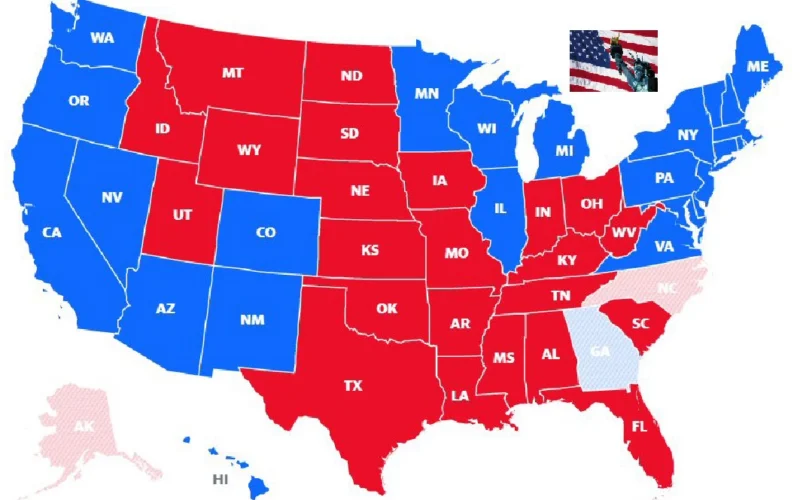
Democrats secured full control of at least five state governments in Tuesday’s midterm elections, winning both legislative chambers and the governor’s office in key battlegrounds across the country. The sweep gives the party unified authority in Michigan, Minnesota, Nevada, Pennsylvania and Wisconsin, reversing years of Republican dominance in state capitals alongside midterm victories where Democrats won full control of Congress.
According to NBC News, the wins gave Democrats a majority of governorships for the first time in 16 years. The gains marked the largest single-election shift in state legislative power since 2010, said Katie Owens Hubler of the National Conference of State Legislatures, as reported by The Associated Press. Mandara Meyers, executive director of the Democratic-aligned group The States Project, called it “the most significant night for state legislatures since the seismic Republican wave in 2010.”
Sweeping trifectas across northern battlegrounds
In Wisconsin, Democrats ended 16 years of unified Republican legislative rule by flipping both the state Assembly and Senate while retaining the governor’s mansion with newly elected Gov. David Crowley. The party benefited from new legislative maps approved after the state Supreme Court overturned previous Republican boundaries in 2024. Wisconsin Democrats entered the election needing two seats to take the Senate and five to win the Assembly, but they ended up exceeding both numbers.
In Pennsylvania, Democrats captured their first state government trifecta since 1993. The party flipped the state Senate by winning more than the three seats needed to flip the chamber and widened its slim majority in the state Assembly, providing legislative support for reelected Democratic Gov. Josh Shapiro.
In Michigan, Democrats reclaimed unified control two years after losing it. Secretary of State Jocelyn Benson won the governor’s race to succeed term-limited Gov. Gretchen Whitmer, while legislative candidates flipped the state House and expanded a thin majority in the state Senate. In neighboring Minnesota, Democrats expanded majorities in both legislative houses as Democratic Sen. Amy Klobuchar won the governorship to succeed Gov. Tim Walz.
In Nevada, Democrats protected their majorities in both legislative chambers and flipped the governor’s office when state Attorney General Aaron Ford defeated Republican Gov. Joe Lombardo. Democrats could also add Arizona to their list of trifectas, where Gov. Katie Hobbs won reelection and state party leaders said they were positioned to take both legislative chambers, though final calls had not been made.
Breaking Republican control in the South
In Texas, Democrat Gina Hinojosa defeated Republican Gov. Greg Abbott, becoming the state’s first Democratic governor in three decades. The outlets gave differing accounts of the Texas statehouse outcome. The Associated Press reported that Texas Democrats also took control of the state House for the first time since 2002, while Republicans retained the state Senate. NBC News reported that as of Wednesday morning, the AP had not yet called the Texas House, though state Democratic leaders believed a majority was within reach.
In Georgia, Democrat Keisha Lance Bottoms won the governor’s race, taking an office held by Republicans for 24 years and breaking a Republican trifecta that had stood since 2005. Republicans maintained control of the Georgia state Senate, while Democrats made gains in the state House.
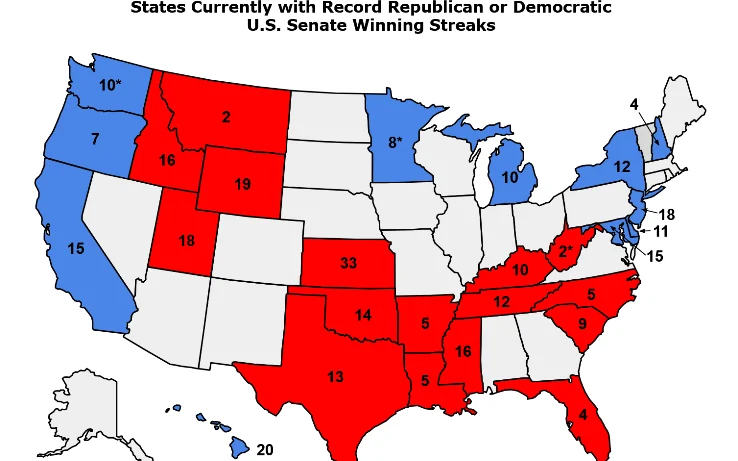
Democrats will hold at least 28 governorships nationwide in 2027 after additional wins in Iowa and Ohio, which broke single-party Republican control in both states. In North Carolina, Democrats captured the state House for the first time in 16 years, though they fell just short of winning the state Senate. Across the country, Democratic victories broke or prevented Republican supermajorities in nine legislative chambers spanning eight states, including Florida, South Carolina, Indiana, Missouri, Iowa, Ohio, Kansas and North Carolina. The shifts mean Republican lawmakers won’t be able to override gubernatorial vetoes on their own in Iowa, Ohio and North Carolina.
What the new majorities plan to do next
The new majorities put pressure on lawmakers to address inflation, housing costs, energy bills and healthcare. Shapiro told supporters in Pennsylvania that his second-term priorities include raising the minimum wage to $15 an hour, enshrining abortion protections in the state constitution, and funding infrastructure and education.
Heather Williams, president of the Democratic Legislative Campaign Committee, said the party’s mandate rests on kitchen-table economics, expanding healthcare access in rural communities and boosting education. Other incoming leaders signaled plans to pursue bipartisan cooperation. During her victory remarks in Minnesota, Klobuchar said, “I am not interested in moving Minnesota to the left or the right; I want to move us forward.”
Incoming majorities in states like Wisconsin will also face internal calls to redraw congressional lines. A nationwide redistricting effort urged by Donald Trump backfired on Republicans, who lost several target seats. While Texas Republicans redrew maps to target Democratic seats, Democrats captured two red districts in the state and limited Republican pickups to a single seat, according to CBS News. Wisconsin will also send an evenly divided congressional delegation to Washington in 2027 after Democrats picked up two U.S. House seats on Tuesday.