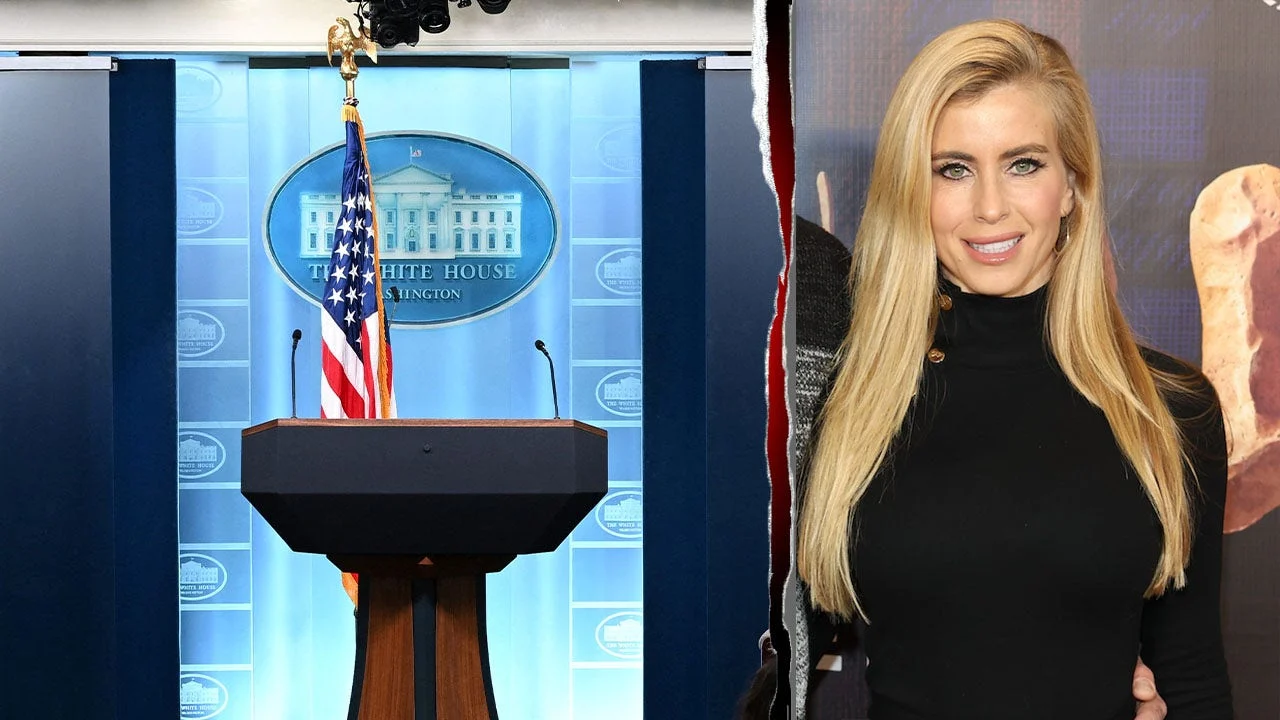

Secretary of State Marco Rubio announced new visa limits on birth tourism on Wednesday and said the U.S. is open to discussions with Cuba if it pursues a political transition.
Visa curbs ahead of Beijing summit
Secretary of State Marco Rubio announced Wednesday that the Trump administration is restricting visas for people who facilitate or engage in birth tourism, speaking hours before Chinese President Xi Jinping was due to arrive in the United States. Xi’s schedule includes a Wednesday evening White House meeting with President Donald Trump to discuss tariffs, artificial intelligence, fentanyl exports and rare earth minerals.
The State Department’s curbs focus on foreign nationals who work in commercial birth tourism, along with fixers who coach applicants to carry out visa fraud. Birth tourism is the practice of traveling to the United States primarily to give birth so the child secures American citizenship. Justice Department cases have centered on Chinese clients traveling to West Coast clinics and Saipan, an island that’s part of the U.S. Commonwealth of the Northern Mariana Islands. In a statement obtained by Fox News Digital, Rubio said the administration won’t allow foreigners to abuse the immigration system or “violate the sanctity of U.S. citizenship.”
Cracking down on birth tourism has formed a central part of Trump’s immigration platform. After the Supreme Court struck down the administration’s initial effort to end birthright citizenship, Trump issued two executive orders. One targeted children of members of designated terrorist groups, while the other told the State Department to deny visas or seek deportations against people suspected of traveling for birth tourism. Representative Brandon Gill of Texas, who heads a House Oversight task force on the issue, has also pointed to China and Russia when raising concerns about the practice.
Conditions for Cuba talks
Also on Wednesday, Rubio spoke in New York City about Cuba, saying the United States is willing to talk with officials in Havana about a political transition and an end to the U.S. trade embargo. Rubio, whose parents fled Cuba before Fidel Castro’s 1959 revolution, said Washington is ready to work with Cuban officials whose “hands are not stained with blood” if they pursue political changes. He added that American investors and Cuban diaspora businesses are prepared to help restructure the island’s economy.
The remarks followed Trump’s address to the United Nations General Assembly on Tuesday, where he labeled Cuba a “failed state” and mentioned Washington’s regional actions, including the abduction of Venezuelan President Nicolas Maduro. Trump said his administration is pushing for fundamental change while Cuba’s government faces intense economic pressure. His speech prompted the Cuban delegation to walk out of the assembly hall.
Cuban officials have denied that any discussions with Washington are taking place. Foreign Minister Bruno Rodriguez has described the U.S. embargo as “economic asphyxiation.” The Cuban government said the embargo cost its economy $8 billion between March 2025 and February 2026, an increase of 7 percent over the prior period, even before accounting for U.S. energy restrictions introduced in January and secondary sanctions added in May. Every year since 1992, the U.N. General Assembly has passed a non-binding resolution calling for an end to the U.S. embargo. In July, a vote on whether to hold a debate on the resolution saw 136 member states in favor, nine against, and 30 abstentions, including Germany and Canada.