

The White House announced shipments of Russian fuel while the Treasury Department waived sanctions on exports until April 2027.
President Donald Trump announced Friday that he reached an agreement with Russian President Vladimir Putin to supply millions of tons of Russian diesel to the United States and the global market, a major reversal of American sanctions policy aimed at reducing record fuel costs ahead of the midterm elections.
Under the plan, Trump said Russia will release 300,000 tons of diesel immediately, followed by 500,000 tons in November and 1 million tons next, with an additional 3 million tons to follow shortly after depending on refinery conditions, PBS NewsHour reported. To facilitate the shipments, the U.S. Treasury Department issued a temporary general license waiving sanctions on Russian diesel deliveries until 12:01 a.m. Eastern Daylight Time on April 7, 2027.

The move comes as the administration faces voter discontent over high inflation and fuel costs driven by the war in Iran, which began in February. According to AAA, the national average price for diesel was $6.28 a gallon on Friday, after hitting a record peak of $6.52 or $6.53 in late September. A year ago, diesel averaged $3.68 a gallon.
Backlash from Kyiv and Congress
Ukrainian President Volodymyr Zelenskyy denounced the agreement, warning that relaxing penalties on Moscow would prolong the conflict and finance Russian military efforts. Zelenskyy called it, “a weak decision, unfortunately, a weak decision by strong partners,” according to a statement released through the Ukrainian Embassy in Washington.
The announcement arrived while Ukrainian representatives were scheduled to meet in Miami with Trump envoy Steve Witkoff and son-in-law Jared Kushner to discuss a proposal to end the war, the BBC reported. Zelenskyy expressed frustration over the timing, saying Ukrainian negotiators were being treated like a smokescreen.

Democratic lawmakers also criticized the move. Representative Don Beyer described the decision as infuriating and argued that lifting fossil fuel restrictions demonstrated that Trump could not be trusted on Russia policy.
The agreement marks a sharp departure from bipartisan legislation Trump signed last month, which directed tariffs of up to 100% against major purchasers of Russian oil and gas and targeted Russian banks and shipping fleets. The United States had barred Russian oil and gas imports since 2022 following the invasion of Ukraine.
Why the diesel deal matters
The White House is attempting to suppress energy prices that have surged across the global economy. Diesel is vital for commercial trucking, agriculture and heavy construction, making its cost a direct driver of grocery and consumer prices. Trump previously described lowering expenses for farmers and truckers as his top priority.
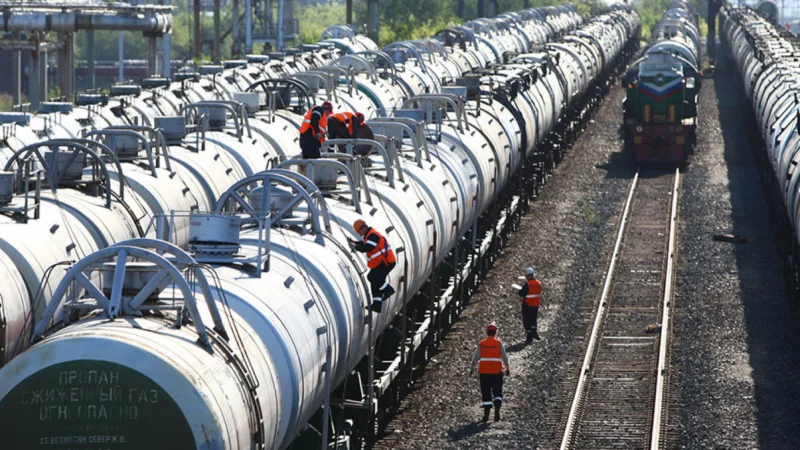
Russian Deputy Prime Minister Alexander Novak said Moscow would immediately lift its domestic diesel export ban ahead of schedule, state news agency Tass reported. Novak said supplies could head to the U.S. during October. Russia had imposed the export ban in July after repeated Ukrainian drone strikes on its domestic oil refineries caused local fuel deficits. The International Energy Agency calculated that those strikes cut Russian diesel production by nearly 30%, according to NBC News.
Trump has previously urged Ukraine to cease targeting Russian diesel refineries, blaming those strikes for pushing global pump costs upward. Zelenskyy rejected any unilateral halt, insisting Ukraine would stop hitting refineries only if Russia stopped attacking Ukrainian power infrastructure.
Uncertain effect on pump prices
Energy market analysts expressed skepticism that the arrangement will provide lasting relief. Michael Lynch of the Energy Policy Research Foundation noted that redirecting Russian fuel to American or alternative buyers simply diverts supplies away from existing customers without solving global shortages, leaving overall prices largely unchanged.
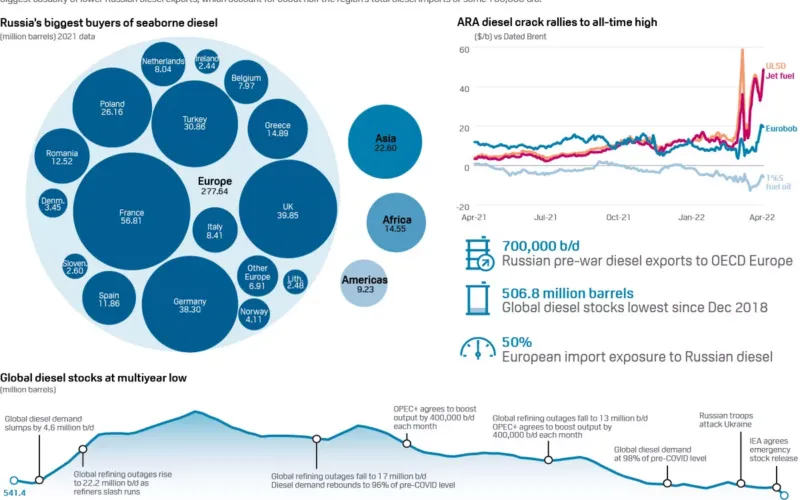
Diesel futures dropped about 4% on Friday after Trump posted the news on social media, yet futures remain more than 110% higher since the start of the year. Brent crude oil traded above $103 or $104 a barrel on Friday, down only marginally on the day, compared to roughly $73 a barrel before the war in Iran started.
Prior to the Russian agreement, the White House pursued other measures to lower fuel costs, CBS News reported. Earlier in the week, Trump issued an order permitting the highway use of red-dyed diesel, which is exempt from the 24.4-cent federal fuel tax. The administration also pressured G7 nations into releasing 100 million barrels of oil and diesel from strategic reserves and discussed a possible pause on the federal gasoline tax.
The White House has not clarified who will purchase the Russian diesel, when the initial shipments will arrive at retail pumps, or what concessions Moscow received from Washington in return.