The president proposed penalties on foreign facility projects after returning from Asia, arguing computing power must stay in the country.
President Donald Trump announced Friday that he intends to block American companies from constructing artificial intelligence data centers overseas, threatening heavy taxes on firms that expand abroad. Speaking to reporters in the White House briefing room after returning from his summit in Asia, Trump asserted that the United States must retain all domestic computing capacity so rival powers cannot take advantage of American technology.
Al Jazeera reported that Trump warned tech companies would face severe penalties if they tried to set up infrastructure outside the country, saying that China would otherwise take over the facilities. “We’re going to keep it all in this country,” Trump said during the conference, according to BBC News. Trump admitted he had not briefed his administration before the announcement, telling reporters that members of his cabinet standing in the room were learning about the plan alongside the press. Vice President JD Vance, Secretary of State Marco Rubio, Treasury Secretary Scott Bessent, Defence Secretary Hegseth, and White House chief of staff Stephen Miller all attended the briefing.
Why overseas restrictions matter to the industry
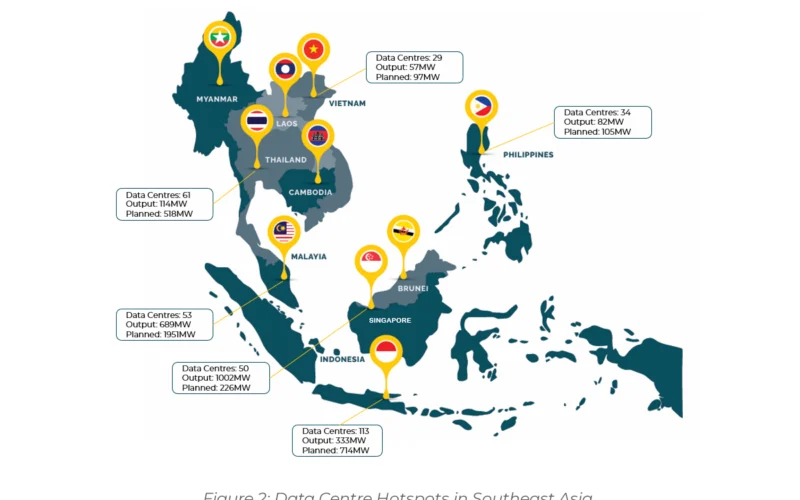
Data centers are warehouse-sized structures that hold the specialized servers and semiconductors required to run artificial intelligence systems like ChatGPT and Claude. NBC News reported that Trump’s proposal adds fresh uncertainty to an artificial intelligence sector already under strain from falling stock markets, where even a record-setting initial public offering by Anthropic this week failed to calm nervous investors. Since Nov. 4, the S&P 500 has dropped by roughly 9%, driven in part by concerns over computing constraints.
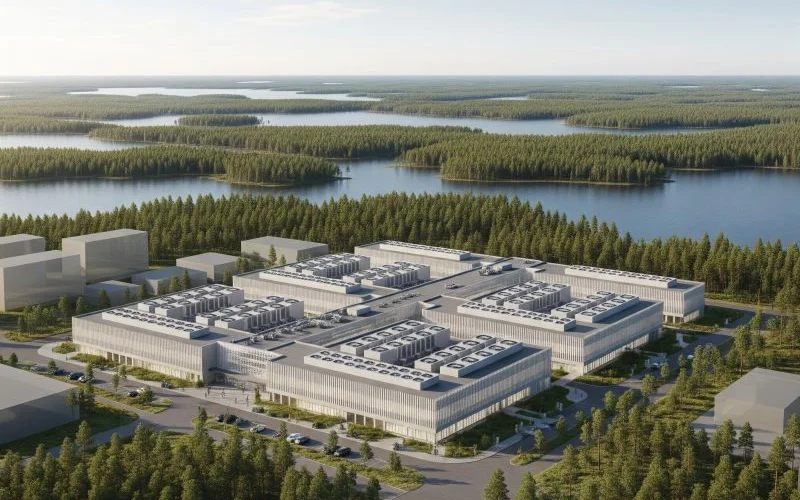
Major technology companies have increasingly expanded their computing footprints internationally. In September, Google announced a 13 billion euro investment in Finnish infrastructure, a project that includes three data centers. Construction on two of those Finnish sites was halted last month over environmental concerns regarding the clearing of more than 300 hectares of forest. Trump pointed directly to that Finnish project during his remarks, insisting his administration would not allow such builds to proceed. Meta has also signed agreements for facilities in other nations, while Canada has pitched itself as an alternative destination with less local pushback.
Political clashes over domestic construction
The president’s firm support for data centers contrasts with public sentiment across the country. A majority of Americans oppose building the massive facilities, and local opposition became a prominent issue during the Nov. 3 midterm elections. Democratic candidates campaigned heavily on promises to restrict data center growth, drawing support from voters concerned about noise pollution and heavy electricity demands. Those platforms helped Democrats secure widespread midterm victories.
Trump rejected those community complaints on Friday, urging local governments to welcome technology companies instead of rejecting them. He argued that towns should demand payments from tech firms while benefiting from local economic gains, calling the centers valuable assets. In August, Trump defended the industry on social media with the phrase “let Data Reign,” writing that localities would end up poor and backward if they blocked development, while welcoming facilities would bring lower taxes and jobs.
Questions over enforcement and next steps
How the White House would enforce restrictions on overseas data center construction remains undetermined. Trump did not present any regulatory framework, executive order, or draft legislation during the briefing. “We’re going to put tremendous penalties on companies that try and do it,” Trump said, but he did not explain how the proposed taxes would be structured or calculated.
The United States already hosts approximately 3,000 data centers, with another 1,500 facilities in various phases of planning and construction as of April, based on data from the Pew Research Centre. The White House and Google did not immediately respond to requests for comment following the briefing, leaving tech executives waiting to see whether Trump’s statements turn into formal federal policy.