
British warplanes and military advisers will help guard Saudi airspace against Houthi drone and missile strikes.
The United Kingdom will deploy Royal Air Force Typhoon fighter jets to Saudi Arabia to help protect the country from aerial attacks by Yemen’s Houthis, British officials announced on Tuesday.
Prime Minister Andy Burnham authorized the defensive mission to protect Saudi cities and critical infrastructure from incoming drones and missiles, BBC News reported. The British Ministry of Defence said the warplanes will not carry out attacks inside Yemen.
“These aircraft will operate in a defensive role and will not conduct offensive strikes against the Houthis,” Defence Secretary Wes Streeting said in a written statement.
The deployment follows weeks of intensifying violence across the Arabian Peninsula. Saudi officials recently blamed Iran after Houthi strikes killed 19 people across the kingdom’s airports, including an October 10 missile attack on King Khalid International Airport in Riyadh that killed 13 people and wounded 308 others.
What the British deployment includes
Under the plan, RAF Typhoons will carry out defensive counter-air patrols across Saudi airspace, Al Jazeera reported. The British government is also deploying military advisers and an RAF A400M transport aircraft to move defense equipment inside the kingdom.
Britain had already supplied Saudi Arabia with air defense support equipment and aerial refuelling services for Saudi defensive flights. Streeting confirmed on Tuesday that Britain will extend its air-to-air refuelling support by 90 days.
Streeting warned that regional violence threatens to disrupt Gulf energy supplies and raise expenses for families and businesses. While the British jets are restricted to defensive roles, British warplanes guarding Saudi skies will free up Saudi aircraft to run offensive strikes against Houthi forces.
Saudi Arabia has faced problems intercepting every incoming weapon because its air defenses were heavily drained during Iranian attacks earlier this year. The kingdom’s vast land area also complicates attempts to provide complete radar and missile coverage.
A broken ceasefire and deep cross-border strikes
Fighting flared again in September when a fragile ceasefire collapsed. The Houthis, also known as Ansar Allah, ousted Yemen’s internationally recognized government from the capital, Sanaa, in 2014. The group launched a major ground push in September, taking control of the strategic Bab al Mandab strait.
Saudi-backed government forces responded with a counteroffensive, prompting Houthi fighters to launch long-range strikes against Saudi oil facilities, ports, and commercial airports. Earlier in October, Houthis struck Saudi oil sites during renewed ground fighting.
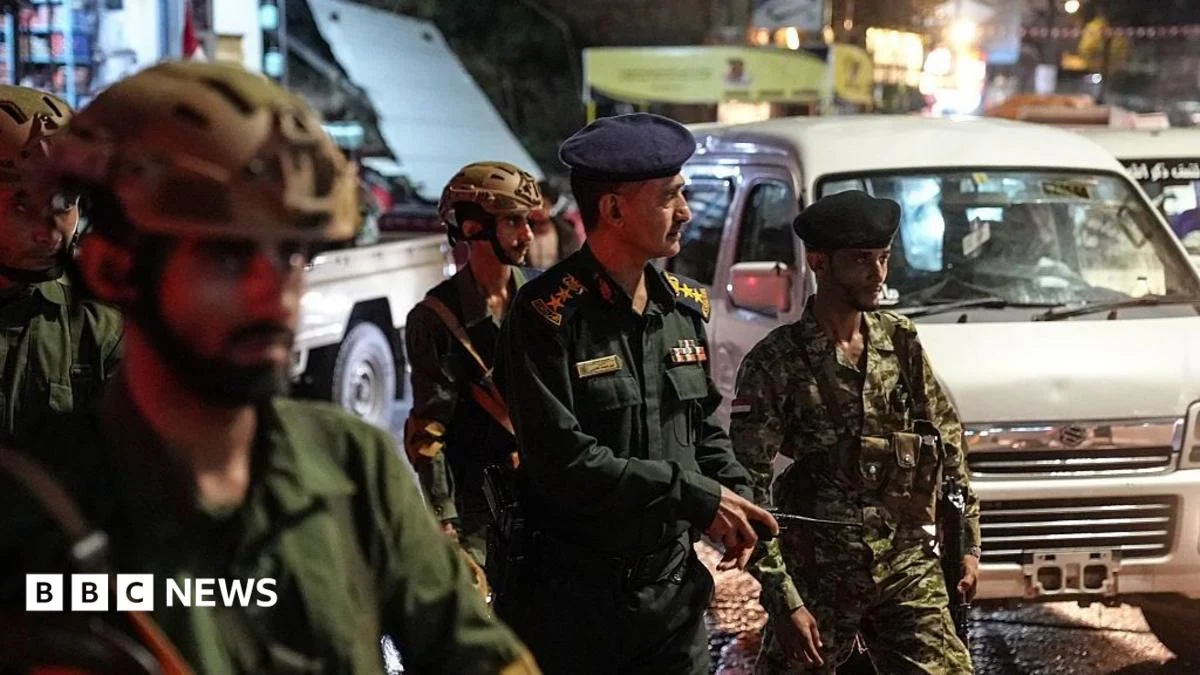
The violence inside Yemen has produced heavy casualties on both sides. Earlier this week, a Houthi missile attack hit al-Alam camp near Ataq in Yemen’s central Shabwa province, killing more than 70 security personnel. A spokesman for the Saudi-backed Yemeni armed forces said the Houthis fired three ballistic missiles at the installation, while Houthi military officials claimed they targeted Saudi enemy concentrations.
Houthi health officials in northwestern Yemen reported that Saudi air and artillery bombardments have killed at least 141 people and injured 395 since September 3. Meanwhile, the internationally recognized government’s health ministry reported last week that at least 1,282 people have died across Yemen since August 6.
Diplomatic moves and next steps
Regional partners are weighing their own military roles as cross-border fire continues. In Cairo, Egypt’s parliament delayed a vote for a second straight day on a request from President Abdel Fattah el-Sisi to authorize Egyptian military support for Saudi Arabia if the kingdom asks for assistance. Egyptian state media reported that lawmakers will take up the measure during a session scheduled for October 26.
Houthi military leaders show no signs of pulling back. Earlier this month, Houthi military spokesman Brigadier General Yahya Saree promised to press ahead with escalating operations deep inside Saudi territory.