
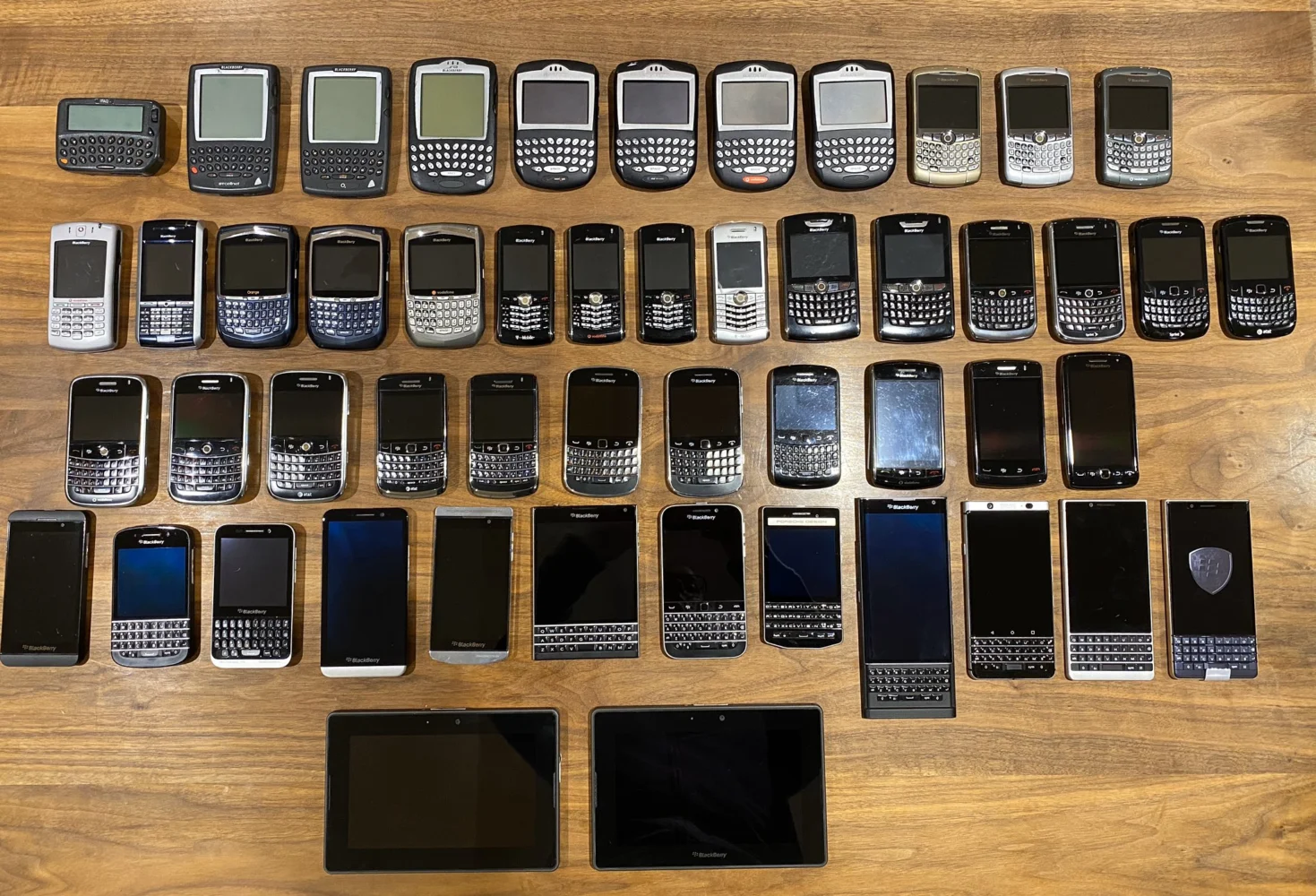
BlackBerry phones did not disappear because of a scandal. They fell because the company that once led the smartphone market was too slow to adapt to the touchscreen and app era that Apple’s iPhone opened in 2007. Research In Motion, later renamed BlackBerry Limited, kept betting on physical keyboards while rivals reinvented the phone. It stopped making its own handsets, licensed the brand to other manufacturers, and then left the hardware business entirely. On January 4, 2022, its legacy phones were switched off for good. The company still exists in 2026, but it now sells security and automotive software, not phones.
That is the short version. The full story is a classic case of a market leader that did almost everything right until the rules of the game changed. Here is the whole arc, with the dates and sources, and an honest answer to the question owners still ask: can you use, or sell, an old BlackBerry today?
Quick timeline
| Year | What happened |
|---|---|
| 2007 | Apple announces the iPhone in January and ships it in June |
| 2008 | RIM releases the BlackBerry Storm, its first touchscreen, to weak reviews; the first Android phone also ships |
| 2009 | Research In Motion peaks at roughly 43% of the US smartphone market |
| 2013 | RIM renames itself BlackBerry Limited and launches the BB10 OS and the Z10 on January 30 |
| 2016 | BlackBerry stops designing phones in-house and licenses the brand to TCL in December |
| 2020 | The TCL licensing deal ends on August 31 |
| 2022 | Legacy BlackBerry OS devices are decommissioned on January 4; a planned 5G revival collapses in February |
| 2025-26 | BlackBerry Limited operates as a cybersecurity and QNX automotive software company |
When BlackBerry ruled: the CrackBerry years
For most of the 2000s, BlackBerry was the phone that serious people carried. Research In Motion (RIM), the Canadian company behind it, built its reputation on three things: a physical keyboard people could type on at speed, push email that arrived the instant it was sent, and enterprise-grade security that corporate IT departments and governments trusted. The addiction was real enough that “CrackBerry” became the nickname, and later the name of the biggest fan community.
At its peak in late 2009, RIM held about 20 percent of the global smartphone market and roughly 43 percent of the US market, according to figures widely cited from that period (BizTech Magazine, Statista). In the US, its user base reportedly climbed toward 21 million around 2010 before sliding to about 9 million by 2012 (as reported by outlets including BGR and Envirofone). For a while, BlackBerry was not just a phone. It was the default tool of business.
2007: the iPhone arrives, and the bet on keyboards
Apple announced the iPhone in January 2007 and shipped it that June. It had no physical keyboard, a full touchscreen, a real web browser, and soon after, an App Store. RIM’s leadership famously doubted it would matter to their core business customers, who they believed wanted keyboards and battery life over a glass slab.
That was the fatal misread. The iPhone, and the first Android phone that followed in 2008, did not just add features. They redefined what a phone was: a pocket computer that ran an open ecosystem of third-party apps. BlackBerry kept optimizing the thing it already did well, physical typing and secure email, while the market moved to a completely different idea of the product. This is the textbook shape of the innovator’s dilemma. The strength that made BlackBerry dominant, its focus on the corporate keyboard user, became the blinder that kept it from seeing the shift.
The Storm, the PlayBook, and the missteps that sealed it
BlackBerry did try to respond, and the responses are where the story turns from “slow” to “self-inflicted.”
The BlackBerry Storm (2008) was RIM’s first touchscreen phone, rushed out to counter the iPhone. Its “clickable” screen and software were widely panned, and it became a byword for a company chasing a trend it did not understand.
The BlackBerry PlayBook (2011) was RIM’s answer to the iPad. It launched without a native email or calendar app, which was a strange gap for the company that built its name on email, and it sold poorly. Our own archive from the time captures how much promise it once carried: back in July 2012 this site was covering the rumored BlackBerry PlayBook 4G LTE release as real news. That is how alive the platform still felt to fans, even as the ground was giving way underneath it.
By the time the genuinely modern platform arrived, it was too late. In 2013, RIM renamed itself BlackBerry Limited and launched BB10, a brand-new operating system built from the ground up for touch, with the Z10 handset on January 30, 2013. Reviewers found BB10 competent. The problem was that developers and users had already committed to iOS and Android, and the app catalog never caught up. A good product two ecosystems too late does not win.
The licensing years: TCL, KeyOne, and the last BlackBerry phones
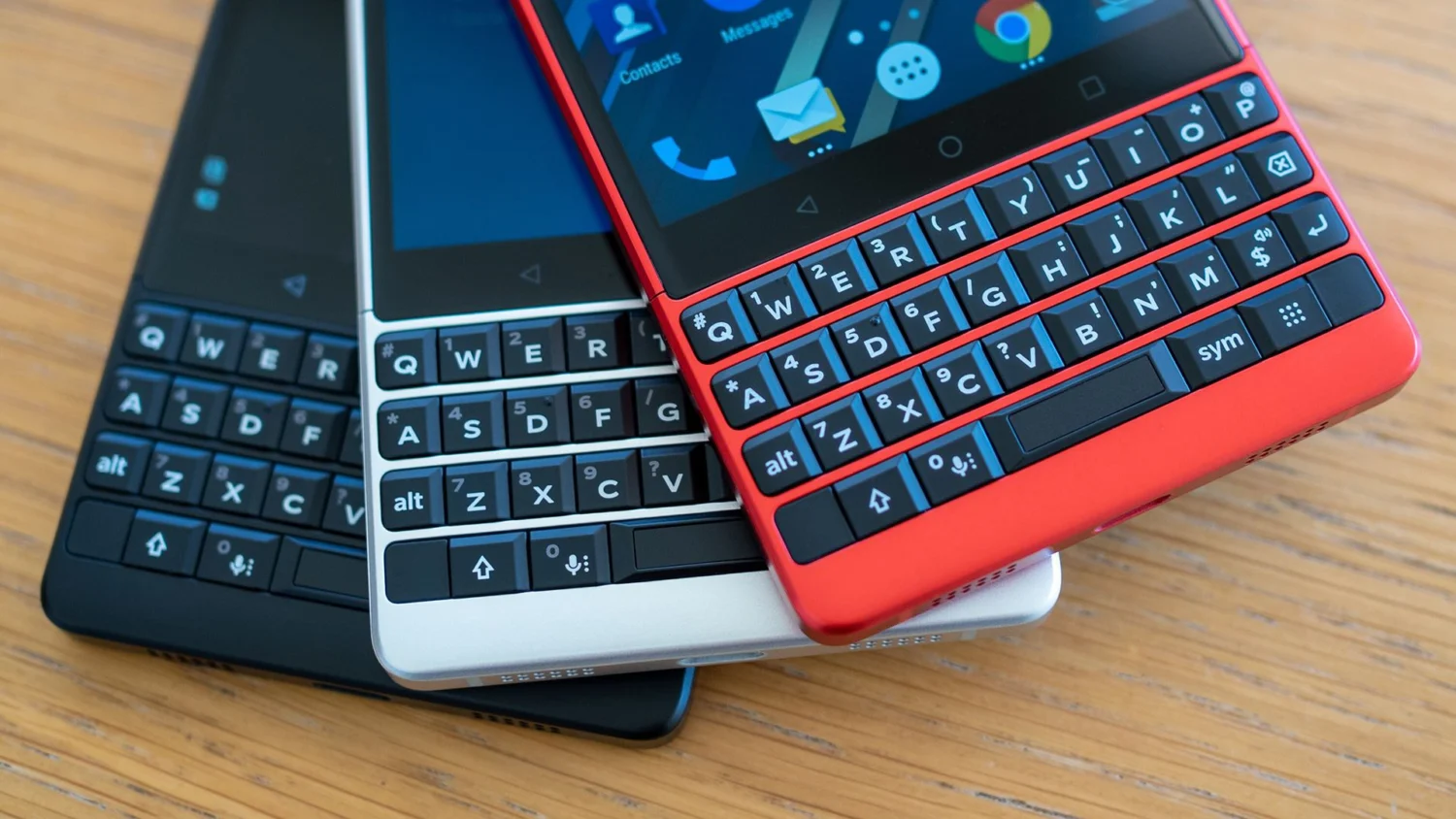
In late 2016, BlackBerry made the decision that effectively ended it as a phone maker: it stopped designing handsets itself and licensed the brand name to other companies. The main partner was TCL, which signed on in December 2016 and produced the Android-powered KEYone, Motion, KEY2, and KEY2 LE. These ran Google’s Android with a nod to the classic keyboard, and they earned a small, loyal following, but never mainstream scale.
That arrangement ended on August 31, 2020, when TCL confirmed it would stop making and selling BlackBerry-branded phones. A startup called OnwardMobility then picked up the rights and promised a secure 5G BlackBerry with a physical keyboard for 2021. It never shipped. In February 2022, OnwardMobility shut down and the project was officially dead. That was the last serious attempt to put a new BlackBerry phone on sale.
January 2022: what “decommissioned” actually meant
The date that truly closed the book is January 4, 2022. BlackBerry had announced back in September 2020 that it would end support for its legacy operating systems, and on that day it followed through.
Devices running BlackBerry 7.1 OS and earlier, BlackBerry 10, and BlackBerry PlayBook OS 2.1 and earlier stopped reliably working. According to BlackBerry’s own end-of-life notice, affected phones could no longer dependably make calls, send texts, reach 911, or connect to data over either Wi-Fi or a carrier. In plain terms, the phones did not just lose an app store. Many became unable to do the basic job of a phone.
One important exception: the Android-based models, the KeyOne, Key2, and Key2 LE, were not part of this shutdown. They ran Android, not BlackBerry’s own OS, so they kept working like any other aging Android phone.
What BlackBerry does now
BlackBerry Limited did not go bankrupt. It quietly transformed into a business-to-business software company, and that is what it still is in 2026.
The company today runs on two main engines. The first is cybersecurity: secure communications and endpoint software sold to enterprises and governments, the modern extension of the security reputation the phones were built on. The second is QNX, a real-time operating system that runs inside the electronics of cars and other embedded systems; it is used widely across the automotive industry. For the fiscal year ending February 28, 2025, BlackBerry reported total revenue of about $535 million, with cybersecurity contributing roughly half and QNX growing on strong automotive demand (BlackBerry financial reports). So the brand you associate with a keyboard phone now most likely touches your life through the software in your car’s dashboard, not a device in your pocket.
Can you still use, or sell, a BlackBerry in 2026?
Here is the honest owner’s answer that the phone-buyback blogs tend to skip.
Can you still use one? If it is a legacy BlackBerry OS, BB10, or old PlayBook device, no, not as a working phone. The January 2022 shutdown means calls, texts, and mobile data can no longer be counted on. It may still power on and show old photos or notes stored on it, but it is essentially an offline keepsake. If it is an Android-based KeyOne, Key2, or Key2 LE, it can still function as a basic Android phone, though it no longer receives security updates and many modern apps have moved beyond its version of Android.
Is yours worth anything? For most models, not much in practical terms. There is no active mainstream resale market for phones that cannot connect. A small collector and nostalgia interest exists for boxed, mint, or rarer models, and the Android KEY-series phones hold a little more appeal to keyboard enthusiasts, but you should treat any old BlackBerry as sentimental rather than valuable. We do not buy or sell phones, so there is no angle here beyond telling you straight.
Why BlackBerry’s fall still matters
It is tempting to remember BlackBerry as a failure. It is more accurate, and more useful, to remember it as a company that got beaten by the future it could not bring itself to believe in. There was no fraud and no single villain. There was a dominant leader, a genuine technology shift, and a series of reasonable-sounding decisions to protect the existing business instead of cannibalizing it. By the time the danger was undeniable, the window had closed.
That is why the story keeps getting taught. Kodak, Nokia’s Symbian, and BlackBerry all rhyme: market leaders undone not by laziness but by loyalty to the thing that made them great. BlackBerry’s second act, surviving as a software company, is the twist most people miss and the reason the name is still on a stock ticker in 2026.
Frequently asked questions
Does BlackBerry still make phones?
No. BlackBerry stopped designing phones in-house in 2016 and licensed the brand to other makers. The last of those partnerships ended in 2020, and a planned 5G revival collapsed in 2022. No new BlackBerry phones are being made.
Why did BlackBerry fail?
It was too slow to adapt to the touchscreen and app-driven smartphone that Apple’s iPhone introduced in 2007. BlackBerry kept prioritizing physical keyboards and secure email while iOS and Android built open app ecosystems that reshaped what buyers expected from a phone.
What happened on January 4, 2022?
BlackBerry decommissioned its legacy operating systems. Devices running old BlackBerry OS, BlackBerry 10, and older PlayBook software could no longer reliably make calls, send texts, reach 911, or use data, according to BlackBerry’s own end-of-life notice.
Do any BlackBerry phones still work?
The Android-based models, the KeyOne, Key2, and Key2 LE, still function as basic Android phones because they never relied on BlackBerry’s own OS. They no longer get updates. Devices on legacy BlackBerry software effectively stopped working after January 2022.
What does BlackBerry the company do now?
BlackBerry Limited is a business software company. It sells cybersecurity and secure communications products and develops QNX, a real-time operating system used widely in cars and embedded devices.
Sources: BlackBerry Limited end-of-life notice (blackberry.com); BlackBerry financial reports for the fiscal year ended February 28, 2025; contemporary reporting from Statista, BizTech Magazine, BGR, Envirofone, XDA, Android Central, TechCrunch, and GSMArena. Market-share and user figures reflect widely cited reporting from the periods noted.