Apple launched its fourth-generation Apple TV 4K with faster processing and surround sound options, but dropped budget configurations to start at $299.
Apple’s fourth-generation Apple TV 4K is now in buyers’ hands with a faster processor and hands-free voice controls, alongside a price increase that pushes the streaming box to $299. Engadget reported in its review that the new model swaps the older A15 Bionic chip for an A19 processor, delivering up to 50 percent faster CPU performance and doubling graphics speeds.
The hardware also launched at £299 in the United Kingdom and AU$449 in Australia, according to TechRadar. While the box provides top-tier video format support and an ad-free home screen, TechRadar found that the steep price makes the device difficult to justify for people who already own recent 4K hardware.
The company previously rolled out the $299 Apple TV 4K with Siri AI and a revamped remote control after years without a major hardware revision.
Why the internal and audio upgrades matter
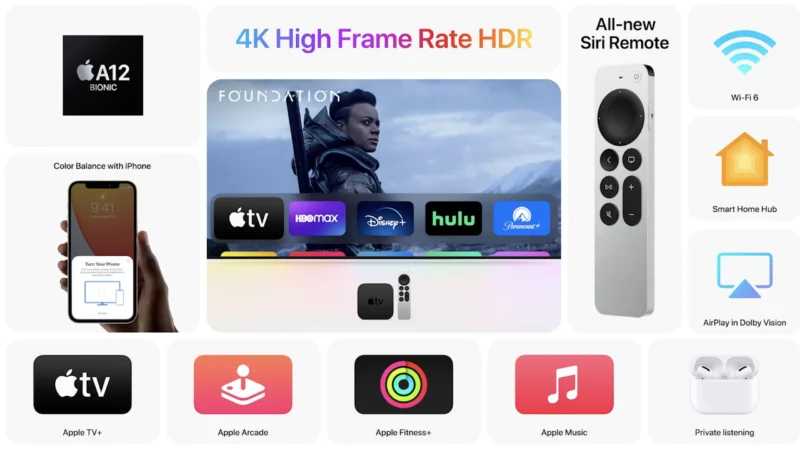
Inside the box, the A19 chip includes a dedicated AV1 decoder to handle HDR streaming more efficiently. Apple also added three far-field microphones directly to the chassis, letting people speak commands to Siri without touching the remote. Voice data from these microphones stays inside a Secure Exclave on the processor, keeping audio recordings out of reach of third-party apps, the operating system, and Apple.
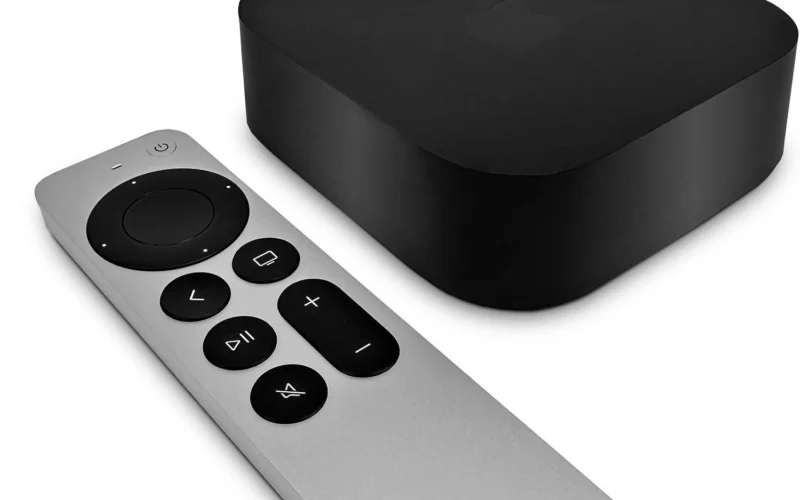
The upgraded Siri assistant can tap into personal context across Apple devices, such as finding a show mentioned in a text message. For physical hardware, Apple made minor exterior adjustments: the status light shifted from the right edge to the center of the front panel, while the box grew 0.24 millimeters wider and deeper and gained 3 grams in weight. The Siri Remote keeps its previous measurements of 1.4 inches by 5.4 inches by 0.36 inches, but adds Find My Precision Finding and built-in speakers that chime when lost.
Audio setups expanded as well. The fourth-generation box can link up to four HomePods or HomePod mini 2 speakers for full surround sound, provided front and rear units match. During setup, the box plays tuning tones to calibrate sound to the room. A feature called Whole Room Audio in the Control Center lets all connected speakers play identical audio across the room during gatherings. For connected homes, the device serves as a Matter and HomeKit smart home hub, encrypting HomeKit Secure Video feeds locally and showing live doorbell camera popups in the corner of the screen.
What happened before this model arrived
Apple previously approached Apple TV pricing from a lower baseline. When the third-generation Apple TV 4K launched in 2022, Apple priced a 64GB Wi-Fi-only version at $129, down from the $179 price of the 32GB model that came before it. The Ethernet-equipped 2022 tier started at $149 in the United States, £149 in Britain, and AU$219 in Australia.
Component expenses contributed to price increases earlier this year, when Apple raised the third-generation base model to $199 and the higher model to $249, or £249 and AU$399 internationally. With the fourth-generation release, Apple dropped the cheaper Wi-Fi-only model entirely. The new streaming box sells in a single 128GB configuration for $299.
By contrast, budget competitors cost significantly less. Amazon sells its Fire TV Stick 4K Max for $84.99, £99.99, or AU$149, offering broad format compatibility at a fraction of the cost. Nvidia’s Shield Pro matches the $299 price tag, though it runs on older hardware.
Where the streaming software falls short
Despite software strengths like quick app launching and seamless iPhone password autofill, testing revealed several gaps in Apple’s living-room platform. Siri AI delivered uneven results on screen, sometimes cramming dense unformatted text into narrow side panels or enlarging text until words were cut off. In streaming apps like Netflix, the assistant could not detect on-screen viewing and asked testers to state titles manually.
Netflix also remains disconnected from the system’s universal search and the Apple TV app hub, forcing subscribers to search for content inside Netflix separately. Gaming options have limitations as well. While tvOS lets users connect PlayStation and Xbox controllers to run local App Store games, company policy restrictions continue to block cloud game streaming services from running on the device.