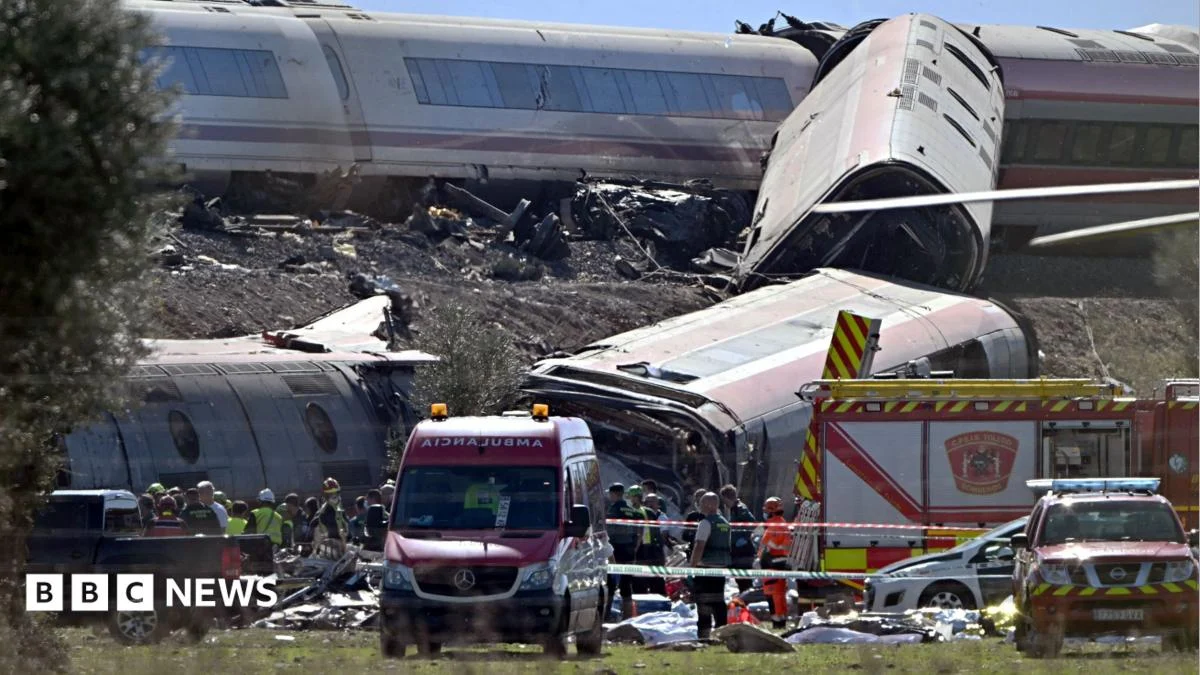
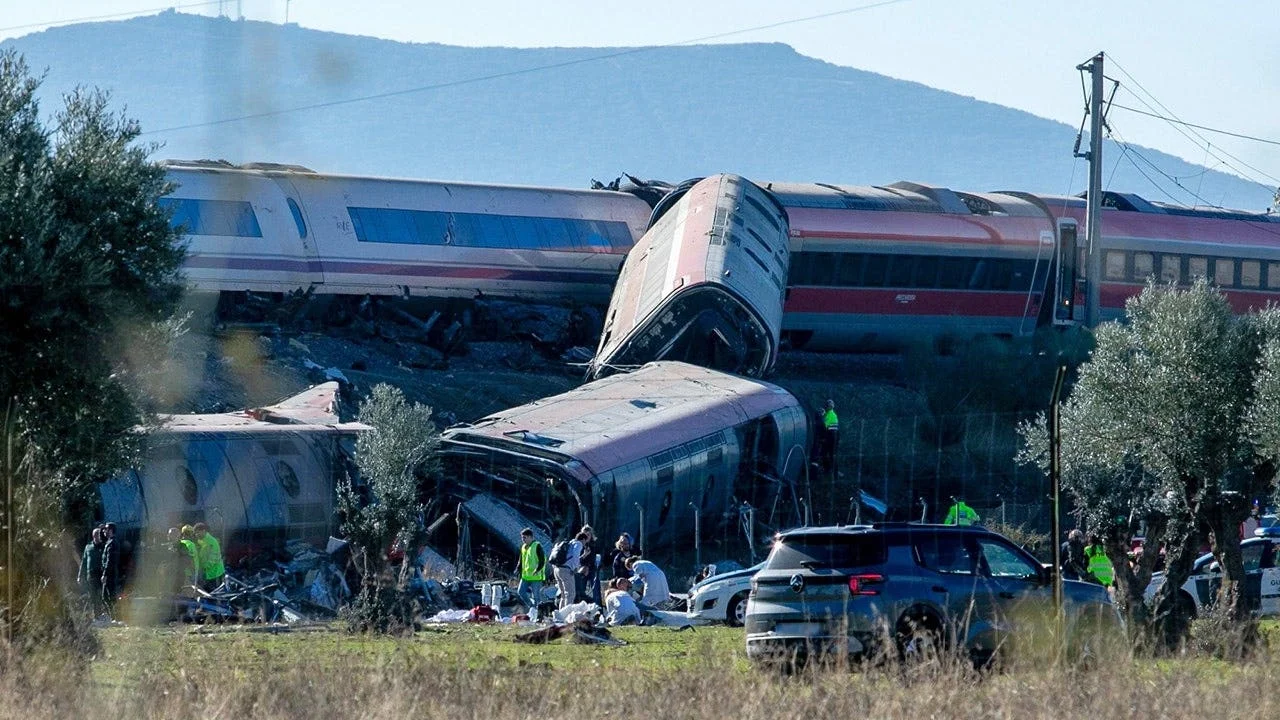
Leaked recordings show rail controllers cleared a passenger train to run at full speed into a section of track where another train had stalled.
Audio recordings from Spanish rail controllers show how a train cleared to run at full speed slammed into a stalled passenger train in central Spain on Wednesday morning. NBC News reported that the recordings captured communications between operators of both trains and staff at a control center in Madrid before the collision near Urda.
The disaster followed earlier reports after the death toll rose to 68 people, when two trains carrying more than 500 passengers collided in Toledo province. Emergency teams had mobilized after at least 10 dead were confirmed shortly after the impact.
NBC News reported that at least 69 people were killed, while Al Jazeera reported that at least 68 people died and about 80 were injured. Emiliano Garcia-Page, president of the Castilla-La Mancha regional government, said 50 of the injured suffered serious wounds and 15 were in critical condition.
What the recordings show
The audio recordings, obtained by Spanish media, trace the decisions made before the collision at roughly 8:53 a.m. Spanish transport officials said an automated safety system failed around 8:30 a.m. because of a computer problem, halting about six trains across a 63-kilometer stretch of track. Spain’s rail infrastructure manager, Adif, transferred line control to its Madrid center.
At approximately 8:36 a.m., controllers authorized a train run by state-owned Renfe to resume traveling without speed caps, despite the stalled private Iryo train ahead. In the recording, the Renfe driver asked, “At normal speed? OK,” to which the controller agreed and signed off. Controllers then called the Iryo train several minutes later to authorize it to proceed.
The Iryo train could not get moving. Its driver called controllers back seven minutes later to report the stall, saying, “I’m still stopped at the entrance signal,” according to the audio. Controllers told her to restart when possible and reach out if problems continued. Five minutes later, the Renfe train, having accelerated past 200 kilometers per hour, struck the rear of the stationary Iryo train. Two Iryo carriages derailed and slid down an embankment.
How the safety systems failed
Transport Minister Oscar Puente called the order from the control room inexplicable, saying it broke operating rules. Under standard rail protocol, trains operating after a breakdown of the primary LZB safety system may only travel at speeds up to 40 kilometers per hour. That limit is intended to allow drivers enough time to spot track obstructions and halt manually.
Puente said the train drivers and rail engineers were not at fault. The main LZB system automatically maintains safe separation between trains and applies brakes if another train stops ahead. When it crashed, a backup system took over, but it tracks train positions only at fixed points along the rails rather than continuously. Rail engineer Jose Luis Gonzalez Vallve told Spanish news agency EFE that a functioning LZB network would have prevented the collision.
Previous crashes and network upgrades
Wednesday’s crash marks the second fatal high-speed collision on the same line this year. On January 18, a high-speed train derailed near Adamuz in Cordoba province and hit an oncoming train, killing 46 people. That incident also involved Renfe and Iryo trains. Prime Minister Pedro Sanchez said the causes appeared unrelated, but called having two high-speed train disasters in one year unacceptable.
Spain operates the largest high-speed rail network in Europe, with over 1,900 miles of track for trains running faster than 155 mph. The line between Madrid and Seville is the only route in the country still running the older LZB signaling equipment installed in 1992. Adif received a 52-month contract in 2021 to replace that equipment with the European Union standard system, but the installation remains underway.
Political protests and travel disruption
Spain began observing three days of national mourning on Thursday. Sanchez cancelled upcoming campaign appearances ahead of national elections scheduled in a few weeks. Alberto Nunez Feijoo, leader of the opposition People’s Party, also suspended campaign events during the mourning period.
On Wednesday evening, about 1,500 protesters gathered outside the Ministry of Transport in Madrid, demanding Puente’s resignation before clashing with police. Adif suspended high-speed train travel between Madrid and Andalusia following the crash. Renfe halted ticket sales for the corridor through December 13, with an alternative route between Madrid and Andalusia scheduled to begin operating on Friday.