A state-run train rammed into a stopped private passenger train in Toledo province after a computer glitch and a control room order.
At least 68 people died Wednesday morning after a high-speed passenger train struck a stationary train from behind in Spain’s central Toledo province.
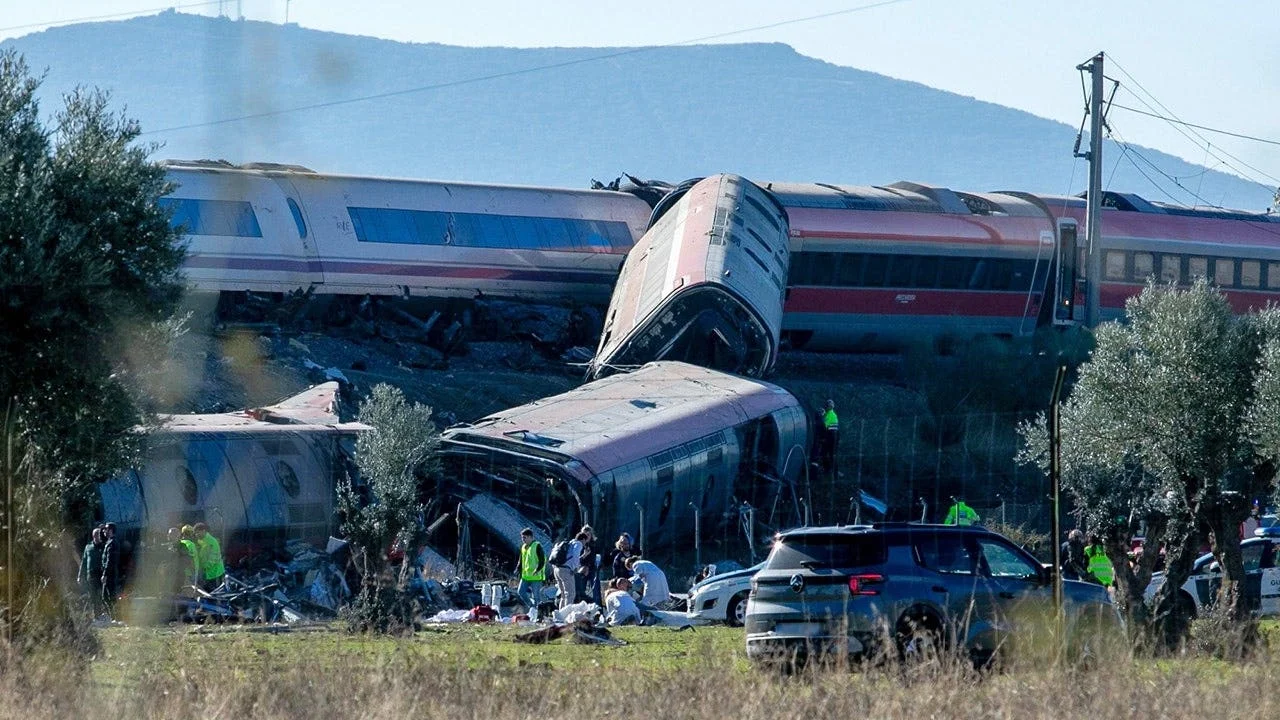
The collision left 58 people requiring hospital treatment as emergency teams searched the wreckage for survivors and victims, PBS NewsHour reported. Two carriages derailed down an embankment between the rural towns of Urda and Los Yébenes, roughly 140 kilometers (100 miles) south of Madrid.
The disaster marks a steep rise in casualties after initial reports confirmed at least 10 dead following the morning crash.
Signal failure and a fatal control order
The crash involved two passenger services traveling south on the high-speed line from Madrid to Seville. A train operated by private rail company Iryo was carrying 147 passengers when it halted on the tracks. Behind it, a train operated by the state-run railway Renfe was carrying 397 passengers.
Spain’s Transport Minister Óscar Puente stated that a computer breakdown disabled the safety system across a 63-kilometer (39-mile) section of track at 8:30 a.m., forcing trains on that stretch to stop. However, a central rail control facility ordered the Renfe train to restart its journey without imposing any speed restrictions while a stop signal was still in effect.
Puente described the command center’s instruction as an inexplicable decision and said the train drivers were not responsible. While Puente said the Renfe train could have reached 200 kilometers per hour (124 mph), officials are still examining operational logs.
Sources gave slightly different times for the impact. PBS NewsHour reported that the crash took place at 8:53 a.m., while BBC News reported the collision occurred just after 09:00 (08:00 GMT).
Emergency rescue and passenger accounts
The force of the collision tore through carriages and threw passengers across the train cars. A length of rail pierced one carriage, and one car caught fire. Construction workers working nearby cut through boundary fences and offered first aid until paramedics arrived.
Military emergency personnel, regional firefighters, police officers and medical helicopters joined local rescue teams at the scene. Spanish Health Minister Mónica García noted that workers concentrated recovery efforts on the two most heavily damaged carriages. Uninjured travelers were evacuated on buses, while the Civil Guard announced it will collect DNA samples from relatives to help identify deceased victims.
Passenger Ignacio Relaño told Spain’s TVE network that the Renfe train stopped briefly before accelerating and hitting the Iryo train. “We all felt the train abruptly slowing down and then the impact,” he said.
Officials in Urda opened a local sports arena to receive wounded passengers. Spain’s rail infrastructure manager ADIF suspended all rail traffic running between Madrid, Ciudad Real and the southern region of Andalusia.
Scrutiny of Spain’s high-speed rail network
The crash is Spain’s deadliest railway accident since a 2013 derailment near Santiago de Compostela killed 80 people. It also represents the second deadly incident this year involving Renfe and Iryo trains. In January, 46 people died near Córdoba in southern Spain when an Iryo train jumped tracks and struck an oncoming Renfe service.
Spain built roughly 3,900 kilometers (2,400 miles) of high-speed lines after opening its first route in 1992, giving it the largest high-speed network in the world behind China. The government opened the system to commercial competitors in recent years, allowing Italian-owned Iryo to begin operating passenger services in 2022.
The repeated accidents have drawn sharp criticism. Joan Rodríguez, a representative for the train workers’ union, questioned whether rail maintenance kept pace with increased traffic following deregulation. Trade union CSIF called for Puente to step down, arguing the transport minister shifted blame onto control staff instead of accepting leadership responsibility. Opposition leader Alberto Núñez Feijóo demanded answers regarding infrastructure safety.
Spanish Prime Minister Pedro Sánchez and King Felipe VI visited the scene on Wednesday. Sánchez called having two fatal high-speed crashes in one year unacceptable and promised a full inquiry to establish whether negligence occurred. Political leaders paused campaigning for upcoming national parliamentary elections, and the Royal Spanish Football Federation postponed 24 Copa del Rey matches.