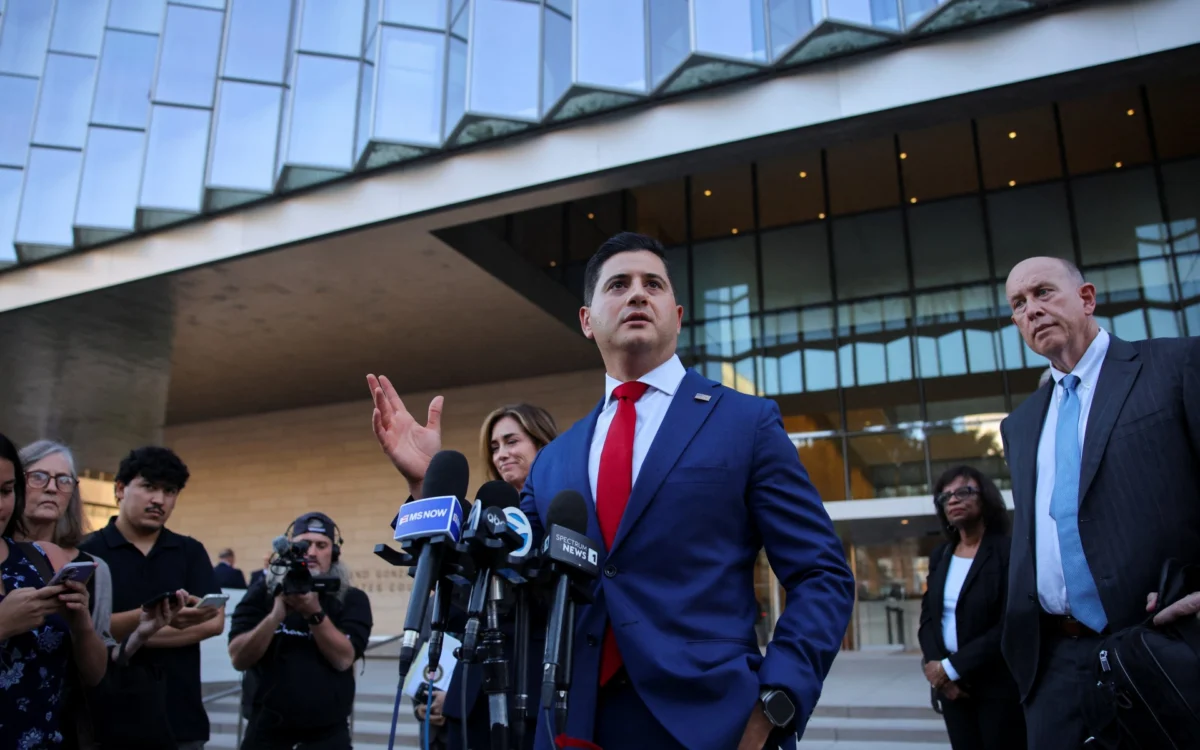
Tennessee death row inmate Christa Pike released her first public statement since surviving two lethal injection doses in September.
Tennessee death row inmate Christa Pike said Friday that she remains in constant physical and emotional pain one month after surviving the state’s attempt to execute her by lethal injection.
Pike, 50, dictated her first public statement from the prison infirmary at the Debra K. Johnson Rehabilitation Center, Fox News reported. She stated that she had walked into the execution chamber on Sept. 30 prepared to die and had not planned for any life beyond that night.
“There hasn’t been a moment since that night when I haven’t been in pain,” Pike said in the statement released through her legal team.
The statement marks her first direct address to the public since she became conscious and speaking after execution failed earlier this month. Pike was rushed to a Nashville hospital after receiving two doses of pentobarbital that failed to kill her, leaving her in critical condition on a ventilator before she was discharged back to prison custody.
Ongoing pain and medical isolation
Pike said she continues to deal with aching arms, hands and throat, and still struggles to speak. Her attorneys noted that the failed procedure left her arms burned and blistered, with swelling and pneumonia developing during her initial days in the hospital.
Pike blamed the situation on incompetence while also expressing sympathy for the relatives of Colleen Slemmer, the 19-year-old woman Pike was convicted of killing in 1995. She added that she is thankful for the medical staff who treated her and for supporters who sent kindness.
Since leaving the hospital, Pike has remained in the prison medical unit. She said being separated from others in the infirmary brings its own kind of pain after having spent 28 years in solitary confinement. While she noted that she is gaining strength, she said recovering is not the same as being well.
Scrutiny over state execution protocols
Pike’s survival was the second time this year that Tennessee executioners failed to complete a lethal injection, CBS News reported. In May, the state called off the execution of Tony Carruthers after executioners spent more than an hour trying unsuccessfully to place an IV line, leading Gov. Bill Lee to grant him a one-year reprieve.
During Pike’s execution at Riverbend Maximum Security Institution, workers also struggled for an hour with multiple needles to establish an IV line. Her attorneys said Pike complained of burning in her arm and told staff she felt as if her vein would burst before the procedure was stopped.
The failed procedures have directed attention to changes in Tennessee’s lethal injection manual. A CBS News review found the state cut its protocol from over 100 pages down to 44 pages early last year. The updated rules eliminated requirements for execution teams to practice IV placement on volunteers and reduced the operational guidelines for the IV team to a single sentence.
Kit Thomas, deputy chief of the capital habeas unit at the Federal Public Defender’s Office in Nashville, told CBS News that shortening the protocols removed essential guidance and shielded officials from accountability when errors occur.
Legal battles and next steps
Following the botched injection, Gov. Bill Lee paused all remaining executions scheduled in the state this year and ordered an independent inquiry into what occurred, PBS NewsHour reported. The commissioner of the state Department of Correction also resigned.
Pike’s defense attorneys have repeatedly called on Lee to commute her sentence to life in prison without parole, arguing that subjecting her to another execution attempt would be unconstitutional.
Lee indicated this week that he does not intend to grant clemency. “I suspect her sentence will be the same as before unless determined otherwise by the courts,” Lee told reporters.
Pike was 18 when she was condemned for the torture and murder of Slemmer on the University of Tennessee campus, making her one of the youngest women sent to death row in modern American history, BBC News reported. A judge has since ordered the state to preserve all physical evidence from the Sept. 30 execution attempt as legal challenges proceed.