Two weeks of negotiations ended Sunday after nations rejected a draft agreement that omitted any mention of moving away from fossil fuels.
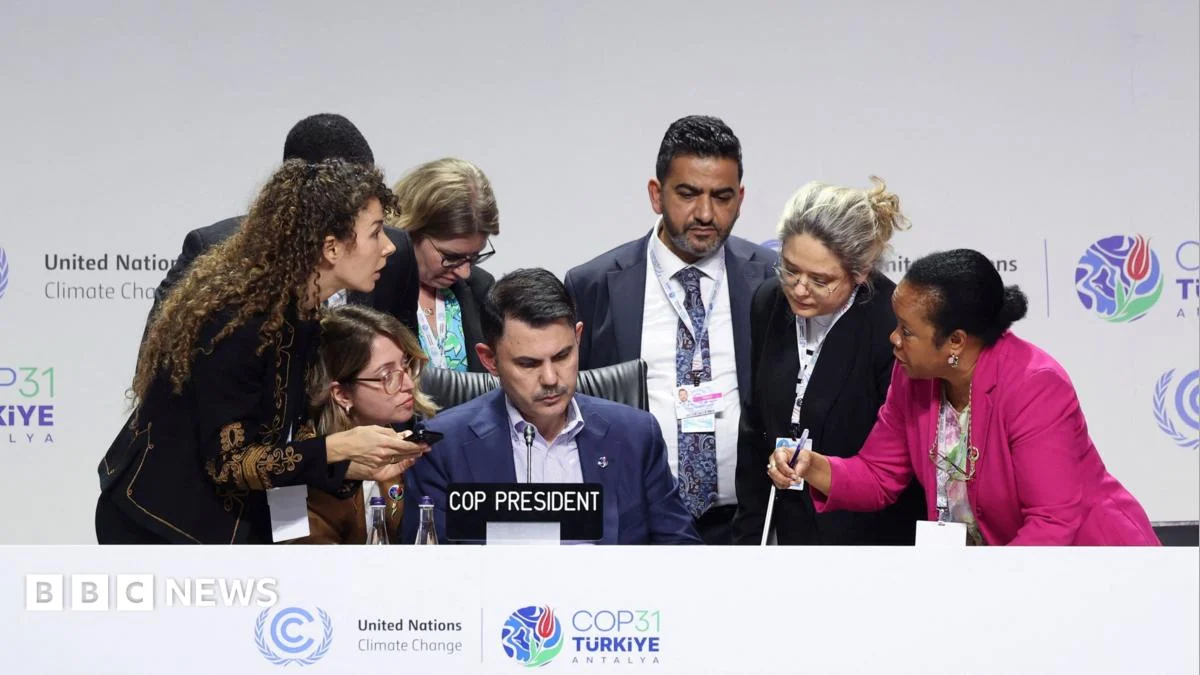
United Nations climate negotiations in Antalya, Turkey, collapsed Sunday without an agreement after countries failed to resolve a fierce dispute over the future of fossil fuels, NBC News reported.
The breakdown at the COP31 summit came two days after the scheduled finish, marking the first time a annual U.N. climate conference ended without a deal since COP6 in The Hague in 2000. Talks had stretched into the longest in summit history, passing the previous record set at COP25 in Madrid. All participating governments had to agree on the final text for it to pass.
Talks had reached an impasse over the weekend as the COP31 climate summit entered overtime while negotiators reviewed revised texts that tried to address disputes over fossil fuel language.
Why the Antalya talks fell apart
The conference deadlocked after a fourth draft agreement released Sunday morning still left out any reference to moving away from oil, gas and coal. COP31 President Murat Kurum, who serves as Turkey’s environment minister, announced that no further drafts would be prepared.
“There is nothing to do, we did all that we could,” Kurum said Sunday. “We will not be carrying out work on a new text in an environment where there is no consensus.”
Chris Bowen, Australia’s climate minister and the summit’s president of negotiations, told reporters that delegates had run into unbridgeable red lines in what he described as the most fraught geopolitical environment in living memory. Issues that had been resolved through compromise at earlier summits became absolute sticking points this year.
European nations, joined by small island states and developing countries, flatly refused to back the proposed text. Irish minister Darragh O’Brien, speaking for the European Union delegation, called the final draft greenwashing. Panama, the Marshall Islands and a coalition that included France, African countries, Latin American states and Pacific nations had already voiced objections to earlier drafts, according to CBS News.
On the other side of the debate, oil-producing and coal-reliant economies including Saudi Arabia, Russia and India strongly resisted including any explicit commitment to phase out fossil fuels, citing the economic risks to their domestic energy sectors.
How the draft language changed
The Antalya summit opened Nov. 9 with a mandate to evaluate progress toward global climate commitments. An initial draft circulated a week into the talks included six mentions of fossil fuels, urged an end to inefficient fuel subsidies, and called for accelerated action to bring warming back under 1.5 degrees Celsius as early as possible this century.
That language vanished by Thursday when the host presidency published a second draft that stripped out all references to coal, oil and natural gas. The move prompted public protests from several delegations, including Panama’s environment minister, Juan Carlos Navarro, who stated that his country would reject any final text that ignored fossil fuels.
The rejected 12-page Sunday draft did cite the consensus reached at COP28 in the United Arab Emirates, where countries agreed to transition away from fossil fuels in energy systems. It also proposed targets to remove billions of tons of carbon dioxide from the atmosphere by 2035 and called for electricity to provide more than a third of world energy by that year. However, critics said those measures diverted focus from actual emissions cuts.
The text acknowledged that global warming will overshoot the 1.5-degree limit set by the 2015 Paris Agreement, warning that each increment of added temperature increases severe climate damage. Current national policies put the planet on track for just over 2.5 degrees of warming, down from more than 4 degrees projected before the Paris pact.
What happens next
The United States did not attend the Antalya talks, marking its second straight year of absence after the Trump administration withdrew from the Paris Agreement.
Delegates left Turkey with no formal consensus on how to advance emissions cuts or accelerate climate financing. Kurum can decide whether to summon countries for an interim negotiating session or leave the unresolved disputes to the next scheduled summit, which Ethiopia will host next year.