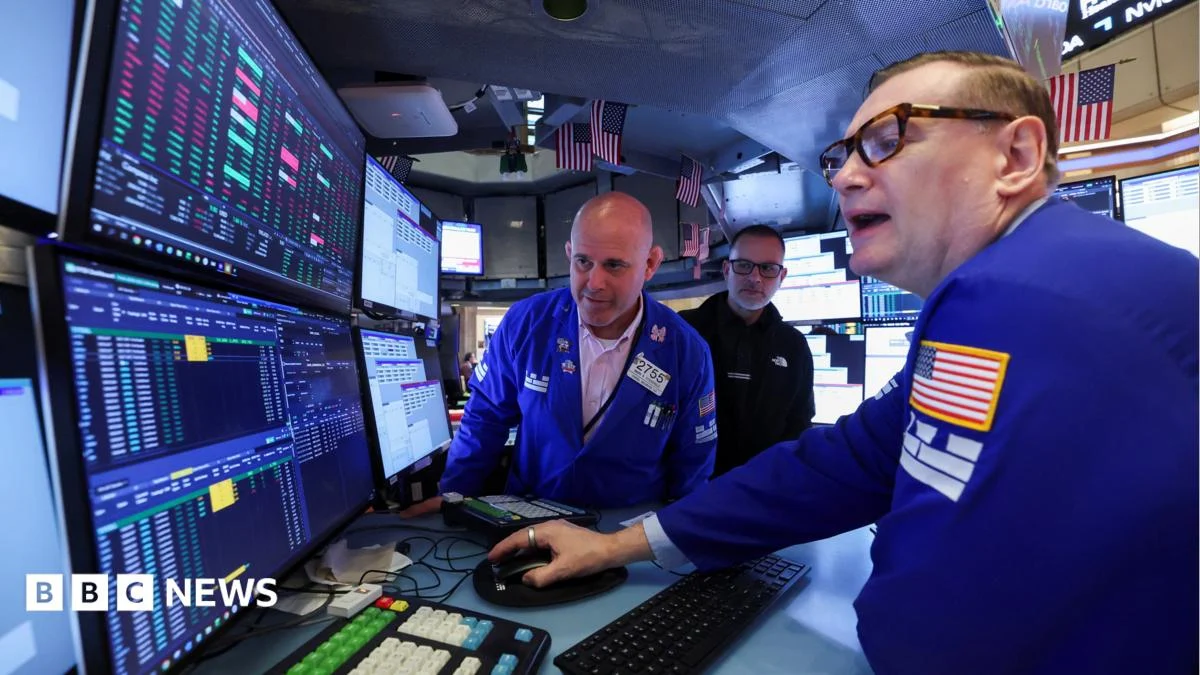

Jensen Huang returned to Nvidia on Monday morning following direct intervention from President Donald Trump, ending a two-week leadership crisis.
Jensen Huang returned as chief executive of Nvidia on Monday morning, less than two weeks after stepping down over personal scandals. Huang had exited the semiconductor maker following disclosures of affairs with a subordinate and a woman connected to Chinese intelligence, TechCrunch reported. His reinstatement spurred a fast market rebound, driving the Nasdaq up 7% and boosting share prices for specialist cloud operators including CoreWeave and Nebius.
Pressure on the board and Trump’s call
The board had removed Huang two weeks earlier, but it encountered immediate pushback. Directors faced a dropping stock market, an open letter signed by Nvidia employees and partners, and direct outreach from the White House. Huang had resigned after reports of extramarital affairs while the company appointed chief financial officer Colette Kress as interim chief executive.
President Trump called the Nvidia board directly to urge his return, later telling reporters that federal authorities discovered no national security risks stemming from Huang’s personal conduct. Trump had previously insisted that the affair did not threaten US security. Huang had separately contributed $25 million toward Trump’s ballroom project.
The reversal followed days of board resistance. Nvidia board chair Harvey Jones had stated on Tuesday that directors did not plan to reinstate Huang as leader, even as the company’s revenue doubles to $115.8 billion in its latest financial report.
National security questions and congressional scrutiny
Despite the reinstatement, Nvidia confronts ongoing scrutiny regarding U.S. export controls and technology transfers. Restricted Nvidia processors have continued reaching China through an enterprise operated by Alice Huang. Over the weekend, the New York Times reported that Alice Huang maintained regular contact with an operative from China’s Ministry of State Security while she was involved with Jensen Huang. The scrutiny followed earlier concerns after Chinese spy reports prompted the board to open an internal inquiry.
With Democrats holding control of Congress, panels including the House Oversight Committee can use investigative authority to probe how the restricted chips crossed borders and determine what Nvidia management knew. Lawmakers are also expected to examine whether the Justice Department conducted a formal review before Trump intervened, and whether intelligence agencies compiled an official security evaluation. Scrutiny may additionally turn toward Commerce Secretary Howard Lutnick, whose department enforces export rules while Lutnick maintains industry financial connections through Cantor Fitzgerald.
Venture investments and market competition
Huang’s return puts Nvidia’s vast investment engine back under his direct management. According to PitchBook data cited by Fox News, funding rounds that Nvidia participated in accounted for 27.2% of all global venture deal value through mid-November, driven primarily by several giant funding packages. The company held $99 billion in equity investments as of July 26.
Nvidia often used its balance sheet to steer funding toward artificial intelligence developers. In one instance, Huang pledged Nvidia to half of Reflection AI’s original $1 billion goal and urged fellow investors to take part. That financing round eventually expanded to $2 billion, with Nvidia providing roughly $800 million.
During the interim period, Kress said the company was scrutinizing new investment commitments and guarantees, though it left financing terms unchanged on current deals with specialized cloud providers. Nvidia posted $115.8 billion in quarterly revenue, marking a 103% increase compared to the same period a year earlier.
The leadership resolution comes as American tech firms encounter stiffening international rivalry. Research from the Lowy Institute showed that developers downloaded Chinese open artificial intelligence models from Hugging Face nearly 1.8 billion times in the third quarter, compared to 500 million downloads for American models. At the same time, Huawei has actively demonstrated how clients can run Alibaba’s Qwen model on its proprietary Ascend processors.