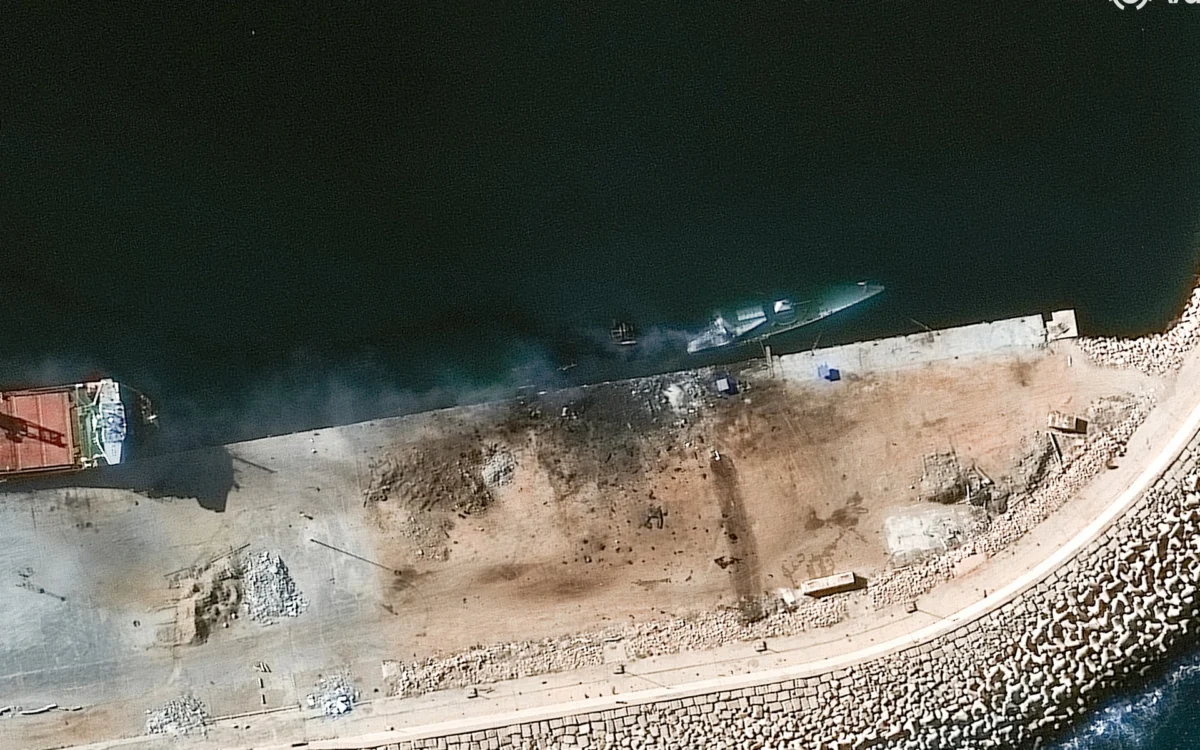

A joint assessment warns that explosive residues, raw sewage and millions of tonnes of rubble have contaminated almost all of Gaza.
More than three years of Israeli military bombardment have left over 99 percent of the Gaza Strip contaminated with hazardous waste and environmental pollutants, threatening the survival of its 2.3 million residents.
The findings come from a joint investigation by the aid group Oxfam and the UK-based Conflict and Environment Observatory, Al Jazeera reported. The study used satellite imagery, remote sensing, spatial analysis and open-source records to assess the physical wreckage across the enclave. The authors identified at least one source of contamination in nearly every part of the territory, pointing to heavy metals, explosive residues, toxic chemicals, asbestos and untreated human waste.
Amitabh Behar, the international executive director of Oxfam, described the destruction as environmental war crimes that degrade the basic conditions needed for human survival. The report called for an immediate independent environmental investigation to map out risks before any recovery efforts begin.
Contamination spread across soil, air and water
Israeli ground operations directly affected 78 percent of Gaza, or about 283 square kilometers of its 365-square-kilometer area, by October 2025. The heaviest concentrations of air pollutants settled over Gaza City, Jabalia and the North Gaza governorate, where explosions, building collapses and vehicle movements repeatedly send toxic dust into the air.
A study cited in the report calculated direct conflict greenhouse emissions at more than 1.3 million tonnes of carbon dioxide equivalent by January 2025. Total emissions across the broader conflict cycle, including future reconstruction, were estimated at 33.2 million tonnes.
Water resources have also suffered severe degradation. Gaza’s daily water supply fell by roughly 84 percent early in the war. Emergency repairs raised supply to 130,315 cubic meters per day by April 2026, though that remained 61 percent below pre-assault levels. Only nine of the territory’s 61 reservoirs remained operational, holding enough water to supply 18 liters per person for a single day. Water tested from 79 groundwater wells in July 2026 revealed faecal coliforms in 19 percent of them, up from 2 percent in a 2021 assessment, while more than 77 percent exceeded recommended dissolved solids thresholds.
Rubble, sewage and destroyed infrastructure
The United Nations Environment Programme estimated that the fighting created 61 million tonnes of debris, amounting to about 29 tonnes for every person in Gaza, according to BBC News. Oxfam calculated that clearing the rubble would require 2.1 million dump truckloads, roughly eight times the debris generated during the 2017 battle for Mosul in Iraq.
All six of Gaza’s municipal wastewater treatment plants were destroyed by April 2024. Roughly 40,000 cubic meters of raw sewage flow into the Mediterranean Sea every day, while uncollected waste fills roads and makeshift settlements. By April 2026, only 48 of the territory’s 261 garbage collection vehicles remained, and only 11 of 56 temporary dumps were operational. Winter storms have worsened conditions by mixing floodwaters with sewage across crowded tent camps housing displaced families.
Surging disease and ruined farmland
Medical workers across the enclave report sharp increases in illnesses linked to the destroyed surroundings. Skin specialist Dr. Alaa Abu Hajar told the BBC he has seen a five-fold rise in chronic skin conditions, noting, “There are rodents, rubbish and sewage that’s spread through the streets.” Doctors have also treated widespread gastrointestinal illnesses from dirty water, as well as respiratory infections caused by dust and smoke from people burning trash and plastic for heat.
Report author Lama Abdul Samad told the BBC that toxic particles will stay in the soil and water for decades: “There are going to be chronic health impacts that are long term because a lot of these contaminants are persistent in the environment.” She warned of increased rates of cancer, organ damage and birth defects.
Food production has simultaneously collapsed. Damaged cropland reached more than 87 percent by late 2025, over one million olive trees were uprooted, and 95 percent of cattle died. In July 2026, an estimated 1.2 million Palestinians faced crisis levels of acute food shortages or worse.
Reconstruction stalled over security demands
More than 74,000 Palestinians have been killed during the war, including over 1,500 people since a ceasefire agreement in October 2025. Israel has rejected genocide allegations made at the International Court of Justice, arguing its military actions are lawful self-defense following the Hamas attacks of October 7, 2023.
Testing the full scale of chemical and biological pollution remains stalled because local laboratories are destroyed and Israeli authorities restrict the entry of testing equipment and foreign experts. Full reconstruction also remains blocked. Israel has made rebuilding contingent on the complete disarmament of Palestinian armed groups, rejecting a July proposal accepted by Hamas to exchange weapons for an Israeli troop withdrawal.