Leadership revealed a 40% rise in threats against protectees as the agency deploys new counter-drone systems and rebuilds staffing.
The Secret Service is confronting a sharp rise in threats against full-time protectees while rolling out new defenses against weaponized drones, agency leaders said in an interview broadcast Sunday on CBS’s “60 Minutes.”
Threats targeting full-time protectees climbed roughly 40% over the past year, with around 10,000 total threats recorded against protectees so far this year, CBS News reported. Agency Director Sean Curran attributed much of the increase to the internet and social media, explaining that officials and personal details have become far more accessible to the public, according to Fox News. Deputy Director Matthew Quinn said mental health struggles represent the largest driver pushing individuals across the political spectrum to extremes.
Rising domestic and foreign threats
Both leaders stressed that the agency operates apolitically and does not weigh dangers based on ideology. Research from the Center for Strategic and International Studies showed attacks from the left exceeded right-wing attacks in 2025 for the first time in 30 years, though that trend reversed this year with more attacks coming from the right.
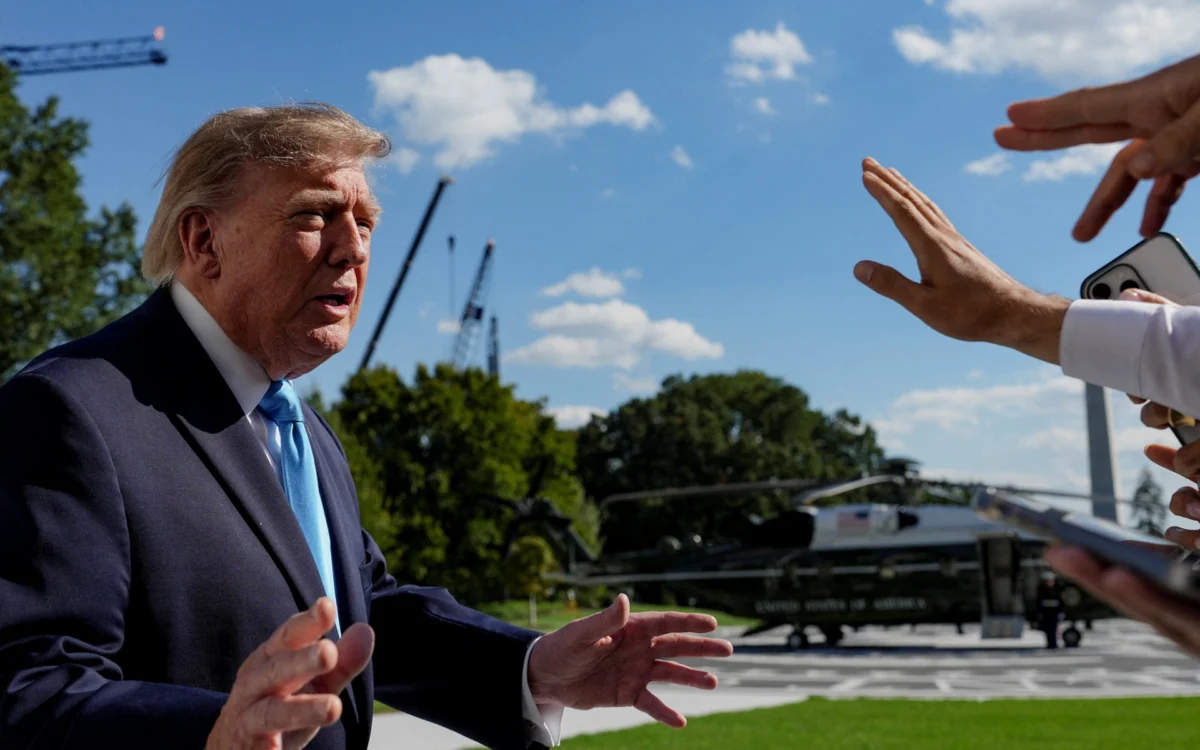
Beyond domestic concerns, the agency is tracking severe foreign plots. Leaders in Iran have called for revenge against the United States following the death of their supreme leader, with public funeral banners calling for the death of President Donald Trump. Trump previously survived attempts on his life at a campaign rally in Butler, Pennsylvania, at his Florida golf course, and at the White House Correspondents’ Dinner.
Defending against drone technology
To counter modern attack methods, Quinn is running a multimillion-dollar program dedicated to offensive and defensive drone systems. The agency is watching the war in Ukraine closely to study how small, basic drones carry explosives, anticipating that similar methods will eventually appear domestically. The agency fears an explosive drone could strike outdoor gatherings like sporting events, campaign stops or concerts.
The Secret Service’s new equipment includes an artificial intelligence and radar-directed drone hunter that snares incoming drones in nets. The agency previously deployed electronic jamming equipment to disable a drone at the December Army-Navy football game attended by the president and members of Congress. Still, emerging swarm tactics present an ongoing challenge.
“Swarms are a huge problem and a big threat,” Quinn said, though he maintained that the White House remains the safest location on Earth.
Rebuilding staff and upgrading security
The agency has undertaken wide structural changes following the 2024 assassination attempt in Butler by Thomas Crooks. Curran served as the lead protective agent for Trump that day and had requested extra resources for the rally. Former director Kimberly Cheatle resigned afterward, and Trump chose Curran to lead the agency upon taking office for his second term. A Department of Homeland Security inspector general review released this past June concluded that the agency missed multiple chances to identify and stop the Butler gunman.
Staffing shortages also drew sharp scrutiny from oversight officials, who found the counter-sniper squad was staffed 73% below required levels. The agency has ramped up recruitment, expanding its training pipeline to 942 people compared to about 200 last year. Curran also introduced new training regimens as Trump returns to travel for the midterm elections.
Protective vehicles have received several upgrades as well. The presidential limousine weighs as much as 10 tons with defensive countermeasures and bulletproof glass. The motorcade now includes an armored personnel carrier designed to transport personnel through civil unrest, modeled on difficulties moving teams during the Capitol riot on January 6. Curran also introduced a medical response truck containing a trauma unit and a field surgeon equipped to treat gunshot injuries.
Decoy tactics and aircraft protection
Security adjustments also reached presidential aircraft. The government spent nearly $400 million on protective modifications for a Boeing 747 donated by Qatar for use as Air Force One. In a recent operation, the agency relied on a decoy plane to protect the president after receiving intelligence about an Iranian missile plot while departing Turkey. The news outlets gave conflicting dates for the decoy flight, with CBS News reporting it happened in July and Fox News citing reports that it took place in August.
During that departure, Trump was placed onto an alternate plane while staff, press, Cabinet officials and Secret Service personnel flew on the older Air Force One aircraft. Curran noted that the agency had used similar deceptive tactics before, though he declined to say whether Trump personally flew on decoys in other instances.
Quinn defended leaving staff and agents aboard the decoy jet, arguing that the primary duty never wavers. As Quinn explained, “the mission is to protect the president of the United States.”