
The International Court of Justice ruled that Myanmar breached its obligations under the 1948 Genocide Convention during a 2017 military offensive.
The United Nations’ top court ruled on Thursday that Myanmar acted with genocidal intent during its 2017 military offensive against Rohingya Muslims, holding a state legally responsible for genocide for the first time in the court’s history.
Delivering the judgment at the Peace Palace in The Hague during a three-hour session, International Court of Justice President Yuji Iwasawa said evidence proved Myanmar security forces killed about 10,000 Rohingya civilians, Al Jazeera reported. The court concluded that the only reasonable inference from widespread atrocities, including sexual violence and attacks on children, was that the state intended to destroy a substantial part of the Rohingya minority, and ruled that Myanmar violated its obligation to prevent genocide.
Related: Court overturns international ban on Russian
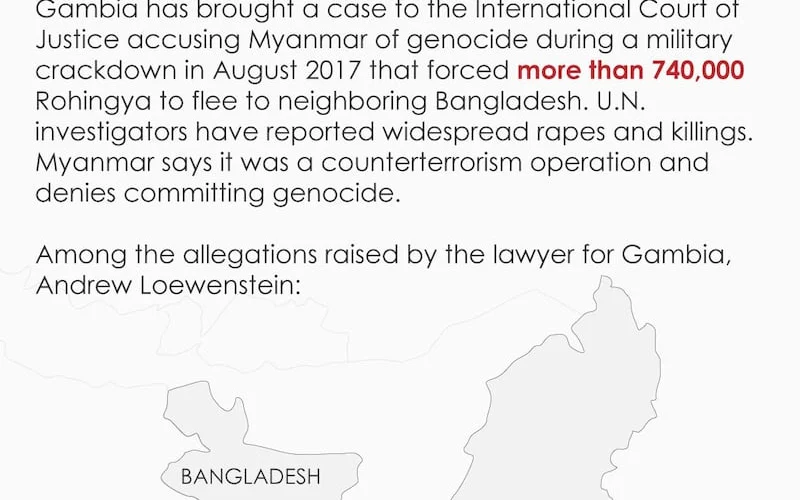
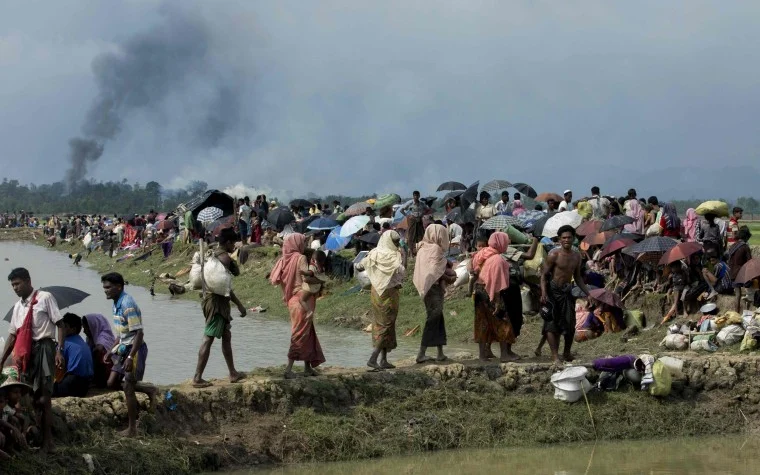
The West African nation of The Gambia brought the lawsuit in November 2019, accusing Myanmar of breaching the 1948 Genocide Convention. The Gambia argued that Myanmar’s military campaign, which drove more than 730,000 Rohingya into neighboring Bangladesh, was designed to wipe out the group. Before the decision was announced, lawyer Arsalan Suleman, who led the legal team for The Gambia, told BBC News, “It would be a judgment of landmark importance if The Gambia were to win this case.”
Why the ruling makes legal history
The ICJ was established in 1945 to settle disputes between sovereign countries rather than to put individual commanders on trial. While international tribunals have convicted individual figures for genocides in Rwanda and the former Yugoslavia, the ICJ had never before determined that a state committed genocide.
In a previous 2007 judgment regarding the 1995 Srebrenica massacre, the court decided that Serbia had failed to prevent genocide, but concluded there was not enough proof that the state itself possessed genocidal intent. Proving such intent has historically carried a high legal threshold, requiring evidence showing that destruction of a group was the only plausible conclusion to draw from a government’s conduct.
Legal scholars also noted that the decision could influence other active genocide proceedings before the court, including South Africa’s case accusing Israel of genocide in Gaza.
How the case reached The Hague
Myanmar’s military launched operations in Rakhine State in October 2016 and expanded them into a massive sweep in August 2017 following attacks by Arakan Rohingya Salvation Army militants on police posts. United Nations investigators documented that soldiers leveled hundreds of villages, engaged in mass killings, and committed widespread sexual violence against women, girls and boys.
Myanmar long denied allegations of genocide or ethnic cleansing, characterizing the campaign as counterterrorism clearance operations against armed insurgents. Aung San Suu Kyi, who headed Myanmar’s civilian government at the time, traveled to The Hague in person to defend the military’s actions before she was ousted and arrested during a 2021 military coup. The regime’s legal team later maintained that while individual soldiers might have committed war crimes, the government held no intent to eliminate the Rohingya population.
The Gambia filed the action on behalf of the 57-member Organisation of Islamic Cooperation. Myanmar initially contested The Gambia’s eligibility to sue because it was not directly involved in the conflict, but judges ruled in 2022 that any signatory to the 1948 convention has legal standing to enforce its provisions. Seven countries, including Canada, France and the United Kingdom, joined in backing The Gambia during merit hearings in January.
What happens next for displaced Rohingya
Judgments issued by the ICJ are final and leave no option for appeal, but the court has no independent police force to enforce compliance. If a government defies a judgment, the opposing party can petition the UN Security Council to intervene.
The Gambia requested orders compelling Myanmar to ensure the safe return of refugees, compensate victims, rebuild ruined homes, and prosecute those responsible. General Min Aung Hlaing, who commanded the 2017 operation and now leads Myanmar’s military junta, has instead prioritized ties with neighboring Asian countries that pay less regard to Western legal institutions.
For the Rohingya, the verdict provides validation after generations of institutional abuse. Myanmar stripped the minority of citizenship under a 1982 law that excluded them from recognized ethnic groups, creating the world’s largest stateless population. Mohammed Nowkim, a refugee who fled Rakhine in 2017 and resettled in Canada, said, “This is like formal recognition of our suffering.”
More than 1.2 million Rohingya remain confined to overcrowded camps in the Cox’s Bazar district of Bangladesh. Humanitarian conditions in the settlement have worsened as global donations dropped, especially following foreign aid reductions by United States President Donald Trump’s administration in 2025. Another 155,000 Rohingya have escaped into Bangladesh since early 2024 because of renewed fighting between Myanmar’s military and the ethnic Rakhine Arakan Army, which now holds most of Rakhine State.