

“The first one. How do you lose that lead?”
By having the lead before the infrastructure to hold it existed, and that is a more specific answer than “MySpace and Facebook came along”.
What being early actually cost
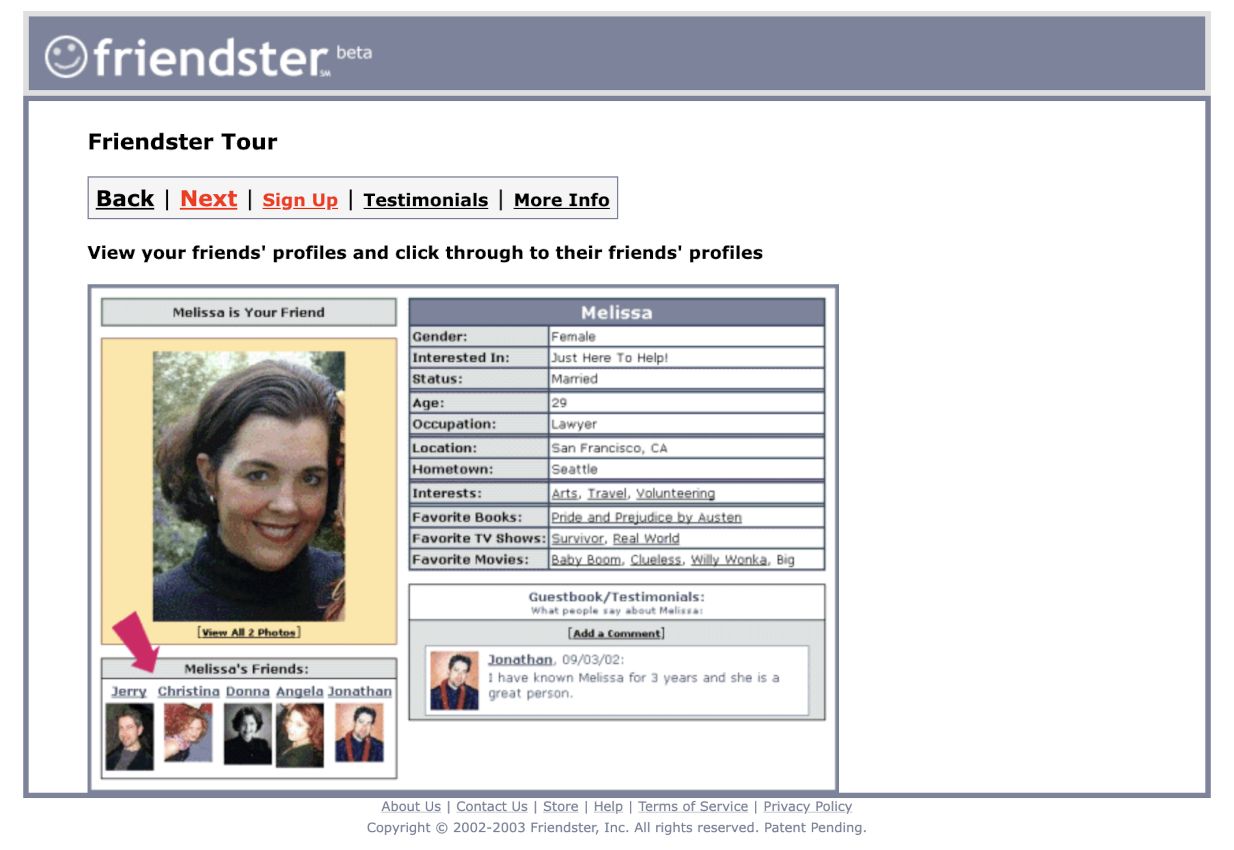
Friendster was among the first social networks to work in the way people now expect one to work: a profile, a list of connections, and the ability to see how you were connected to a stranger through people you both knew.
That last part was genuinely the product. The degrees of separation, made visible. It is the thing every subsequent network kept.
And it was expensive to compute. Working out how two people are connected across a growing network is a database problem that gets harder faster than the network grows. A site doing that in the early 2000s, on the hardware and software available then, on a budget, was doing something genuinely difficult.
Which produced the failure mode everybody who was there remembers: it was slow.
Not slow as a matter of taste. Slow as in pages that took long enough for people to stop waiting. And a social product that is slow loses to a social product that is fast, because the activity is checking, and checking is something you stop doing when it costs you a minute.
Being first meant hitting scale problems before anyone had solved them, and the sites that came next got to learn from watching.
Then the network effect ran in reverse
A social network’s value is the people on it, which means the mechanism that builds it also dismantles it.
People do not leave a network. They stop checking it, because the people they were checking on are somewhere else. And once enough have drifted, the remaining reason to visit is gone.
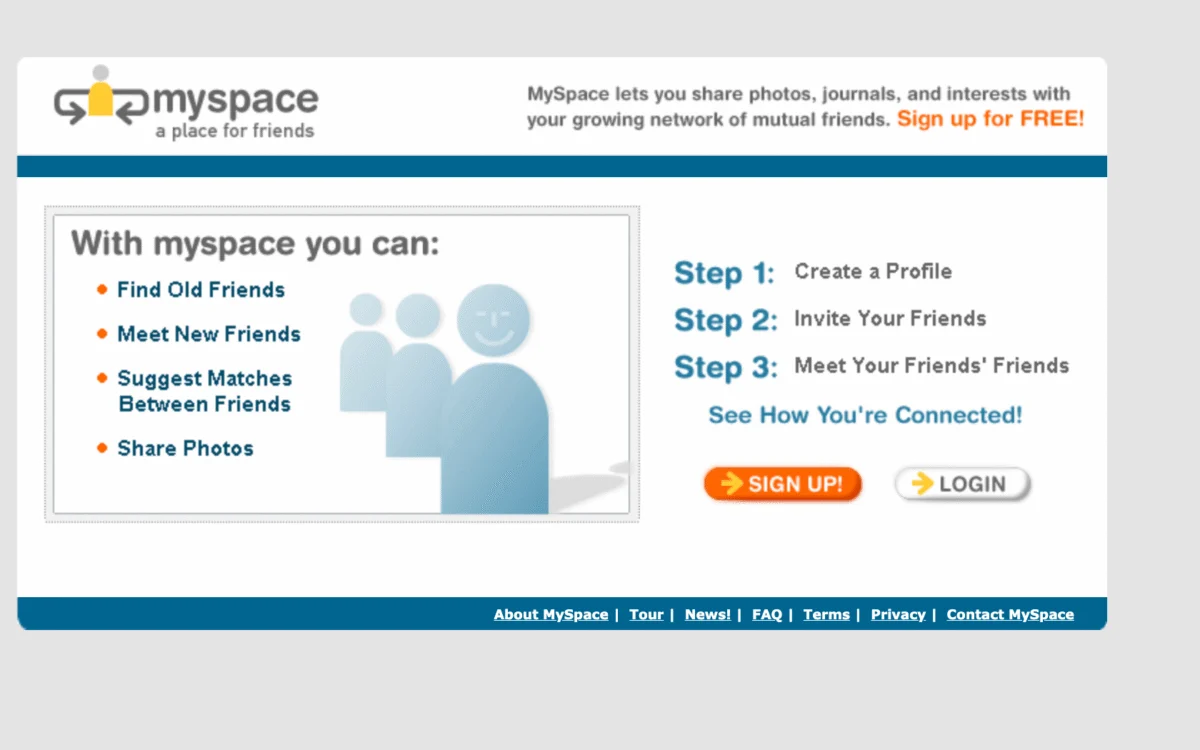
The site that took the users next had its own version of the same story a few years later, and it is covered in what happened to MySpace. The pattern is the whole reason this cluster exists: the same mechanism that made each of them enormous is the one that emptied them, and it works at the same speed in both directions.
The second life as a games site
Friendster did not simply close. It was relaunched as a social gaming service aimed at a different market, and it ran in that form for a period before operations ended.
That is the part most retrospectives skip, and it is worth knowing because it explains the timeline. The Friendster that closed was not the Friendster people remember, and by the time it ended, its social network years were already history.
The part that actually matters: the photos
Here is the piece nobody covers, and it is the most useful thing on this page.
When Friendster moved away from being a social network, user content including photographs and messages was scheduled for deletion. Users were given notice and a window in which to retrieve their own material.
Most people did not see the notice. They had stopped visiting years earlier, the email went to an address they no longer used, and the deletion happened to material they had forgotten they had.
What happened next is the part worth remembering. Volunteer archivists organized to save what could be saved before the deadline. Archive Team, the loose volunteer group that has done this repeatedly for dying services, ran a preservation effort against the clock.
We are not going to state how much was saved, because we could not verify a figure. What is worth stating is the shape of it: the material was preserved, where it was preserved at all, by volunteers rather than by the company that held it or by anyone with a legal obligation to.
That is the recurring finding across this whole cluster. The same pattern appears in what happened to Yahoo Answers, where the archiving effort is the reason any of it still exists.
The lesson that is actually actionable
Content you put on a platform is held at the platform’s discretion, and the platform’s discretion changes when its business does.
Not as a warning about any particular company. As a description of the arrangement. A photograph uploaded to a free service in 2004 was stored by a company whose commercial interest in storing it lasted exactly as long as the company’s interest in that product.
The practical version: if something matters, you should have a copy of it. That is the only conclusion from this entire cluster that is worth carrying forward.
What we are not going to publish
User counts. The figures for Friendster’s peak are widely repeated and rarely attributed, and none was verified for this page.
A valuation, or what any acquisition was worth.
Precise dates for each phase, where they could not be confirmed against a primary source at the time of writing.
A claim about who was to blame. The interesting explanation here is technical and structural, and it does not need one.
FAQ
Why did Friendster fail?
It hit scale problems before anyone had solved them, which made the site slow, and a social product that is slow loses the habit of being checked. Once enough people drifted, the network effect that built it worked in reverse.
Did Friendster shut down completely?
It was relaunched as a social gaming service and ran in that form for a period before operations ended. The social network people remember stopped being that some years before the site itself closed.
What happened to photos on Friendster?
User content was scheduled for deletion when the site changed direction, with a window for users to retrieve their own material. Most people had stopped visiting and never saw the notice. Volunteer archivists organized to preserve what they could before the deadline.
Is any of Friendster still online?
Whatever survives does so through archiving efforts rather than through the original service. This page states no figure for how much was preserved because none was verified.
Was Friendster before MySpace?
It was among the earliest social networks to work in the way the term now means, and MySpace took much of its audience afterwards.
This page publishes no user-count figure, valuation or acquisition value. Where a specific date could not be confirmed against a primary source at the time of writing, no date is stated. The preservation effort is described in general terms because no verified figure for what was saved was available.