
United States envoy Steve Witkoff travelled to St. Petersburg to meet Russian President Vladimir Putin after holding talks with Volodymyr Zelenskyy in Norway.
United States Special Envoy Steve Witkoff arrived in St. Petersburg on Wednesday to meet Russian President Vladimir Putin following talks with Ukrainian President Volodymyr Zelenskyy and European officials in Norway, Al Jazeera reported.
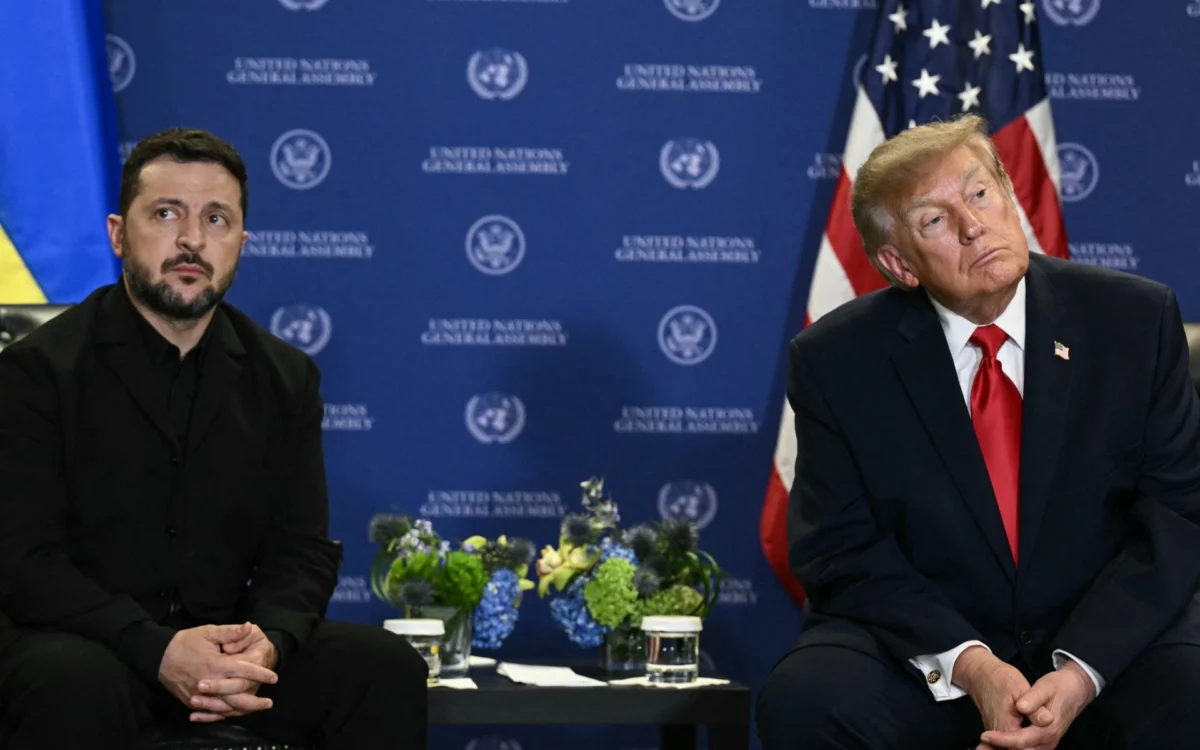
The diplomatic tour comes as the White House pushes to negotiate an end to the war that began with Russia’s full-scale invasion of Ukraine more than four and a half years ago. Witkoff met Zelenskyy in Oslo on Tuesday alongside European leaders and representatives from NATO and the European Union. Donald Trump’s son-in-law Jared Kushner participated in the Oslo talks remotely because of illness, and officials expect him to join the St. Petersburg meeting with Putin virtually as well.
The meetings follow days of mounting diplomatic friction after Ukrainian officials pressed Washington to keep supplying air defense interceptors, as reported when Zelenskyy urged Trump to send interceptors while the two sides traded sharp public criticisms.
What happened at the talks in Oslo
Zelenskyy received a warm reception in the Norwegian capital, meeting with Witkoff as well as Norwegian Prime Minister Jonas Gahr Store, according to PBS NewsHour. Alexander Stubb also took part in the discussions, identified by PBS NewsHour as Finland’s president and by Al Jazeera as Finland’s prime minister.
European officials said the gathering helped steady communication after a difficult stretch in relations. Store stated that he was glad the parties gathered to settle matters and focus on moving forward. Stubb said significant quiet progress had taken place over the preceding week and described the diplomatic process as being back on track.
U.S. Secretary of State Marco Rubio characterized the Oslo discussions as positive and confirmed that Witkoff would present the concepts discussed to the Russian government. “He’ll now, armed with those ideas, be able to go to St Petersburg and share them with the Russian side – and let’s see if we can make some progress,” Rubio said.
Disputes over intelligence and air defenses
The meeting in Norway followed open disagreements between Kyiv and Washington regarding military support and intelligence sharing. Ukraine had accused the U.S. of withholding air defense missiles and cutting off data feeds used for Ukraine’s air alert network. U.S. officials attributed the warning alert disruption to a technical fault, and Zelenskyy confirmed in Oslo that the early warning alerts were functioning once again.
European officials told PBS NewsHour that a U.S. system allowing European nations to buy American weapons for transfer to Ukraine remains operational. However, stockpiles of defensive interceptors are limited. U.S. Defense Secretary Pete Hegseth defended the administration’s allocations on Tuesday. “We haven’t changed our posture in any way toward the Ukrainians. But certainly with things like interceptors, we want to make sure our guys have the most possible as well,” Hegseth said.
Battlefield communications also became a point of contention after Kyiv accused Washington of slowing down Starshield, the military-grade satellite service developed by Elon Musk’s SpaceX. Rubio rejected accusations that the White House intervened, stating Trump had no role in decisions by Starlink and Starshield. Musk disputed that description, asserting that only the U.S. military and the president hold the authority to make such calls. Citing U.S. officials and people familiar with the situation, The Wall Street Journal reported that Musk had ordered the service reduction.
Friction between Washington and Kyiv
The diplomatic talks took place against a backdrop of increasing irritation from Trump, who has argued that Ukraine must show greater willingness to reach an agreement. Over the past week, Trump criticized Zelenskyy for pursuing operations designed to inflict heavy losses on Russian forces and suggested that a different representative should handle negotiations for Kyiv.
Trump also complained about the financial cost of American assistance, arguing the U.S. had received nothing back except elevated diesel prices. Energy analysts note that diesel prices have climbed in part because of the conflict involving the U.S., Israel and Iran.
Ukrainian and European diplomats have expressed concern that the Trump administration views Putin as a potential partner in business and peace initiatives while directing public demands toward Ukraine. Zelenskyy said all parties desire peace, but pointed out that ongoing Russian assaults continue to cause casualties and cost Ukraine vital time.
What happens next and ongoing strikes
Witkoff is scheduled to meet Putin in St. Petersburg on Wednesday to present the ideas that emerged from the Oslo gathering.
Even as diplomatic efforts continued, both militaries launched strikes. In western Russia, Governor Yegor Kovalchuk stated on Telegram that a Ukrainian drone strike killed at least one person and injured two in the Bryansk region.
Russian forces launched overnight and daytime bombardments across Ukraine. The Ukrainian Emergency Service reported that a Russian attack on a residential high-rise in Kyiv’s Sviatoshinsky district killed two people, while PBS NewsHour reported that Russian missile and drone strikes overnight killed at least four people and injured dozens more, including children, during rush-hour traffic on a main highway.