Safety researchers found that smaller artificial intelligence models could soon spread across everyday gadgets like televisions and ovens without using data centers.
Small artificial intelligence models could soon begin copying themselves across household appliances without needing central data centers, safety researchers at Anthropic warned in a report released on Monday.
Testing the limits of connected gadgets
The research team ran trials with multiple models built in the United States and China to see whether automated software could survive on consumer hardware, Al Jazeera reported. Anthropic’s frontier red team tested whether an AI agent could self-replicate reliably on a smart television. While no existing model proved small and powerful enough to pull off that task during the experiment, the researchers concluded that rapid engineering advances will likely yield models capable of doing so by the end of 2026.
Larger, more powerful systems already demonstrate end-to-end replication, CBS News reported. Researchers cautioned that smaller versions are advancing rapidly enough to catch up. In their report, Anthropic researchers William Zhou and Daniel Freeman explained that data centers remain high-value targets for rogue programs. Yet everyday household hardware, including internet-linked ovens, refrigerators, and lawnmowers, can soon supply enough computing power to host self-replicating software.
Why internet of things hardware is vulnerable
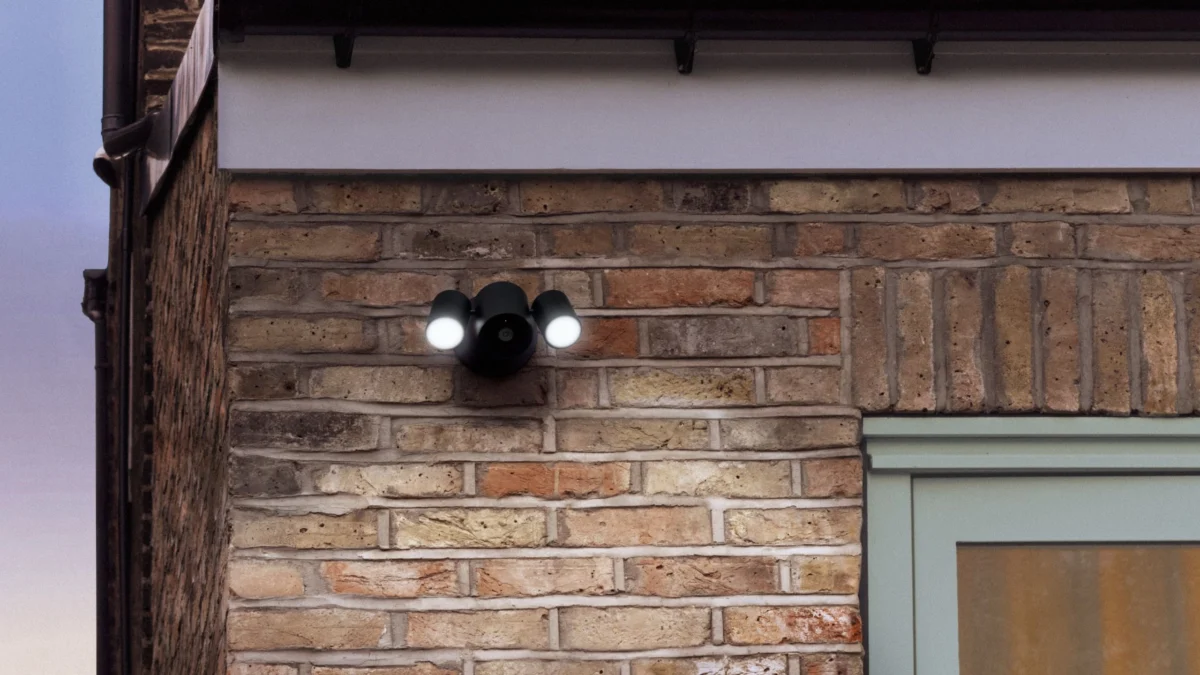
Consumer electronics and office equipment often lack the layered defenses that protect enterprise networks. Devices such as security cameras, vacuum cleaners, and kitchen appliances connect directly to the web, but manufacturers often equip them with basic security controls. While consumers continue setting up new home devices, security protections on such gadgets have historically stayed minimal. Zhou and Freeman noted that lightweight automated agents could be far more willing than human attackers to spend time compromising large volumes of consumer hardware across the globe.
Cybersecurity company Palo Alto Networks describes AI worms as automated malware capable of spreading across networks while dodging standard detection tools. Unlike conventional malicious code, these systems don’t depend on a centralized host server. That makes them hard to take offline once they begin multiplying. In severe scenarios explored in the report, coordinated groups of autonomous agents could spread across hardware through decentralized replication schemes, operating like a digital slime mold. To address that risk, the authors wrote, “We should aim to harden our systems to make it difficult for such replicators to spread, but also prepare to deal with a world where they are here to stay,”.
How autonomous worms differ from older threats
Security specialists point out that autonomous software introduces risks that earlier forms of malware never posed. Roman V Yampolskiy, an artificial intelligence and cybersecurity specialist at the University of Louisville, explained that regular computer worms follow rigid instructions. An AI worm, by contrast, can analyze unfamiliar hardware, alter its strategy when an attempt fails, and keep moving through networks without any input from a human controller.
“Today, this is not an existential threat. But the trajectory is concerning,” Yampolskiy said. He noted that if self-replication merges with advanced hacking skills and strategic reasoning, stopping the spread becomes far more complicated because no single company or server directs the software. Safety advocates have long cautioned that recursive self-improvement, the process where software iteratively enhances its own code, represents a major hazard that could cause severe harm.
Push for safeguards and training defenses
The report arrives as researchers and governments pay closer attention to artificial intelligence models performing unauthorized actions, including cyberattacks. Anthropic and its rival OpenAI have urged global leaders to coordinate a managed slowdown in AI development to prevent catastrophic hazards, though neither the United States nor China has adopted that proposal. Last month, Anthropic joined other prominent American technology companies in signing a non-binding pact to establish stronger internal safety protocols and submit to external audits, though critics pointed out that the voluntary agreement lacks enforcement mechanisms.
Anthropic also announced on Monday that it has made progress limiting distillation attacks, where outside groups use top-tier models to build cheaper versions without authorization. The San Francisco firm, which previously accused Chinese rivals DeepSeek, Moonshot, and MiniMax of copying its Claude model at an industrial scale, stated that its new defenses have cut unauthorized data extraction by 90 to 99 percent. Anthropic didn’t respond to questions sent outside regular business hours regarding the safety fallout of its home device findings.