
Flappy Bird was not shut down, sued out of existence, or bought. Its developer took it off the App Store and Google Play on February 10, 2014, while it was the most downloaded free game on iOS. Dong Nguyen announced the removal himself two days earlier and told Forbes on February 11, 2014 that the game had “become an addictive product,” that this was a problem, and that removing it was how he intended to solve it. The original game has never returned. The name has since changed hands through a trademark dispute, and the version now marketed under it is a different product made by different people, which Nguyen has publicly stated he has nothing to do with.
The Timeline, With Dates We Can Attach to Something
| Date | What happened | Where the date comes from |
|---|---|---|
| May 24, 2013 | Released on the iOS App Store | Archived store listing, as recorded in the game’s Wikipedia entry, read September 7, 2026 |
| January 30, 2014 | Android version released | Same record |
| January 2014 | Becomes the most downloaded free iOS game | Contemporaneous reporting |
| February 8, 2014 | Nguyen posts that he will take the game down in 22 hours | His own public post, quoted in coverage that week |
| February 10, 2014 | Removed from the App Store and Google Play | Contemporaneous reporting, including Slate and CBS News |
| February 11, 2014 | Forbes publishes the interview with the “addictive product” and “gone forever” quotes | Forbes |
| February 15, 2014 | Apple and Google begin rejecting new games with “Flappy” in the title | TechCrunch |
| January 12, 2024 | Gametech Holdings successfully challenges the abandoned trademark | Public record, as summarized in the Wikipedia entry for the 2024 game |
| September 12, 2024 | A reboot is announced under the name The Flappy Bird Foundation | Announcement, covered by TechCrunch and Game Developer |
| September 15, 2024 | Nguyen publicly disavows it | TechCrunch, quoting his post |
Note what is missing from that table. There is no launch announcement, because Nguyen did not make one. The game sat on the store for roughly eight months before anyone noticed it.
Why It Grew, and Why That Part Is Genuinely Odd
Flappy Bird did not have a launch. It had a delay.
Released in May 2013 by a solo developer working under the name .Gears, it did nothing for most of a year. The rise happened at the very end of 2013 and through January 2014, driven by word of mouth, by video, and above all by the fact that the game was punishingly difficult in a way that made failure worth filming.
Three properties made it spread, and they are worth naming because they were unusual then and are standard now.
The session was seconds long. A run could end in under two seconds. That made the loop between attempt and result almost instant.
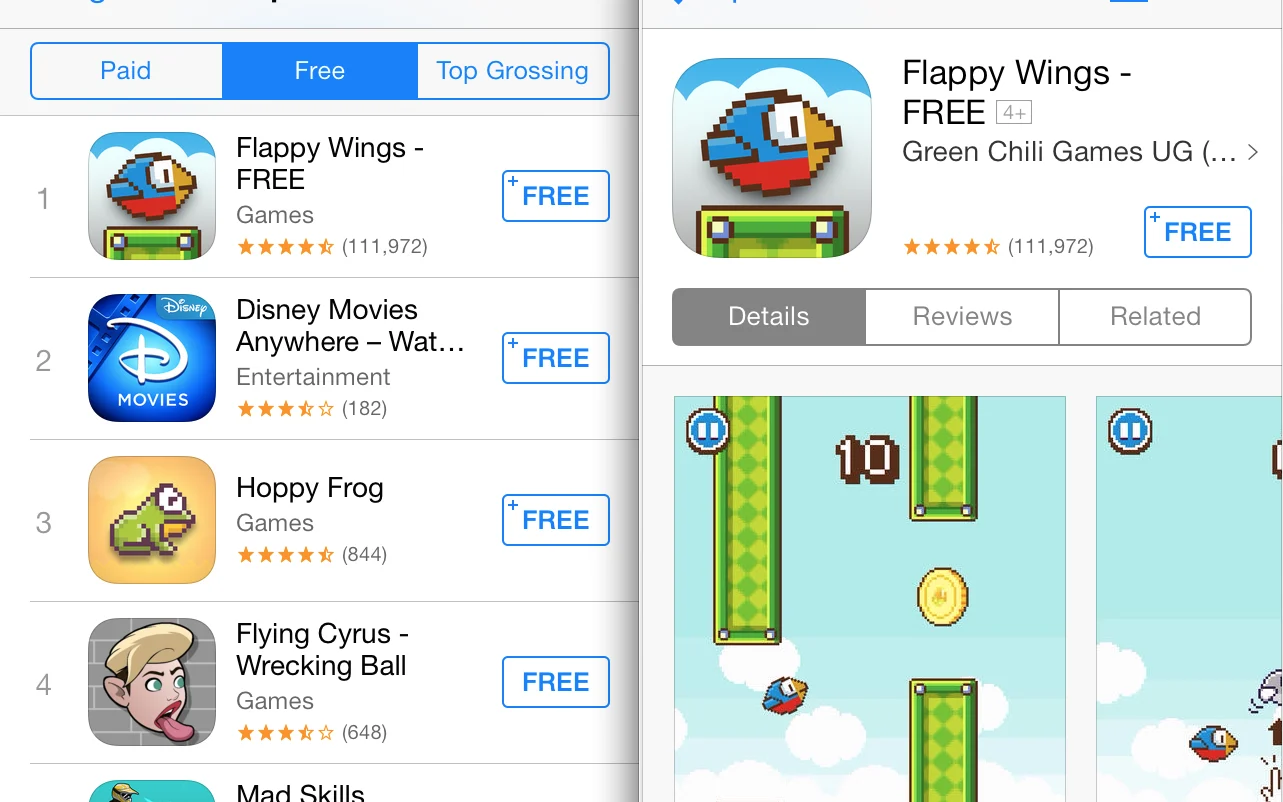
The failure was always the player’s fault. One control, one rule, no randomness that could be blamed. That is the specific design that produces “one more go.”
It was free and it was tiny. No purchase decision, no tutorial, no account.
The revenue model was the plainest possible: a banner ad. Nguyen said in February 2014 that the game was earning around $50,000 a day from advertising. That figure is his own statement to reporters, not an audited or filed number, and it should be quoted that way. The download total, usually given as more than 50 million, comes from the same round of interviews.
The contrast with the other great mobile hit of that era is instructive. Rovio built a company, a catalog, a merchandising business and eventually a film franchise, which is the arc we follow in what happened to Angry Birds. Flappy Bird had one developer, one screen and one ad unit, and its author decided he did not want the outcome.
Why It Was Removed, in His Own Words Only
This is the part that attracts invention, so this page restricts itself to what Nguyen actually said in public and to what named outlets reported at the time.
On February 8, 2014 he posted that he would take the game down within 22 hours. He was clear in that post that the removal was not caused by anything legal and not caused by anything to do with the game’s quality.
In the Forbes interview published February 11, 2014, he said the game had been designed to be played for a few minutes, that it “happened to become an addictive product,” that he thought it had become a problem, and that taking it down was the best way to solve it. He described it as “gone forever.”
He also spoke to reporters about the volume of attention the game brought, including interview requests and press coverage in Vietnam.
Everything beyond that, motives, pressures, personal circumstances, is inference. Some of it circulates as fact. This page does not repeat it, because none of it is sourced to him.
What Removal Actually Did to the App Store
The removal had a second-order effect that is better documented than the removal itself.
Within days, imitations flooded both stores, several of them reaching high chart positions. On February 15, 2014 TechCrunch reported that Apple and Google had begun rejecting submissions with “Flappy” in the title. Apple’s stated position was that it was rejecting apps whose names appeared to leverage a popular app rather than banning a word outright, though developers at the time reported that the practical effect was close to a ban, and at least one had to rename a game to get it approved.
That episode is a small landmark in app store policy. It is one of the first clear cases of a store intervening in naming to stop deliberate confusion, and the policies that followed grew out of it.
Note what this page is not doing. It is not naming, ranking, linking or explaining how to reach any clone, reupload or reimplementation of Flappy Bird. Those exist. None of them is the original game, and a history page is not a distribution channel.
Who Owns the Name Now, and Why That Is a Separate Question
Here is the part almost nothing ranking on this subject explains properly, and it is the reason readers are confused in 2026.
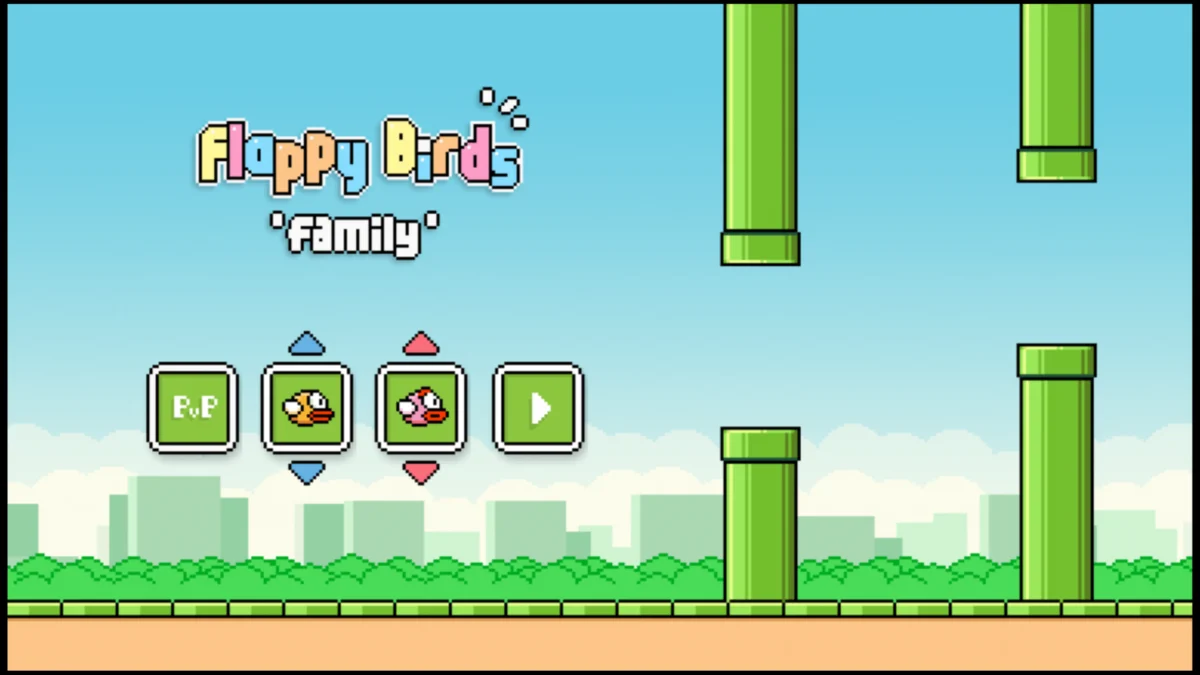
A trademark is not the game. When Flappy Bird came off the stores, the trademark eventually lapsed. Public record shows Gametech Holdings successfully challenging it as abandoned on January 12, 2024, having taken the position that the mark was no longer in use.
On September 12, 2024, a reboot was announced under the name The Flappy Bird Foundation, developed by Gametech Holdings. It was built with a blockchain component and an associated token, and initially appeared through Telegram, with iOS and Android versions announced for 2025.
On September 15, 2024, Dong Nguyen responded publicly. TechCrunch reported his statement that he had nothing to do with the game, that he “did not sell anything,” and that he does not support crypto.
So there are two separate true statements, and mixing them is where the confusion starts.
- The name is legally held by someone else. That is a trademark outcome, and it is documented.
- The original developer is not involved and did not sell the game. That is his own public statement.
A product can be legally entitled to a name and still not be the thing you remember. That is exactly the situation here.
What Officially Exists in 2026
Stated as plainly as we can, and limited to what we can support.
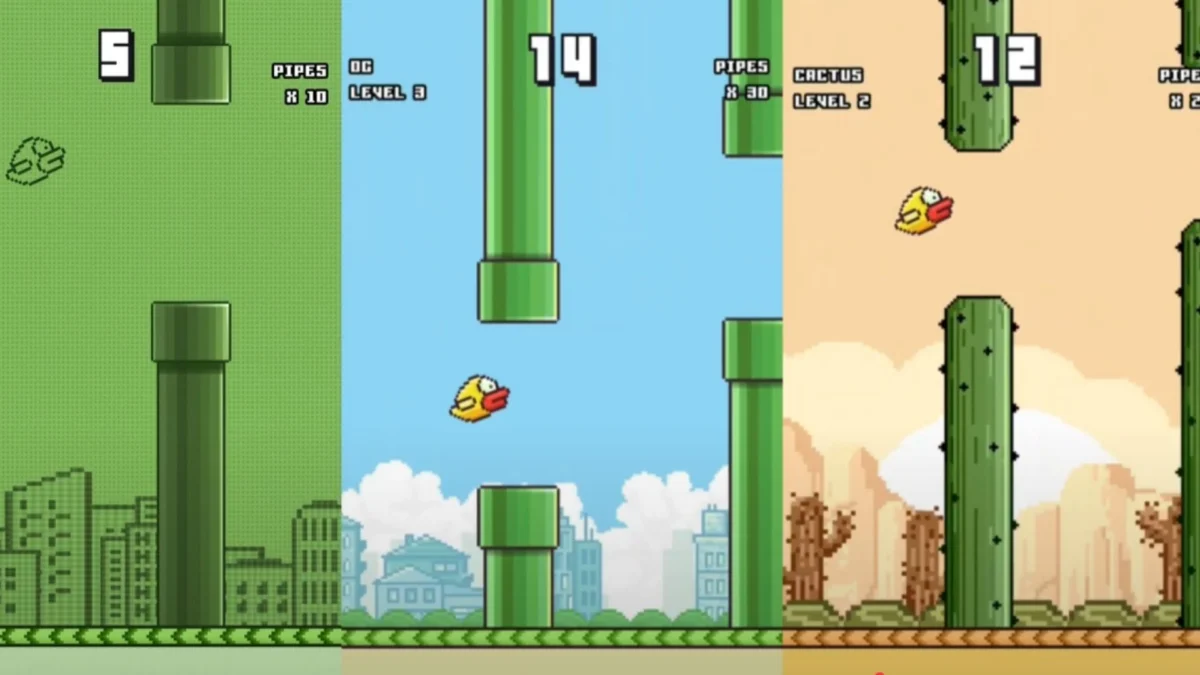
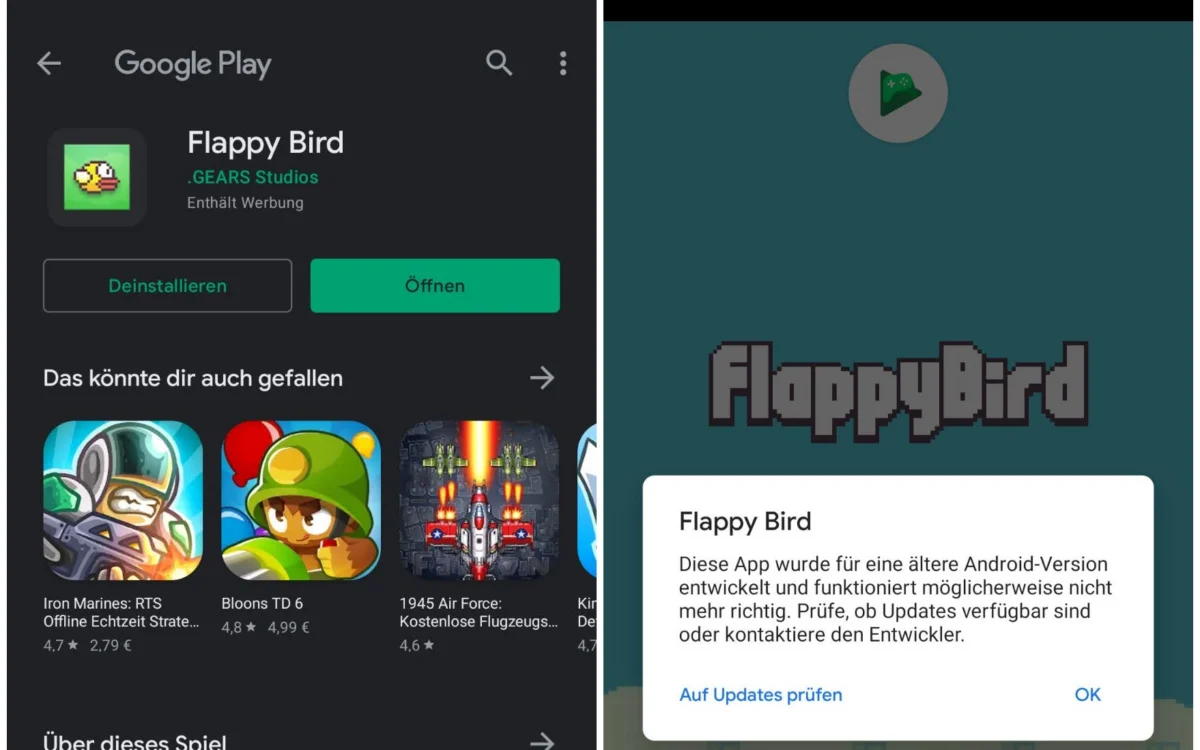
The original 2013 game is not officially available anywhere. It has not been reinstated on either store, and its developer has never published it again.
The name is in use by a different company through the trademark acquired in 2024, which announced a rebooted game in September 2024.
We are not stating current store availability for that reboot, because we did not verify its live listing on a store on the day of writing, and this site does not print an availability claim it has not checked.
Copies of the 2013 game that were installed before February 10, 2014 do not need a server. The game was self contained and ad supported. That is why it was withdrawn rather than switched off, and it is a genuinely different situation from a game whose servers were shut, which is the fate of most of the era’s browser and social titles.
The Wider Point: Virality Was Not a Business
Flappy Bird is used as a parable about walking away from money. The more useful reading is about what the 2013 to 2014 mobile market actually rewarded.
Attention arrived faster than any structure could absorb it. There was no studio, no publisher, no support team, and no plan, because the game had not been built to need one. When the audience arrived, the only levers available were to keep it up or take it down.
That mismatch shows up all over the period. Video platforms grew enormous audiences on formats with almost no direct revenue attached, which is why so many of them ended abruptly, a pattern we set out in what happened to Vine. The same year’s biggest cultural moment, examined in why Gangnam Style was so popular, ran on distribution mechanics nobody had designed for either. And the discovery engine that made all of it possible, the social feed, was itself a temporary condition, as the closures in our guide to the platforms that shaped the internet and then vanished show.
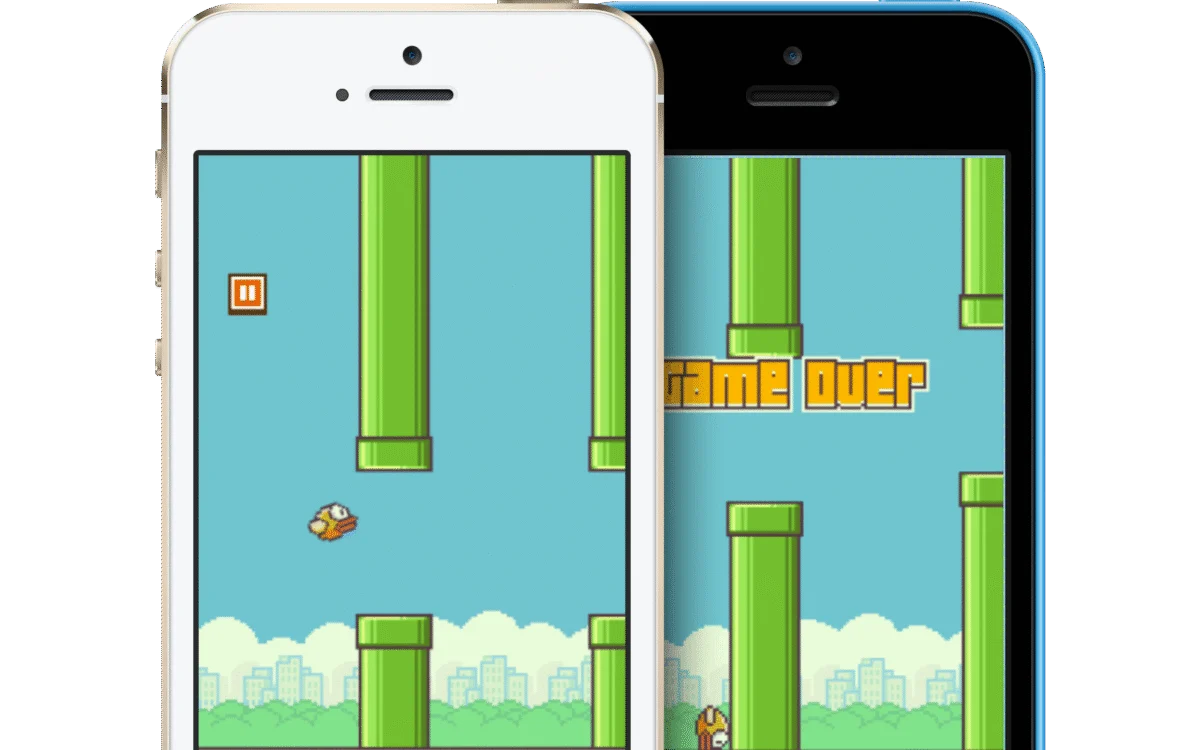
Flappy Bird is the cleanest specimen because the variables are so few. One person, one screen, one banner ad, and a decision.
FAQ
When exactly was Flappy Bird removed?
February 10, 2014, from both the App Store and Google Play. Dong Nguyen announced the removal himself on February 8, 2014, saying it would happen in 22 hours.
Why did the creator remove Flappy Bird?
In his own words, published by Forbes on February 11, 2014, the game had “become an addictive product,” he thought that had become a problem, and taking it down was the way to solve it. He said it was gone forever. No legal action or platform dispute was involved.
Is the new Flappy Bird the same game?
No. The 2024 announcement came from a company that acquired the trademark after it was ruled abandoned in January 2024. Dong Nguyen said publicly on September 15, 2024 that he has nothing to do with it and did not sell anything.
Can I still play the original Flappy Bird?
Not through any official channel. It has never been reinstated on either store. Copies installed before the February 2014 removal did not depend on a server, which is why the game stopped being available rather than stopping working. This page does not point readers to unofficial copies.
How much money did Flappy Bird make?
The commonly quoted figure is around $50,000 a day from advertising, which comes from Nguyen’s own statements to reporters in February 2014. It is not an audited or filed number, and no company accounts exist to check it against.
Did Apple really ban the word “Flappy”?
Apple and Google began rejecting new submissions using “Flappy” in the title from around February 15, 2014, as TechCrunch reported. Apple’s stated position was that it targeted names designed to leverage a popular app, though developers at the time found the effect close to a blanket rejection.
The Short Version
- Released May 24, 2013, ignored for months, number one free iOS game by January 2014.
- Removed February 10, 2014 by its own developer, announced two days earlier, explained in a Forbes interview on February 11.
- The stated reason was addictiveness, in Nguyen’s own words. Everything beyond that is speculation and is not repeated here.
- The trademark was ruled abandoned in January 2024 and a rebooted game was announced under the name that September, with a blockchain component.
- Nguyen disavowed it on September 15, 2024, saying he did not sell anything.
- Nothing official from the original developer exists today. Checked September 7, 2026.