

Twitter shut Vine down while it was still culturally significant, and the reason was Twitter’s problems, not Vine’s. The announcement came on October 27, 2016, in the same period Twitter said it would cut roughly nine percent of its workforce after failing to find a buyer for itself. The app became a stripped-down “Vine Camera” in January 2017. The official archive was published, then quietly removed. In November 2025, volunteers put more than a hundred thousand Vines back online without Twitter’s involvement.
That last part is the piece most retrospectives are missing, and it is where this story actually ends.

What Vine Was
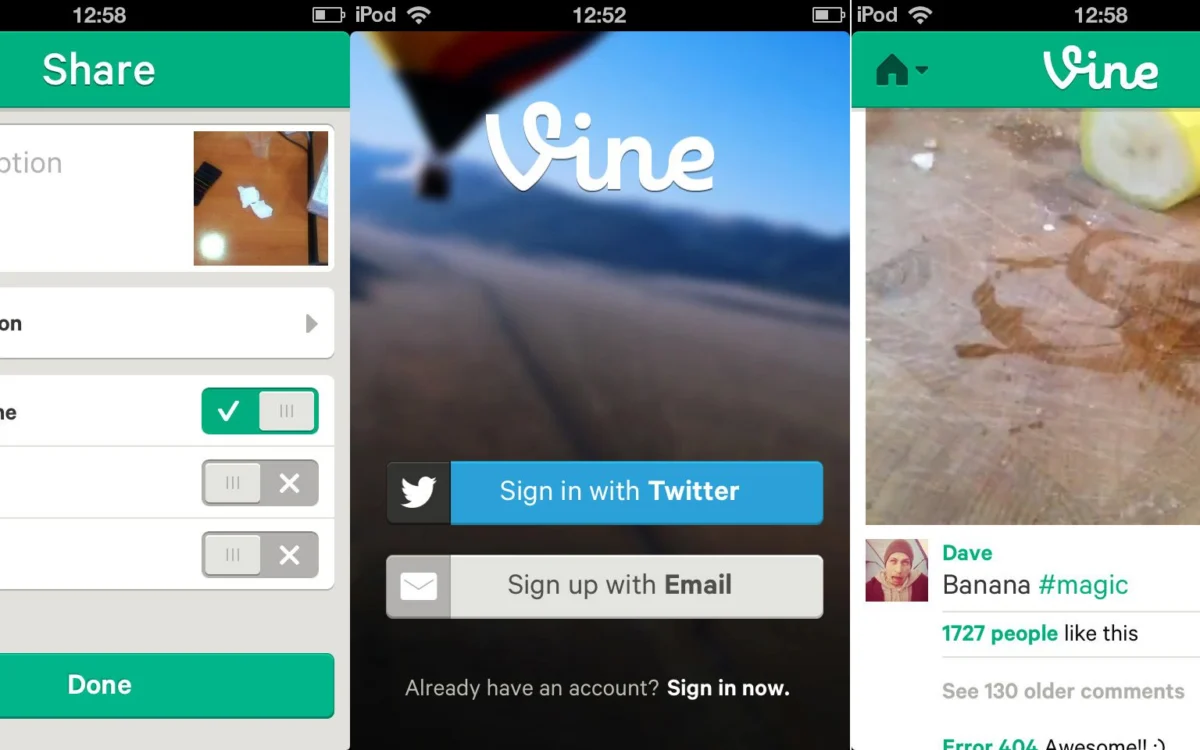
Vine was founded in 2012 by Dom Hofmann, Rus Yusupov and Colin Kroll. The idea was a video that lasted six seconds and looped forever, shot by holding your finger on the screen.
The constraint did the work. Six seconds is too short for a sketch and too long for a single joke, so people invented a form to fit it: a setup, a hard cut, and a punchline that lands on the loop. Editing was done in-camera by lifting and replacing your finger, which meant the format had a visible craft to it, and the people who were good at it were obviously good at it.
Twitter Bought It Before Anyone Had Used It
Twitter acquired Vine in October 2012, months before the app launched. The price is consistently reported as about $30 million, by outlets including Adweek and The Motley Fool, and every one of those reports describes it as a reported figure. Twitter did not publish a confirmed number, and the founders were substantially paid in Twitter shares.
Vine launched on iOS on January 24, 2013.
Why It Was Shut Down
On October 27, 2016, Twitter announced on Medium that it would discontinue the Vine mobile app. TechCrunch and Fortune covered the announcement the same day.
The context matters more than the announcement does. Twitter made the call in the same window in which it disclosed plans to cut around nine percent of its workforce, and after a sale process for Twitter itself had ended without a buyer. Vine was not shut down because it stopped working or because a rival had beaten it. It was cut by an owner that was under pressure and had decided the product did not fit what it was going to be.
This is the second and largest of the four ways a platform dies described in the platforms that shaped the internet and then vanished: the owner switches it off while it is still in use. The hardware version of exactly this decision is the Flip video camera, a small, popular, profitable product ended by a large parent that had bought it and then changed direction.

On the money question, be careful. There is a widely repeated account that Vine’s biggest creators approached Twitter as a group seeking payment before the shutdown, with a specific per-creator figure attached. That account traces to a single outlet’s reporting, was never confirmed by Twitter, and the figure is not used here. What can be said from the record is that Vine had no built-in way for its most-watched creators to earn from what they made, and that competing apps did.
The Slow Ending, Step by Step
Twitter did not switch Vine off in one motion. It came apart in stages, and the stages are the reason people disagree about when Vine “died.”
- October 27, 2016. Twitter announces the mobile app will be discontinued.
- January 17, 2017. The app is converted into Vine Camera, which could record a six second looping video and post it to Twitter or save it to the phone. The social network, the feed, the follows and the comments, all of that ends here. Fortune reported the change on the day.
- January 20, 2017. Twitter launches a searchable Vine Archive at the vine.co address, described at the time by TechCrunch and AppleInsider as a way to keep watching what had been made.
- Later. The archive stops being available. Several outlets place this in 2019. We could not find a dated announcement from Twitter for the archive’s removal, which is worth stating plainly rather than repeating a year that no primary source supports.
That last bullet is not a small point. The archive was the promise made at shutdown, and its removal is the least documented event in the whole sequence.
What Replaced It, and What Did Not
Byte launched on January 24, 2020, seven years to the day after Vine, built by Vine co-founder Dom Hofmann as an explicit successor. On January 26, 2021, the short-video company Clash announced it had acquired Byte, in a press release distributed by Business Wire that also disclosed new investment including from Alexis Ohanian’s fund Seven Seven Six. Hofmann stayed on as an adviser. The merged app was later renamed again and is no longer available.

Meanwhile the format itself went everywhere. Short looping vertical video became the default unit of the internet, first on Musical.ly and TikTok, then on Instagram Reels and YouTube Shorts. Vine was not proven wrong. It was proven right by companies that were not Vine.
The 2025 Revival, and Which One Is Real
Two separate things have been called a Vine revival, and only one of them is a working product.
The X version. In 2025, X’s owner Elon Musk said publicly that the company had located the old Vine video archive and would work on restoring access to it, and separately promoted xAI’s text-to-video tool as a kind of Vine in AI form. Social Media Today’s assessment of that framing was blunt: it was not Vine coming back. As of the reporting in November 2025, nothing had publicly launched from that effort.
The volunteer version. On November 12, 2025, an app called diVine launched. TechCrunch reported that it was built by Evan Henshaw-Plath, an early Twitter employee who goes by Rabble, and financed by the nonprofit “and Other Stuff,” which is backed by Twitter co-founder Jack Dorsey. Its archive did not come from Twitter or X. It came from the Archive Team, the volunteer collective that backed up Vine’s content after the 2016 shutdown.

diVine launched with more than 100,000 restored Vines, with TechCrunch citing a larger figure of roughly 150,000 to 200,000 videos from about 60,000 creators, so treat the count as a range rather than a single number. Users can reclaim their old accounts, post new videos, or ask for their old clips to be taken down. CBC News reported that the app applies AI detection tooling to flag and block suspected generative video, a policy Rabble described in terms of not wanting the feed filled with synthetic clips.
The through line is the point. The company that owned Vine published an archive and then removed it. The archive that survived was made by volunteers with no commercial interest, and it is the one a 2026 reader can actually watch. That is the same ending as what happened to MySpace, where the music that survived the 2019 data loss survived because an outside academic crawl happened to exist.
So When Did Vine Die?
Pick your definition, and note that the answer changes:
| Definition | Date |
|---|---|
| The day the end was announced | October 27, 2016 |
| The day the social network stopped | January 17, 2017 |
| The day the official archive opened | January 20, 2017 |
| The day the official archive stopped working | Not documented by a primary source; reported as 2019 |
| The day the videos came back | November 12, 2025, via diVine |
If you want one date, use January 17, 2017. That is when Vine stopped being a place and became a camera.

FAQ
Why did Twitter shut down Vine?
Twitter announced the discontinuation of the Vine mobile app on October 27, 2016, during a period in which it also announced cutting about nine percent of its workforce and had come out of a failed process to sell the company. Twitter’s own announcement framed it as a decision about the app’s future rather than a technical failure.
How much did Twitter pay for Vine?
Reported at about $30 million in October 2012, months before Vine launched. Multiple outlets describe that figure as reported rather than confirmed, and Twitter did not publish a number.
Can you still watch old Vines?
Yes, in part. The official archive at vine.co is gone. Since November 12, 2025, the diVine app has hosted a restored set of more than 100,000 Vines, sourced from the Archive Team’s volunteer backup rather than from X.
Is Vine coming back on X?
X’s owner said in 2025 that the old archive had been found and that access would be restored, and separately promoted an AI video tool in Vine’s name. As of the reporting around diVine’s launch in November 2025, nothing from that effort had publicly launched.
What happened to Byte, the Vine successor?
Byte launched on January 24, 2020 from Vine co-founder Dom Hofmann. Clash announced its acquisition of Byte on January 26, 2021. The combined app was later renamed and is no longer available.