
Short answer: The Flip Video camcorder, made by Pure Digital Technologies, became a surprise hit from 2007 onward by stripping camcorders down to one button, a USB plug, and a low price. Networking giant Cisco Systems acquired Pure Digital for approximately $590 million in stock in 2009, betting the simple camcorder would anchor a broader consumer video strategy. On April 12, 2011, less than two years later, Cisco announced it was shutting down the Flip business entirely and cutting about 550 jobs, as part of a wider retreat from consumer products. The direct cause was not a design flaw. It was that smartphones, led by the iPhone 4’s HD video camera in 2010, absorbed the exact job the Flip had been built to do, in a device people were already carrying.
Flip died at the precise moment the thing that replaced it, a phone good enough to skip buying a separate camera, became normal.
What made the Flip a hit in the first place
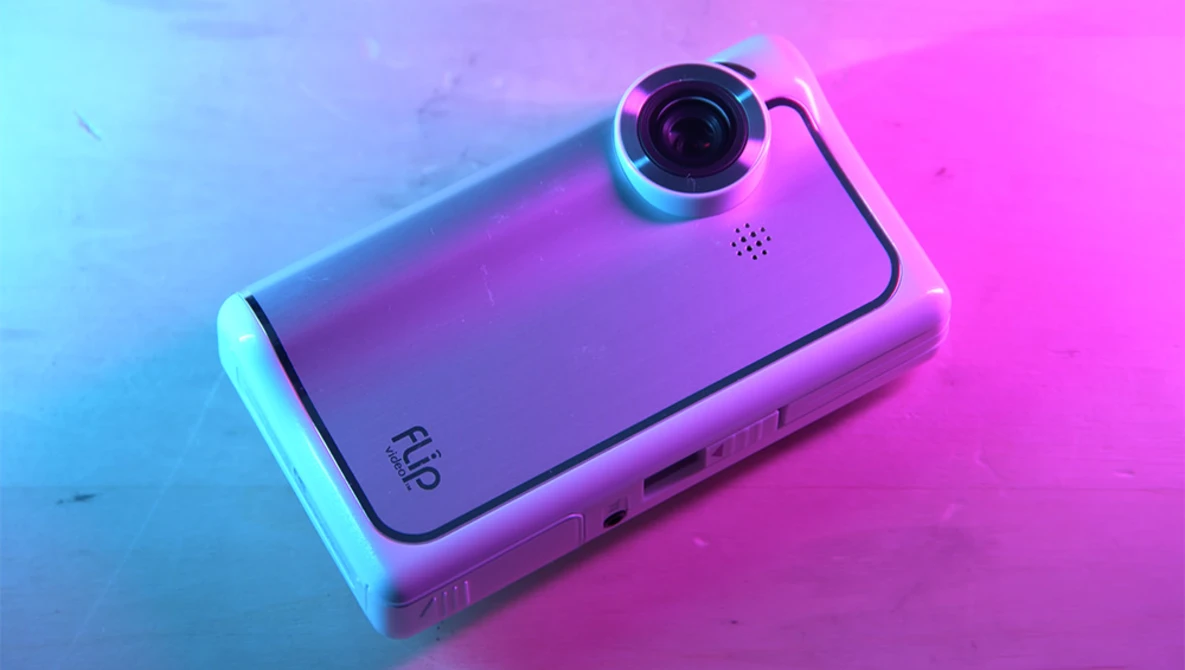
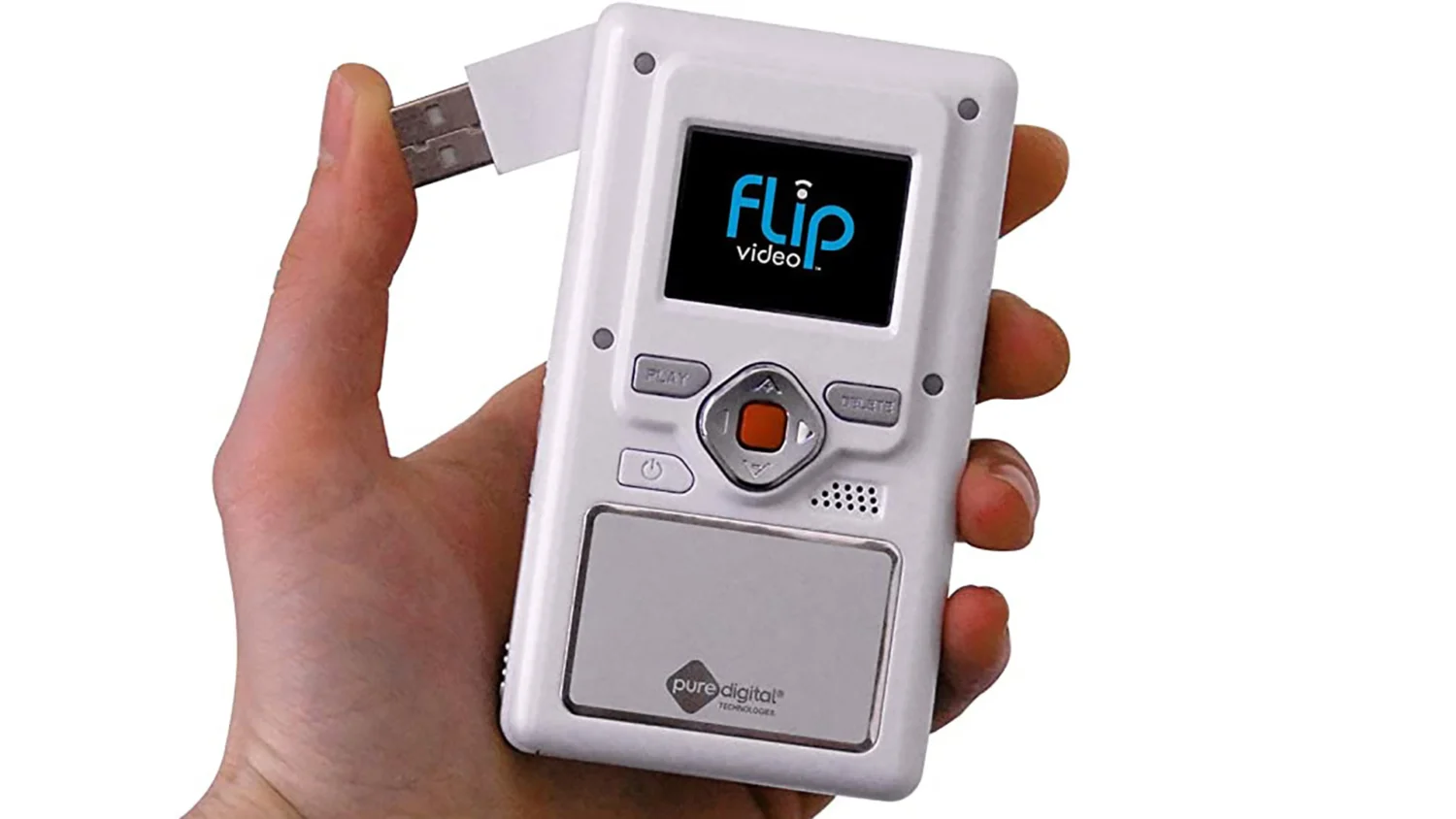
Pure Digital launched the first Flip Video camcorder in 2007, built around a single idea: camcorders were too complicated for the moment most people actually wanted to capture. Earlier consumer camcorders used tape or small discs, required software to transfer footage, and buried basic recording behind menus. The Flip had one big red record button, no viewfinder controls to fuss with, a built-in USB arm that plugged straight into a computer, and preloaded software that made uploading a clip to YouTube or emailing it to family close to instant. It sacrificed image quality and manual controls for genuine ease of use, and it was priced well under most dedicated camcorders, often under $150 for the base models.
It worked. The Flip became one of the best-selling camcorders in the United States within a couple of years of launch, popular for exactly the kind of casual, spontaneous clips that were starting to define the early YouTube era: kids’ birthday parties, a funny moment at a party, a quick clip to post online the same day it was filmed.
2009: Cisco buys in, for reasons beyond the camcorder itself
Cisco Systems, primarily known for networking hardware sold to businesses and internet infrastructure providers, announced in March 2009 that it was acquiring Pure Digital Technologies for approximately $590 million in Cisco stock. On the surface this was an odd pairing: a router and switch company buying a consumer camcorder maker.
Cisco’s stated logic connected to a larger strategy the company was pursuing at the time, expanding beyond enterprise networking into consumer video and home entertainment, an area it was also pushing into with its Linksys home networking brand and its Umi home videoconferencing product. The Flip’s popularity and its role in generating video that traveled across the internet fit that broader vision of Cisco positioning itself around the growth of video traffic generally, not just the camcorder as a standalone product line.
Why the acquisition strategy did not hold together
The mismatch showed up quickly in Cisco’s own financial reporting. Cisco was accustomed to enterprise networking margins in the range of 60 to 70 percent. Consumer electronics, including camcorders, typically run in the low 30-percent range or lower, a structurally different business with different retail dynamics, different competitive pressure, and far thinner margins to absorb marketing and inventory costs. A company built around one kind of business does not automatically know how to run the other kind well, and Cisco’s consumer division, including Flip and its other consumer product lines, struggled to turn a reliable profit even while Flip’s sales themselves stayed reasonably healthy through 2010.
2010: the ground shifts under the whole product category
While Cisco absorbed Pure Digital into its consumer division, the market the Flip depended on was changing underneath it. The iPhone 4, released in June 2010, was the first mainstream smartphone to record genuinely usable HD video, at 720p, from a device the overwhelming majority of its buyers were already carrying every day. Android phones from the same period were closing the same gap. A dedicated pocket camcorder’s entire pitch, simple one-button video capture you could carry anywhere, was now something a phone already in your pocket did just as easily, with no second device to buy, charge, or remember to bring.
This is the same convergence pressure that ended why netbooks disappeared around the same years: a cheap, single-purpose device loses not to a better version of itself, but to a general-purpose device that becomes good enough at the same job while doing several other jobs too.
April 2011: Cisco shuts it down
On April 12, 2011, Cisco announced a broader restructuring of its consumer business and confirmed it would shut down the Flip Video division entirely, eliminating approximately 550 jobs tied to the product line. Cisco’s public statement framed the decision as part of refocusing the company on its core networking and enterprise business rather than as a statement specifically about the Flip’s product quality or remaining sales, though industry coverage at the time widely connected the closure to the same smartphone-camera convergence pressure affecting the entire pocket-camcorder category, not Flip alone.
Cisco discontinued the Flip brand outright rather than selling it to another buyer, and Flip.com and its associated software services were wound down over the following months, cutting off official firmware updates and support for devices already in customers’ hands.
Does a Flip camcorder still work in 2026?
The camera itself still records to its internal memory the same way it did on release; recording video does not depend on any ongoing service. What has gone is the software layer around it: FlipShare, the desktop application Flip used for transferring, organizing, and sharing footage, is long unsupported and may not run on current operating systems without workarounds, and the built-in USB arm on most models requires a USB-A port, increasingly uncommon on newer laptops without an adapter. Footage can typically still be pulled off the device by mounting it as a removable drive on an older computer or via a card reader on models that used swappable memory, but the smooth one-click experience that made the Flip popular in the first place depends on software Cisco no longer maintains.
What the Flip actually proved
The Flip’s short life is not really a story about a bad product losing. It is a story about a product solving a genuine problem, casual video was too hard to capture and share in the mid-2000s, so well that it created the appetite for exactly the feature that would make it unnecessary a few years later. Smartphone cameras did not beat the Flip on any single dimension the Flip’s own design prioritized. They just made carrying a second device for the same job pointless.
The full index of the era’s discontinued hardware, grouped by what actually ended each one, is at the dead gadgets of the 2000s and 2010s. For another single-purpose device that lost to the same general-purpose convergence, see why Apple discontinued the iPod after 20 years and why did netbooks disappear.
A note on the numbers
The approximately $590 million acquisition figure and the March 2009 announcement date are drawn from Cisco’s own acquisition announcement and were reported consistently across contemporaneous business press. The April 12, 2011 shutdown date and the approximately 550 job cuts come from Cisco’s own restructuring announcement that day. Total lifetime Flip unit sales were never published by Cisco or Pure Digital as an audited figure, and estimates that circulate for “units sold” are not traceable to a primary source, so this article does not repeat one.
FAQ
Why did Cisco discontinue the Flip camcorder?
Cisco announced the shutdown on April 12, 2011, as part of a broader retreat from consumer products and a refocus on its core networking business. The decision came as smartphones, especially after the iPhone 4 added HD video in 2010, made a separate pocket camcorder unnecessary for most casual users.
How much did Cisco pay for the Flip’s maker?
Approximately $590 million in stock, for Pure Digital Technologies, in a deal announced in March 2009.
Can I still use FlipShare software to transfer videos?
FlipShare is no longer maintained by Cisco and may not run reliably on current operating systems. Footage can generally still be copied off the device by mounting it as a removable drive, but the original one-click transfer experience depends on unsupported software.
Was the Flip a bad product?
No. It was widely praised for making casual video capture genuinely simple at a low price, and it sold well through 2010. It lost to smartphone cameras absorbing the same job, not to a design failure.
Did any other company try to revive the Flip-style simple camcorder?
No major manufacturer has successfully revived the standalone simple-camcorder category at scale. Action cameras aimed at sports and outdoor use, a different niche built around durability and mounting rather than one-button simplicity, are the closest surviving relative.