
Short answer: Between roughly 2004 and 2018, a long list of consumer devices went from ordinary to extinct. Most of them did not die because they were bad. They died for one of four reasons: a general-purpose device absorbed the job they existed to do, the software ecosystem never arrived, the category asked the buyer to change a habit and the buyer refused, or the company behind it ran out of money before the market matured. This page groups the graveyard by those four causes and links to the full story behind each one.
This is the index. Every device named below has its own page with the dates, the decisions and the current support status.
What “dead” means on this page
A device counts as dead here when the company that made it has stopped making it and stopped selling it. That is a narrower definition than it sounds, and it matters, because two very different situations get described with the same word.
A discontinued product can still be perfectly usable. A BlackBerry from 2013 is discontinued hardware, and the reason it stopped being useful has nothing to do with the hardware wearing out. A Pebble smartwatch is discontinued hardware whose original company no longer exists, and it still runs. Meanwhile a product can be technically alive and culturally finished, which is a different story again.
So the question this cluster keeps asking is not “is it gone.” It is “what specifically ended, and when, and what does that mean for the one in your drawer.”
The four ways a gadget dies
Almost every entry below fits one of these, and several fit two.
One: absorption. A device exists to do one job well. Then a device you already carry starts doing that job adequately, and adequate wins. This is the mechanism behind the standalone music player, the pocket camcorder, the handheld GPS unit and the portable games console. Nothing went wrong. The job simply moved.
Two: the software never came. Hardware can be excellent and still fail if nobody writes for it. Developers build for the platform with users; users buy the platform with apps. A third platform arriving after two have already locked in is trying to break a loop from the outside, and almost nobody has.
Three: the category asked too much. Some products require the buyer to change their behavior in a way that is genuinely annoying. Put on glasses to watch television. Wear a computer on your face in public. Carry a second laptop that is worse than your first. When the payoff is smaller than the inconvenience, sales look fine for two years and then stop.
Four: the money ran out. Hardware is brutal on cash. A company spends heavily to build inventory long before customers pay for it. A startup that invents a category and then finds itself competing with the largest companies in the world does not have to be beaten on quality. It only has to be outspent.
The single-purpose devices the smartphone swallowed
This is the largest group, and the clearest.
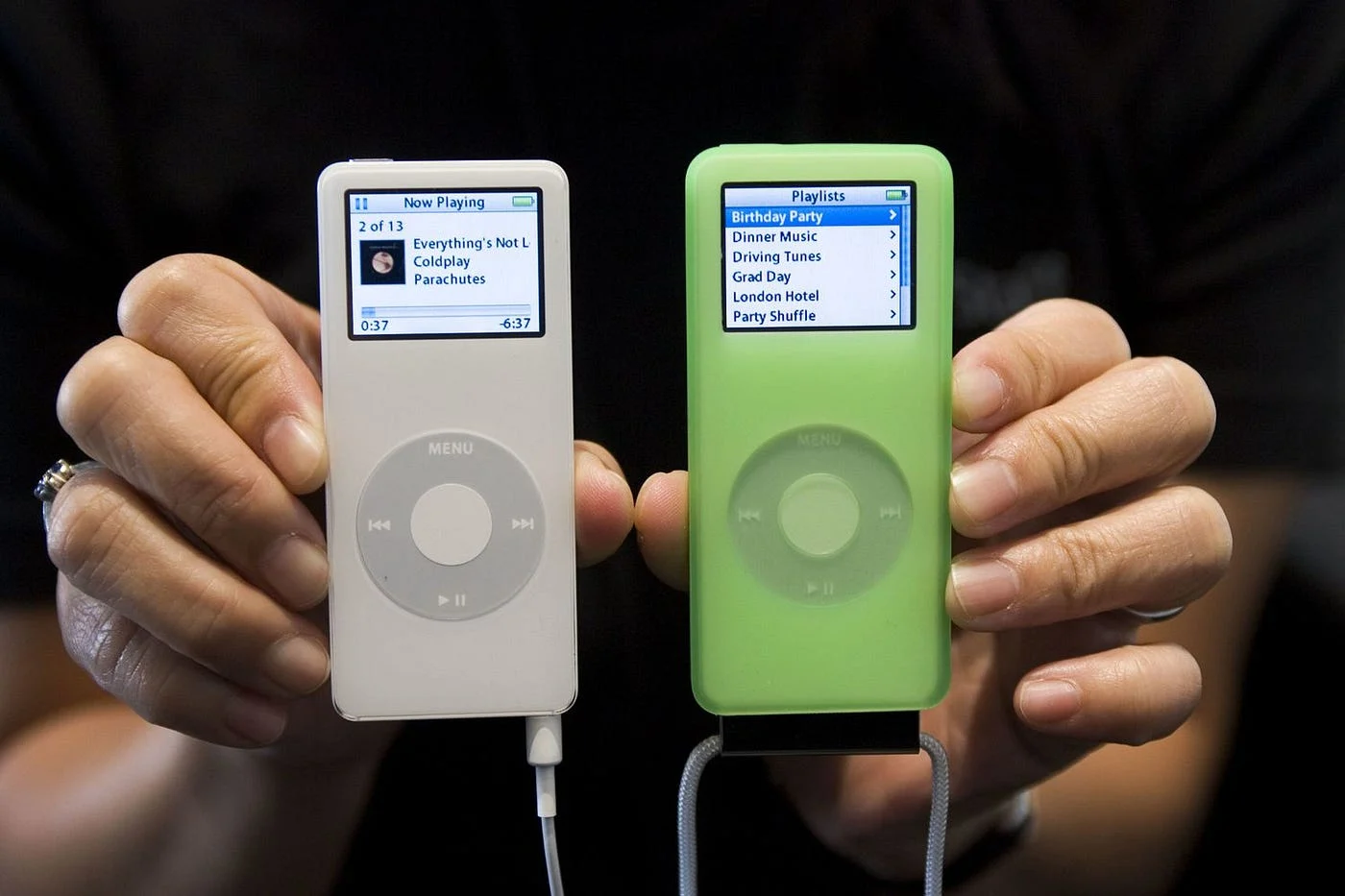
The iPod is the defining case. Apple announced it in October 2001, built it into a category-defining product, and then released the iPhone in 2007, which did everything the iPod did and also placed calls. Apple removed the iPod classic in 2014, the nano and shuffle in 2017, and the last model, the iPod touch, in May 2022. The full timeline, including why it took Apple twenty-one years to close a product line the iPhone had already replaced, is in why Apple discontinued the iPod.
The same pattern took the pocket camcorder, the point-and-shoot camera, the standalone satellite navigation unit and the portable DVD player. In each case the phone’s version was worse for years and then good enough, and good enough was the end of it.
The platforms that never got the software
Two of the most instructive failures of the era were not products at all. They were platforms.
BlackBerry built the phone that professional email ran on, then watched the app economy form somewhere else. Its own story is at what happened to BlackBerry phones, including where a BlackBerry handset actually stands today.
Microsoft’s attempt is the more expensive lesson. Windows Phone had competent hardware, a genuinely distinctive interface and the largest software company in the world behind it, and it still never closed the app gap. Microsoft bought Nokia’s phone business, wrote most of that purchase off within eighteen months, and ended support for the platform in December 2019. That sequence is set out in what happened to Windows Phone.
The categories that asked too much of the buyer
Some products failed because using them was work.
3D television is the cleanest example anywhere in consumer electronics. Every major manufacturer shipped it, the broadcast industry built channels for it, and it required you to find, charge and wear a pair of glasses in your own living room. Samsung dropped 3D from its 2016 sets and the rest of the industry followed. The full account is at why 3D TVs failed and vanished from shops.
Google Glass asked for more than that. It asked you to wear a camera on your face in front of other people, which turned out to be a social problem rather than a technical one. Google ended consumer sales in January 2015, spent six years selling it to factories and warehouses instead, and discontinued that version in March 2023. The timeline, and where the technology actually went, is at what happened to Google Glass.
The netbook is the quiet member of this group. It did not ask you to wear anything. It asked you to accept a second, slower laptop, and once the iPad existed there was no reason to. Why netbooks disappeared covers how a category went from the fastest-growing segment in computing to discontinued in about five years.
The companies that simply ran out of time
Pebble is the case study, and it is unusual because it has a second act. It invented the modern smartwatch on Kickstarter in 2012, sold a great many of them, could not raise enough to keep going once Apple and Google entered, and sold its software and staff to Fitbit at the end of 2016. Then Google open-sourced the operating system in 2025 and Pebble’s founder started building the watches again. The whole arc is at what happened to Pebble.
What makes Pebble worth studying is that nothing about it was a failure of product judgment. The week-long battery and the always-on screen are still the features its owners cite. The company ran out of runway, which is a different sentence entirely.
Deep Dives
Every entry below is a complete article with dates, decisions and current status.
- Why Apple discontinued the iPod after twenty years
- What happened to BlackBerry phones
- What happened to Windows Phone and the Nokia Lumia
- What happened to Google Glass, and where the technology went
- Why netbooks disappeared
- Why 3D TVs failed and vanished from shops
- What happened to Pebble, the smartwatch that came back
More entries are added to this index as the cluster grows, and the list above is reviewed twice a year so that support dates and company status stay current rather than frozen at the date this page was written.
If you still own one of these
The useful question about a discontinued device is almost never whether the hardware still powers on. It usually does. The question is whether the services it depended on still exist.
Three things determine that. First, does the product still receive software updates, and if not, when did that stop. Second, did the device rely on the manufacturer’s servers for anything central, because when those are switched off the hardware keeps working while the features do not. Third, is there a community project that replaced those servers, which has genuinely happened for some products and not for others.
Each of the articles above answers those three questions for its own device, with the dates attached. That is deliberately where this cluster stops. What a device is worth, where to sell it and what to buy instead are separate questions that this site does not cover.
A note on the numbers
Retrospective technology writing is full of unit totals, market-share percentages and revenue figures that get copied from one article to the next until nobody can say where they started. Where a figure appears anywhere in this cluster, it is attached to the company, filing or research organization that published it, and where a widely repeated number cannot be traced to a source, it is left out rather than repeated. That is why some paragraphs here describe what a company did and not how many units it sold.