
Short answer: Windows Phone launched in October 2010, three years after the iPhone, into a market already dividing between two app stores. Nokia adopted it in 2011 and staked its phone business on it. Microsoft bought Nokia’s device business for about $7.2 billion in a deal that closed in April 2014, then announced in July 2015 that it was writing down roughly $7.6 billion against the phone business and cutting up to 7,800 jobs. Microsoft effectively stopped developing the platform in 2017 and ended support for Windows 10 Mobile on December 10, 2019. The cause was not bad hardware. It was that the apps never came, and the apps never came because the users were not there, and the users were not there because the apps never came.
Satya Nadella has since said publicly that exiting the phone business was a mistake. That is a judgment about strategy, not about whether the platform could have been saved in 2016.
What Windows Phone was, and why its owners liked it
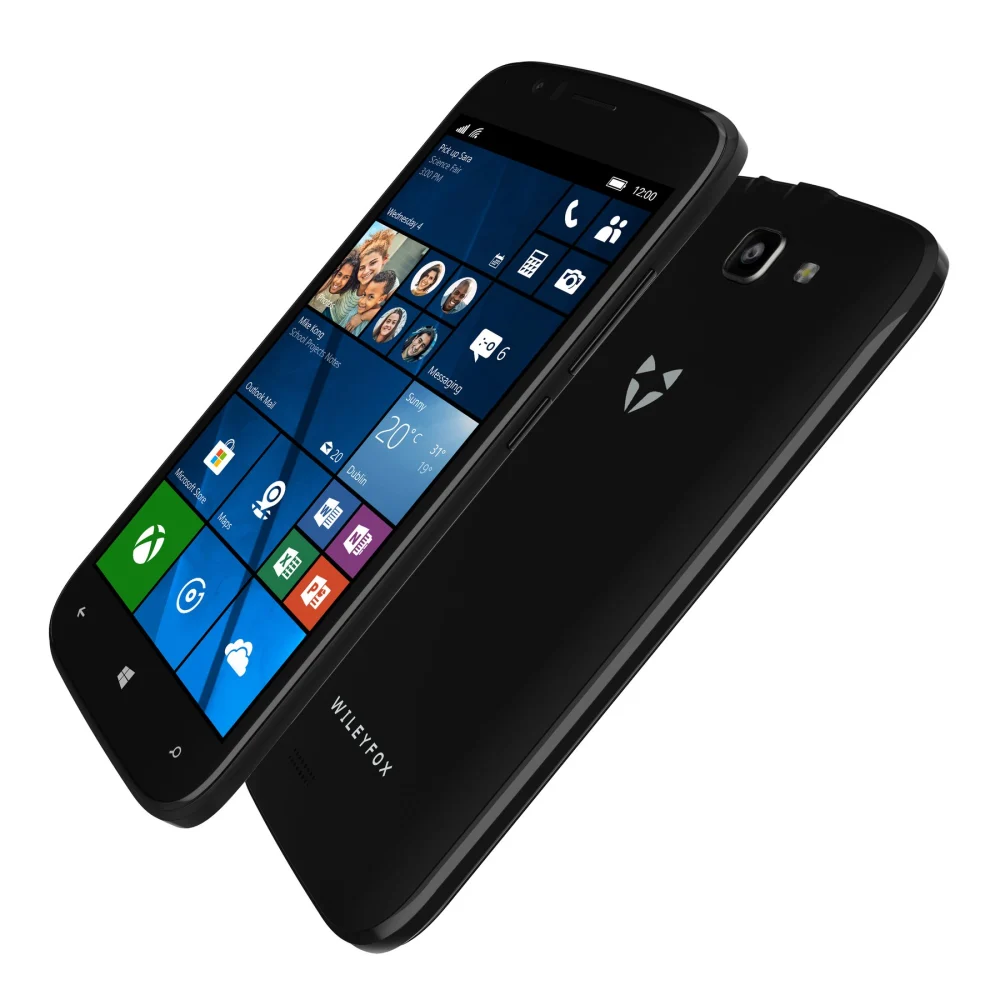
Windows Phone was not a version of desktop Windows shrunk down. It was a fresh design with an interface Microsoft called Metro: large flat blocks of color, heavy typography, and a home screen made of Live Tiles that updated themselves with information rather than sitting there as static icons.
People who used it tend to remember two things. It looked unlike anything else, at a point when iOS and Android were converging on grids of rounded squares. And it ran well on cheap hardware, because the system was built lean, so an inexpensive Lumia felt smoother than an Android phone at the same price did in those years.
The Nokia hardware was the other half of it. The Lumia 800 and 900 had solid polycarbonate bodies in colors nobody else was making, and Nokia put real work into the cameras. The Lumia 1020 is still cited as one of the better phone cameras of its generation. This site was covering that line as it launched, including a contemporaneous 2012 comparison of the Nokia Lumia 900 against the Samsung Galaxy S II and Nokia’s first tablet in 2013.
None of that was enough, and the reasons are worth taking one at a time.
2010: arriving third
Windows Phone 7 shipped in October 2010. The iPhone had been out since June 2007. The first Android handset had been out since September 2008.
Three years is a long time in a forming market, and the specific thing that had formed in those three years was not brand loyalty. It was two app catalogs and two sets of developers who had already learned two sets of tools. A third platform arriving in 2010 was not competing on features. It was asking developers to do a third amount of work for a fraction of the audience.
Microsoft also arrived carrying a corpse. Windows Mobile, the earlier and completely unrelated phone system, had been aimed at business users with styluses and had aged badly. Windows Phone 7 shared almost nothing with it, but it shared a name.
2011: Nokia bets the company
In February 2011 Nokia announced it would adopt Windows Phone as its primary smartphone platform. Nokia was at that point still the largest phone manufacturer in the world by volume, and its chief executive Stephen Elop had circulated an internal memo comparing the company’s position to standing on a burning oil platform.
The logic was defensible. Nokia’s own Symbian system was not competitive, its replacement was not ready, and building a third ecosystem alone was beyond it. Partnering with Microsoft brought money, a modern system and a software company’s resources.
The risk was that it tied two struggling platforms together. If Windows Phone did not work, Nokia had no fallback, because it had discontinued the alternative.
2012: the reset that broke the early adopters
This is the part that gets one line in most retellings and deserves several.
Windows Phone 8, released in October 2012, was rebuilt on the Windows NT kernel rather than the Windows CE kernel that Windows Phone 7 had used. That was the right long-term engineering decision. It was also a hard break, and existing Windows Phone 7 devices could not be upgraded to it. Every Lumia 800 and 900 sold on the promise of a modern platform was, within a year, on a version that would not run the new software. Microsoft offered those handsets a cosmetic update instead.
Consider what that did to the two groups Microsoft most needed.
The early adopters had bought into a new platform on faith and were told their phones were finished. Some of them were, understandably, not there for the next round.
The developers had written applications for one runtime and were asked to move to another, for a platform whose share was already small. Microsoft was, in effect, asking people to redo unpaid work in order to keep serving an audience that had not grown.
A platform in third place can survive being late. It cannot easily survive breaking its own believers halfway through the climb.
The app gap, explained properly
“There were no apps” is the standard summary, and it is true but it is not an explanation. The app gap was a loop, and loops are hard to break from the outside.
A developer decides where to spend engineering time by counting users. Windows Phone had few users, so building for it was hard to justify. A buyer in a shop decides which phone to get partly by asking whether the apps they use are on it. The apps were not there, so they bought something else. Each side was making an entirely rational decision, and together they produced a system that could not start.
Microsoft tried most of the available levers. It paid developers to port applications. It built first-party versions of missing apps itself. It shipped compatibility layers intended to let Android and iOS code run on Windows, a project that was announced and then abandoned. It bought the largest remaining handset maker on the platform.
None of it worked, and the deepest reason is that some of the missing apps were owned by companies that had no interest in helping. A rival’s app store is not a neutral piece of infrastructure. When a platform’s absence is partly a competitor’s decision, buying more marketing does not solve it.
The same loop, from the other side, is what ended BlackBerry as a platform even though its hardware had a devoted following. That story is at what happened to BlackBerry phones. Google Glass hit a smaller version of the same problem: a device with almost no installed base is a hard thing to ask anyone to write for, and that is covered in what happened to Google Glass.
2013 to 2015: the acquisition and the write-off
Microsoft agreed in September 2013 to buy Nokia’s Devices and Services business, and the deal closed in April 2014 at approximately $7.2 billion. Stephen Elop moved with it to Microsoft.
Fifteen months later, in July 2015, Microsoft announced an impairment charge of about $7.6 billion against the phone business along with a restructuring that cut up to 7,800 jobs. That is a write-down larger than the purchase price, which is an unusually blunt statement for a company to make about its own acquisition.
Market-share estimates from IDC put Windows Phone at a few percent of global smartphone shipments in 2013 and below one percent by 2016. Those are outside estimates rather than counted figures, but the direction is not in dispute and Microsoft’s own reporting to the SEC in 2016 showed handset volumes collapsing.
2017 to 2019: the quiet end
There was no announcement declaring Windows Phone dead. In October 2017 Joe Belfiore, the executive most associated with the platform, said on social media that new features and new hardware were no longer a focus and advised users which competing platforms Microsoft’s own apps supported. That was as close to an obituary as it got.
Windows 10 Mobile, the final version, reached its published end of support on December 10, 2019. From that date Microsoft no longer issued security updates, non-security fixes or free assisted support, and its guidance was that users move to Android or iOS.
Does a Lumia still work in 2026?
The hardware generally does. What has gone is everything around it.
The Windows Phone store was retired, so applications can no longer be installed or reinstalled from it. Anything that depended on a Microsoft account service that has since been shut down does not connect. There have been no security updates since 2019, which matters for anything you would use on a network. Basic offline functions, including making calls on networks that still carry the relevant radio bands, telling the time and playing files stored on the device, continue to work.
There is a practical constraint that catches people out and has nothing to do with Microsoft. Mobile operators in many countries have switched off their 2G and 3G networks, and a handset that relies on those bands for voice can be left unable to connect regardless of what software it is running. That is a network decision, not a platform one, and it affects other phones of the same era equally.
What a Lumia is worth, and whether to buy or sell one, is a separate subject that this site does not cover.
What Microsoft actually lost
The obvious answer is money, and roughly $7.6 billion of write-down is a real number. The more consequential loss was position.
Owning a mobile platform meant owning the default, and defaults are where habits form. The company that runs the phone gets to decide which search engine, which maps, which assistant and which store the user meets first. Microsoft spent the 2010s in the position of a guest on other companies’ phones, shipping its applications into stores it did not control, and that is a materially weaker place to stand than the one it had held on the desktop.
It is a bigger version of a lesson that shows up repeatedly in this cluster: what ends a product is usually the ecosystem around it rather than the object itself. The wider set, grouped by cause, is indexed at the dead gadgets of the 2000s and 2010s, and for a case where Microsoft’s licensing decisions shaped an entire category from the other direction, see why netbooks disappeared.