
Short answer: HTC built the T-Mobile G1, the first commercially available Android phone, which went on sale on October 22, 2008, as reported by T-Mobile’s own newsroom announcement. By the third quarter of 2011, HTC was briefly the top smartphone vendor in the United States by unit share, with 24 percent against Samsung’s 21 percent and Apple’s 20 percent, as reported by Bloomberg citing Canalys data. That peak arrived while HTC was already a year into a patent war with Apple, which drained resources for two more years and ended in a November 2012 settlement. Sales collapsed through 2013 to 2016 as Samsung and Apple pulled ahead. In September 2017, HTC and Google announced a deal in which about 2,000 HTC engineers, roughly a fifth of HTC’s engineering staff, moved to Google for $1.1 billion, plus a non-exclusive patent license. That deal closed in January 2018, as reported by TechCrunch. HTC did not shut down and is not defunct. It remains a publicly traded company on the Taiwan Stock Exchange (ticker 2498), still releases the occasional smartphone, and now builds VR headsets and AI glasses under its Vive brand.
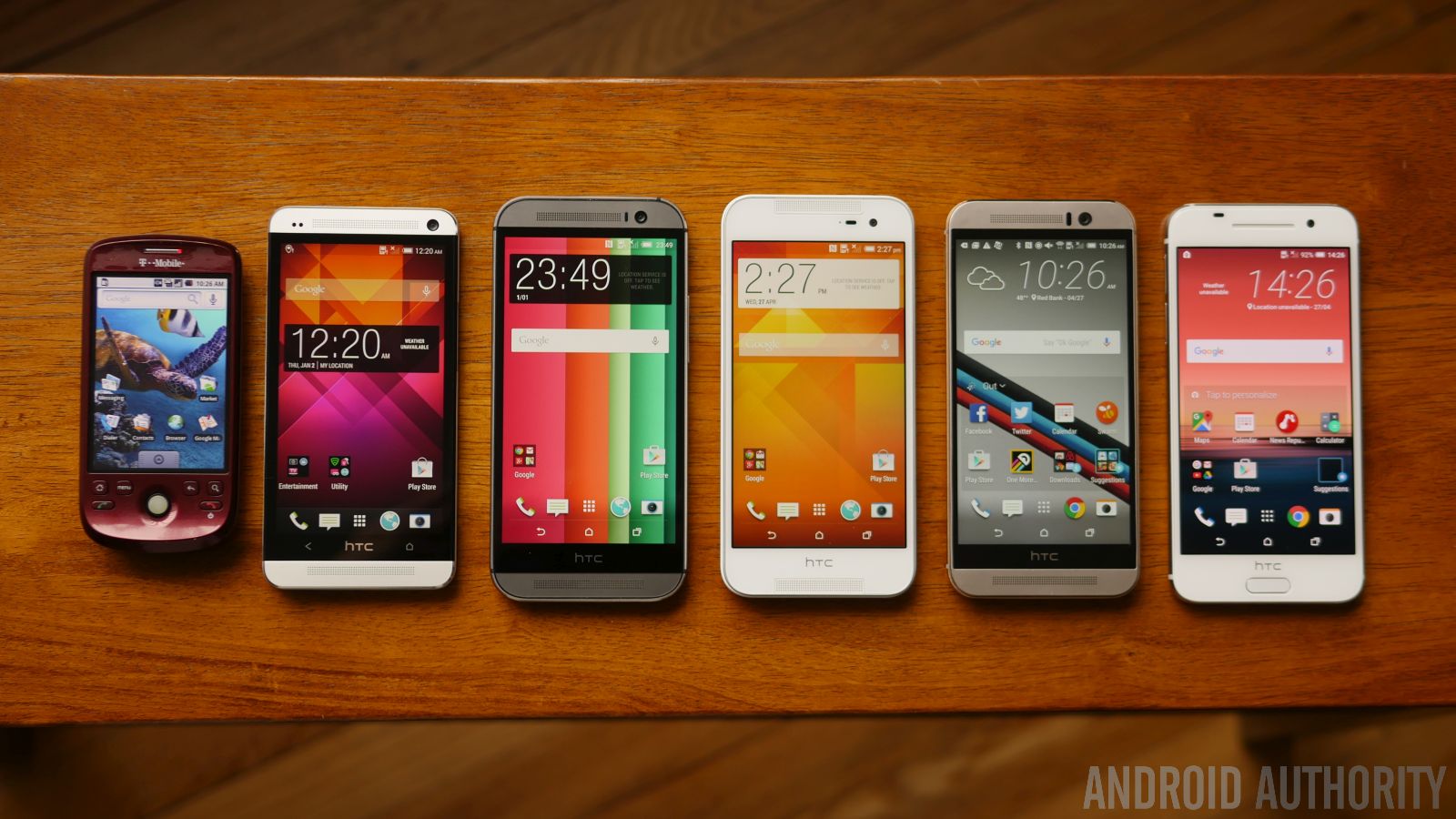
The dated turning points, sourced
Most retrospectives on HTC round these numbers off or skip the source entirely. Here they are dated and attributed.
| Year | Turning point | Source |
|---|---|---|
| 2008 | T-Mobile G1 (HTC Dream), the first Android phone, goes on sale October 22 | T-Mobile newsroom |
| 2011 | HTC reaches 24% of the US smartphone market in Q3, its peak | Bloomberg, citing Canalys |
| 2012 | ITC import ban (effective April 19) followed by a global Apple-HTC settlement (November 10) | Fox News; Apple newsroom |
| 2015 | HTC posts consecutive quarterly net losses of about $139M (Q3) and $101M (Q4) | TechCrunch |
| 2017-2018 | About 2,000 HTC engineers move to Google for $1.1 billion; deal closes January 2018 | HTC newsroom; Bloomberg; TechCrunch |
| 2024 | HTC releases the U24 Pro, a current smartphone | HTC’s own product page |
| 2026 | HTC trades on the Taiwan Stock Exchange (2498) and ships Vive Eagle AI glasses | Focus Taiwan |
2008: HTC builds the first Android phone
Before HTC put its own name on a phone, it built other companies’ phones. Through the 2000s it manufactured Windows Mobile and early smartphone hardware for carriers and brands including T-Mobile, Palm and Google itself, largely unbranded from the buyer’s perspective.
That changed on September 23, 2008, when T-Mobile unveiled the T-Mobile G1 in New York, known outside the US as the HTC Dream. It went on sale a month later, on October 22, 2008, as reported by T-Mobile’s own press announcement. The G1 paired HTC’s hardware, a slide-out keyboard and a 3.2-inch touchscreen, with Google’s brand-new open-source operating system: Android 1.0. It was not a runaway commercial hit on its own, but it was the proof that Android could ship on real hardware, and HTC was the manufacturer that proved it.
That first-mover position mattered more than any single device. Over the next three years, HTC built some of the platform’s defining early phones, including the HTC Hero, the HTC Evo 4G and the Nexus One, a phone HTC built for Google and sold directly online in 2010.
2011: the peak, arriving with a lawsuit already underway
HTC’s high point, by the numbers, was brief and specific. In the third quarter of 2011, HTC held 24 percent of the US smartphone market by units shipped, ahead of Samsung at 21 percent and Apple at 20 percent, as reported by Bloomberg, citing Canalys research. Globally, HTC’s full-year 2011 smartphone share reached 2.3 percent, up from 1.5 percent the year before, as reported by GSMArena citing Gartner’s data.
Those are modest global numbers next to Samsung and Apple’s later dominance, and that gap is the point: HTC’s peak was a US-market moment inside a much larger, faster-consolidating global race. It did not have the manufacturing scale, the marketing budget, or eventually the patent position to hold that lead for long.
And it arrived while HTC was already fighting a legal battle that would consume much of the next two years.
The Apple patent war, explained
In March 2010, Apple sued HTC over 20 alleged patent infringements. HTC counter-filed, taking its own complaint to the US International Trade Commission over Apple products including the iPhone, iPad and iPod.
The ITC ruled that HTC had infringed two of Apple’s patents, one of them covering “data detection,” the feature that lets a phone recognize a phone number or address in text and turn it into a tappable link. The commission set an import ban on the affected HTC phones to take effect April 19, 2012, giving carriers time to adjust their inventory, as reported by Fox News at the time.
The dispute did not end there. It ran through 2012 in multiple jurisdictions before Apple and HTC reached a global settlement on November 10, 2012, dismissing every pending lawsuit between them and signing a ten-year cross-license agreement, as confirmed in Apple’s own newsroom announcement. Neither side disclosed the settlement’s financial terms.
The two-year window this covers, roughly 2010 to late 2012, is the same window in which HTC needed to be executing cleanly on product strategy while riding its US peak. Instead a meaningful share of legal and engineering attention went into litigation. The settlement removed the legal risk, but it did not restore the time or the market position HTC had going into it.
2012 to 2016: the fall
HTC’s product lineup fragmented in these years rather than consolidating around a clear flagship strategy, and consumers had a harder time telling one HTC phone from the next. The company’s most visible misstep was the HTC First, built with Facebook and launched in 2013 to run a heavily Facebook-integrated interface called Facebook Home. It sold poorly and AT&T cut its price sharply within weeks, a widely reported symbol of the company’s declining ability to define a product the market actually wanted.
The financial results through this period were public and severe. HTC posted a net loss of roughly $139 million in the third quarter of 2015, its third consecutive quarterly loss at that point, as reported by TechCrunch. The following quarter was little better: a roughly $101 million net loss in the fourth quarter of 2015, again as reported by TechCrunch. Revenue kept shrinking through 2016 and into 2017, even as HTC narrowed its losses in some individual quarters.
Samsung had scale and marketing reach HTC never matched. Apple had a closed ecosystem and margins HTC’s Android competitors couldn’t replicate. HTC, meanwhile, had spent two of its most important years defending patents instead of building the brand clarity it needed once that fight ended.
What the 2017 Google deal actually was, and was not
This is the point most retrospectives get wrong, usually by compression: “Google bought HTC” is the phrase that circulates, and it overstates what happened.
On September 21, 2017, HTC and Google announced a definitive agreement, confirmed in HTC’s own newsroom post, under which certain HTC employees, many of whom were already working alongside Google on Pixel phone development, would join Google directly. The transferring group was reported at around 2,000 engineers, close to a fifth of HTC’s engineering headcount, for a payment of $1.1 billion, as reported by Bloomberg. Google also received a non-exclusive license to HTC’s intellectual property, not ownership of it.
That is a talent-and-license transaction, not a company acquisition. HTC Corporation remained an independent, publicly traded company before and after the deal closed in January 2018, as reported by TechCrunch. It kept its own smartphone division, its own brand, and its own board. What it lost was a large chunk of the specific engineering team that had spent years building Google’s own hardware, along with the $1.1 billion cash that came with the deal.
The practical effect was still significant: it shrank HTC’s phone-engineering capacity right as the company most needed it, and it gave Google a design and manufacturing team it no longer had to route through a supplier relationship. But calling it an HTC acquisition confuses “Google hired a lot of HTC’s engineers” with “Google bought HTC,” and the two are different facts with different consequences.
What HTC does now
HTC did not close. It kept operating as HTC Corporation, still listed on the Taiwan Stock Exchange under ticker 2498, and it redirected its remaining engineering capacity toward virtual and extended reality under the Vive brand, a line it had actually started in 2016 with the original HTC Vive headset, before the Google deal.
Smartphones did not disappear from HTC’s lineup entirely, though they became a minor part of the business rather than its center. HTC’s own EU product page lists the U24 Pro, announced on June 12, 2024, as a current device.
More recently, HTC has moved into AI-enabled wearables, launching Vive Eagle AI glasses and expanding sales and service locations for the product, as reported by Focus Taiwan. This is a company still making decisions about where to compete, not one that stopped operating.
Does an old HTC phone still work in 2026?
If you still have an HTC handset from the Android-pioneer or One-series era, the hardware will generally still power on and place calls where the network still supports the required bands. What has faded is everything that depended on ongoing support: security updates for older Android versions stopped years ago for most HTC models, and Google Play Store compatibility becomes less reliable as apps drop support for outdated Android releases.
This site does not cover what an old HTC phone is worth, whether to sell one, or where to do it. That is a separate question from the history covered here.
What HTC’s story has in common with the rest of this cluster
HTC is one of several phone makers from this era whose story follows the same underlying shape: an early, sometimes genuine lead, followed by a slower company failing to defend it against a faster-moving duopoly. Nokia held a manufacturing lead Android eventually erased. BlackBerry had the most loyal enterprise user base in the industry and still lost the platform war. Windows Phone never got the app catalog it needed to compete at all. HTC’s version is distinct mainly in one respect: unlike those three, HTC is still an independent, operating company, just no longer a smartphone company first.
For the same App Store-era patent tensions from the other side, see how Apple’s own iPhone 4S launch reshaped the competitive field in the iPhone 4S and the first Siri, and for a Japanese manufacturer navigating a similar narrowing of ambition, see what happened to Sony Xperia phones. The wider set of devices that ended, narrowed, or changed beyond recognition across this decade is indexed at the dead gadgets of the 2000s and 2010s.
FAQ
Does HTC still exist in 2026?
Yes. HTC Corporation remains a publicly traded company on the Taiwan Stock Exchange under ticker 2498. It has shifted its main focus to VR and XR hardware under the Vive brand and, most recently, AI glasses, while still releasing occasional smartphones.
Did Google buy HTC?
No. In a deal announced September 21, 2017 and closed in January 2018, Google paid HTC $1.1 billion for about 2,000 engineers, roughly a fifth of HTC’s engineering staff, plus a non-exclusive license to HTC’s patents. HTC Corporation itself stayed independent and kept operating, including its smartphone division.
What was HTC’s first Android phone?
The T-Mobile G1, known outside the United States as the HTC Dream, unveiled September 23, 2008 and released October 22, 2008. It was the first commercially available phone running Google’s Android operating system.
Why did HTC lose its lead to Samsung and Apple?
No single cause. HTC fought a resource-draining patent war with Apple through most of 2010 to 2012, right as it needed to be sharpening its product lineup. Its own device strategy grew fragmented and harder for shoppers to follow, while Samsung’s manufacturing scale and marketing reach, and Apple’s closed high-margin ecosystem, both outpaced it.
Does an old HTC phone still work?
The hardware generally still functions for calls and offline use where the network supports it. Security updates and full app-store compatibility stopped years ago for older models. This article does not cover resale value or where to sell one.