
Short answer: The standalone MP3 player did not die in one moment, it died in two. First the smartphone absorbed the object itself: once one device in your pocket could make calls, browse the web and hold a music library, carrying a second device for one of those jobs stopped making sense, and that shift was already underway before most people had a streaming subscription. Then, over the following decade, streaming absorbed the library: owning files gave way to renting access to nearly everything, ever. As reported by the RIAA’s 2015 year-end revenue report, streaming passed digital downloads as the largest source of US recorded-music revenue that year, the first time it had done so. The mass market for dedicated players collapsed around both events. A small, specific niche never left: high-resolution audio players, waterproof players built for swimming and running, and players people buy precisely because they cannot receive a notification.
This article is about that category story. For the device-specific account of how Apple wound the iPod down across four separate stages, see why Apple discontinued the iPod.
Two jobs, not one
It helps to break “MP3 player” into the separate jobs it was actually doing, because they did not disappear on the same schedule.
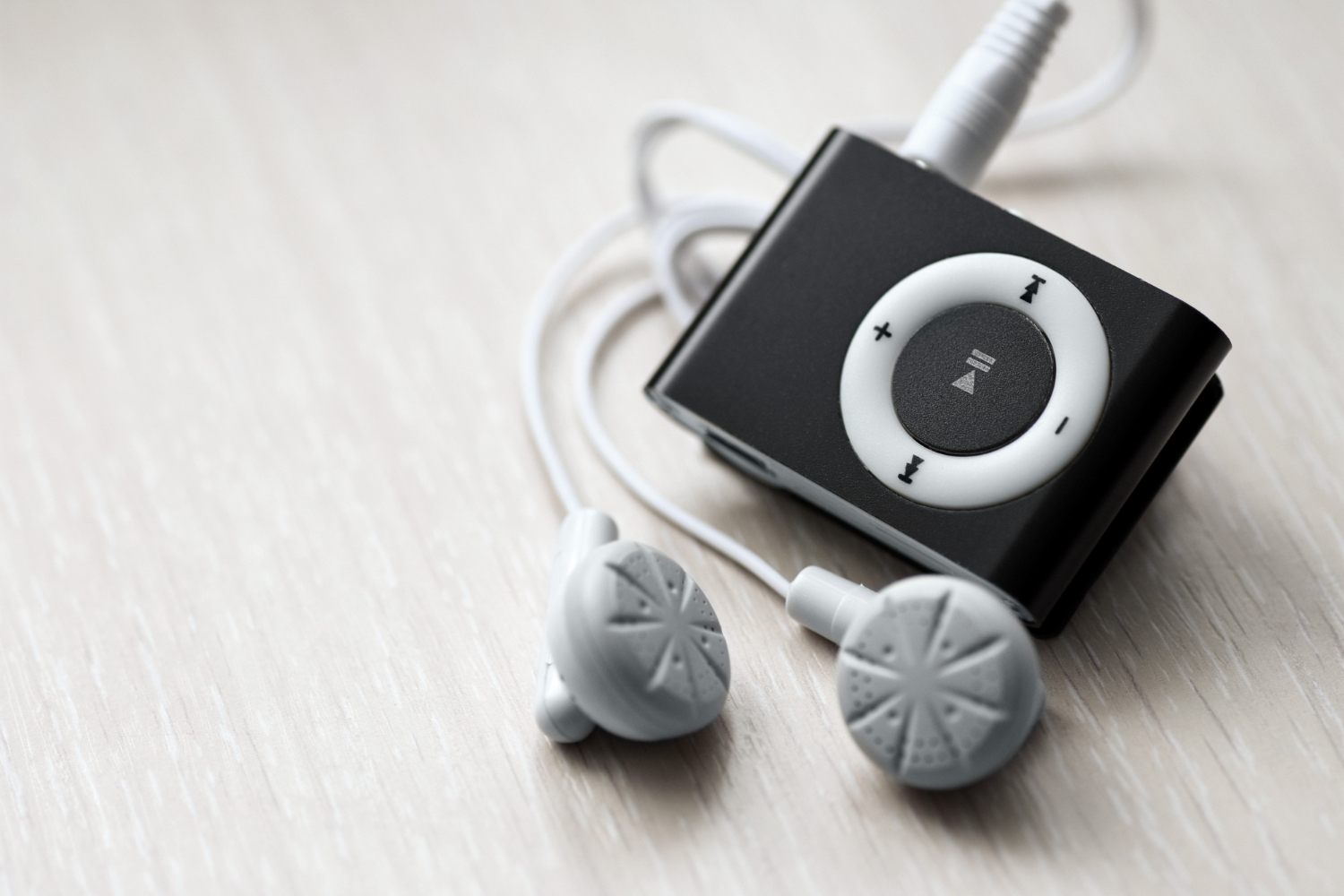
Storage and playback. A dedicated player held a library and played it back, nothing else. That was the entire pitch of the earliest players and it is still the entire pitch of the ones sold today.
A purchase mechanism. For most of the 2000s, filling a player meant buying tracks, one at a time or as albums, usually through a store tied to the device (iTunes, most visibly). You owned a file and it was yours to keep.
Discovery. Finding new music happened elsewhere: radio, a friend’s library, a music blog, a store’s front page. The player itself did not help you find anything; it only carried what you already had.
A smartphone replaced the first job almost as soon as it could hold enough songs, well before it replaced the second or third. A streaming subscription replaced the second and third jobs together, later, and did so by removing the idea of owning a file at all. Most retellings of this story compress two separate transitions into one, which is why they read as vaguer than the actual sequence of events.
The numbers behind the rise and the collapse
The category’s peak and its fall are both documented by named industry trackers, not by folklore.
| Year | Figure | Source |
|---|---|---|
| 2006 | Roughly 34 million MP3 players shipped in the US, with about 41 million expected in 2007 | Consumer Electronics Association (CEA, now the Consumer Technology Association), as reported by RadioWorld, 2006 |
| 2006-2007 | MP3 players accounted for about 90 percent of a roughly $6 billion US portable-entertainment device market | CEA, as reported by RadioWorld |
| 2013 | US wholesale sales of MP3/portable media players at approximately $2.93 billion | Consumer Technology Association shipment-tracking data, as compiled and cited via Statista |
| 2019 | US wholesale sales of MP3/portable media players had fallen to an estimated $734 million | Consumer Technology Association shipment-tracking data, as compiled and cited via Statista |
| 2015 | Streaming revenue overtakes digital downloads as the largest share of US recorded-music revenue for the first time (34.3 percent vs. 34.0 percent) | RIAA 2015 year-end revenue report |
Read across that table and the two-stage story becomes visible. The 2013-to-2019 collapse in wholesale sales happened mostly before and around the RIAA’s 2015 streaming milestone, not after it. The hardware category was already shrinking on smartphone substitution alone; streaming then finished the job by removing the reason to own a music-only device or a music-only file at all.
It is worth saying plainly what these figures are not. Any single-company lifetime unit total you see quoted for the whole MP3 player category is very likely an unsourced restatement of another blog’s unsourced restatement. The CTA/CEA figures above are shipment and wholesale-sales tracking for a device category across the whole US market, not any one company’s own disclosure, and they are the most citable version of this story that exists.
What replaced each job, in order
The object went first. Once a phone could carry a usable music library, alongside everything else it already did, the case for a second pocket device weakened for most owners well before their listening habits changed at all. This is the same absorption story behind why phones removed the headphone jack: once one device does the analog-audio job too, a dedicated port, and eventually a dedicated device, stops earning its keep.
The purchase model went second. Buying a track and keeping the file gave way to paying monthly for access to a catalog you never own. That is a genuinely different transaction, and the industry’s own revenue reporting is the cleanest evidence that it happened on a schedule, not overnight: downloads and streaming ran close to level through 2014 and streaming pulled ahead for good in 2015, per the RIAA figures above.
Discovery changed last, and changed the most. Playlists, algorithmic recommendation and a catalog large enough to browse turned “what do I listen to next” into something the service did for you. A device that only played back a library you had already assembled had nothing to offer against that.
MP3 players’ own casualties: Zune, Sansa and Zen
The standalone player market was never just Apple. What happened to the Zune is its own story of a competitor that entered five years late and never closed the gap before Microsoft discontinued all Zune hardware in 2011. SanDisk’s Sansa line and Creative’s Zen line both shrank from full retail lineups to a handful of budget flash models over the same years, following the same wholesale-sales decline the CTA data shows across the whole category, not a story specific to either brand. The pattern was not one company losing to another. It was a device category losing its reason to exist, the same pattern behind what happened to the Flip video camera, a single-purpose pocket device absorbed by a phone that got good enough at its one job. The full set of categories this happened to is indexed on the dead gadgets of the 2000s and 2010s.
The niche that never went away
A small standalone-player market still exists in 2026, and it exists for three specific, statable reasons rather than nostalgia alone.
High-resolution audio. A phone’s audio hardware is built to be good enough for everyone, not the best possible reproduction for someone with high-impedance headphones and lossless files. Dedicated players with better digital-to-analog converters and no other job competing for battery or processing still have a genuine audio-quality case for that specific listener. Sony’s Walkman line, now sold as a high-resolution digital audio player rather than a mass-market device, is the clearest surviving example of this positioning.
Water and activity. A phone is not a device most people want submerged, sweated on for an hour, or clipped to a swim cap. Small, cheap, fully waterproof clip-on players built for lap swimming and running exist specifically because the phone cannot go where the activity does, or because carrying it there is worse than leaving it at home.
No notifications, on purpose. This is the newest and most interesting reason, and it did not exist as a stated motivation in the category’s first decade because there was nothing to opt out of yet. Some buyers now choose a device that can only play music precisely because it cannot buzz, ping or show a lock screen. That is a single-purpose object bought for the same reason it always was, doing one job and nothing else, in a world where almost every other device in the room is trying to do everything at once.
What the survivors can’t do
None of this is a recommendation, and none of it is complete. A standalone player in any of the three niches above still has to be filled with files, still depends on a manufacturer keeping its sync software or app maintained, and still ages the same way every battery-powered device does: capacity fades whether it is used or not. None of the three niches has scaled back into a mass market, and nothing here suggests they will. What changed is narrower than that. A category that briefly needed to serve nearly everyone shrank down to serving the specific people it can actually still do something for, and stopped trying to serve anyone else.
FAQ
When did MP3 players stop being popular?
There was no single date. US wholesale sales of MP3/portable media players, tracked by the Consumer Technology Association, fell from roughly $2.93 billion in 2013 to an estimated $734 million by 2019, a decline that ran alongside, and mostly ahead of, the point where streaming overtook digital downloads as the largest share of US recorded-music revenue, which the RIAA’s own reporting dates to 2015.
What replaced MP3 players?
Two different things, in sequence. The smartphone replaced the device itself, by carrying a music library alongside everything else in one pocket object. Streaming services then replaced the idea of owning a music library at all, by making access to a large catalog available for a monthly subscription instead of a purchased file.
Do people still buy MP3 players in 2026?
A small number do, for three specific reasons: higher-fidelity audio playback than a phone is built to prioritize, waterproof use for swimming and running, and a device that deliberately cannot receive notifications. None of that adds up to a mass market returning; it is a narrow, ongoing niche.
Is this the same story as the iPod’s discontinuation?
Related but not the same. This article covers the standalone player as a category. The iPod’s own story, including why Apple kept different models alive for different reasons across four separate discontinuation dates between 2014 and 2022, is covered fully in why Apple discontinued the iPod.
Why did streaming take longer to matter than the smartphone did?
Because a phone only needed to hold enough songs to make a second device pointless, which happened early in the smartphone era, while streaming required affordable mobile data, licensing deals with every major label, and a subscription habit consumers had not yet formed. The RIAA’s revenue reporting shows those two effects landing years apart rather than together.