
Short answer: Microsoft launched the original Zune in November 2006, five years after the iPod, into a market Apple already controlled. Zune never seriously dented that lead; retail research firm NPD Group tracked its share of the US hard-drive MP3 player market at roughly 2 to 10 percent depending on the model and month, against Apple’s 70 to 85 percent. Microsoft announced on March 15, 2011 that no new Zune hardware would be developed, then confirmed the full discontinuation of existing Zune devices on October 3, 2011, telling customers to move to Windows Phone instead. It was not a late-inning stumble. Zune arrived too late to catch the market it was built to win, and every year after that made the gap wider, not narrower.
The device itself was not the problem. Being five years behind was.
What the Zune actually was, and why some owners genuinely preferred it
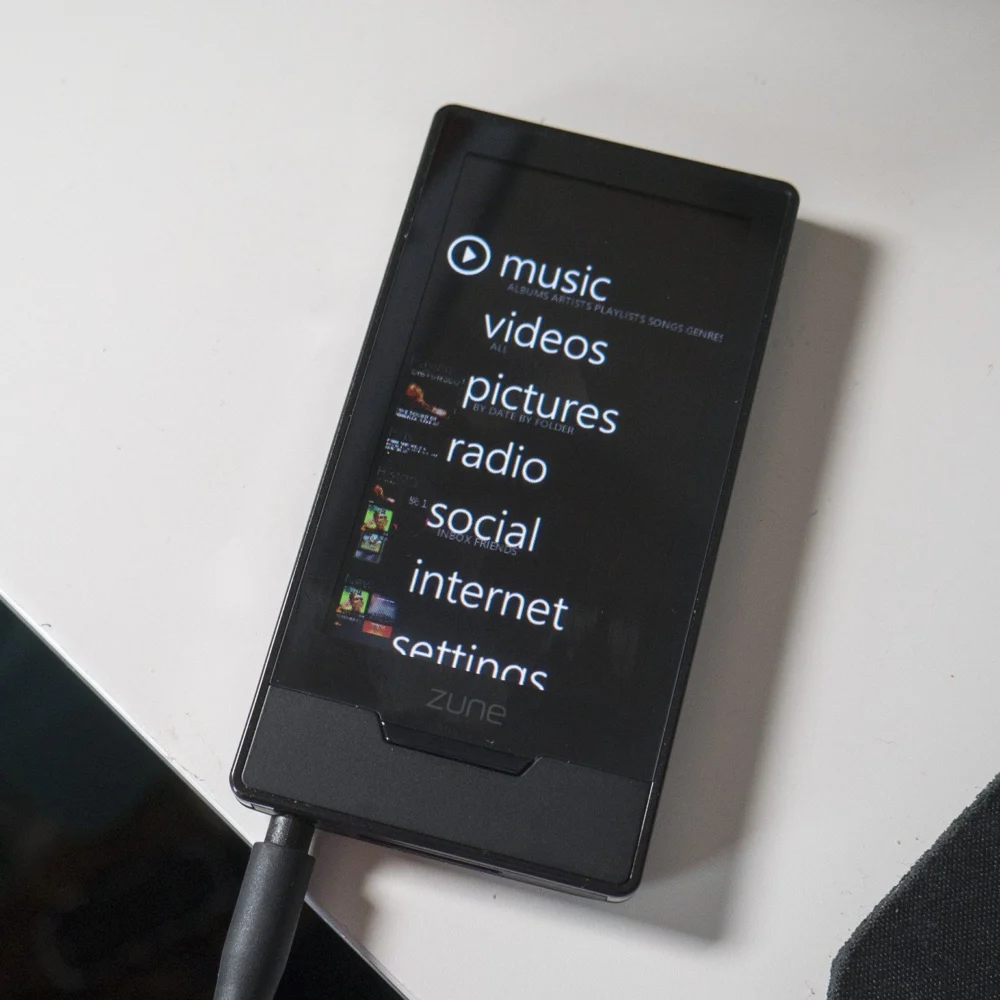
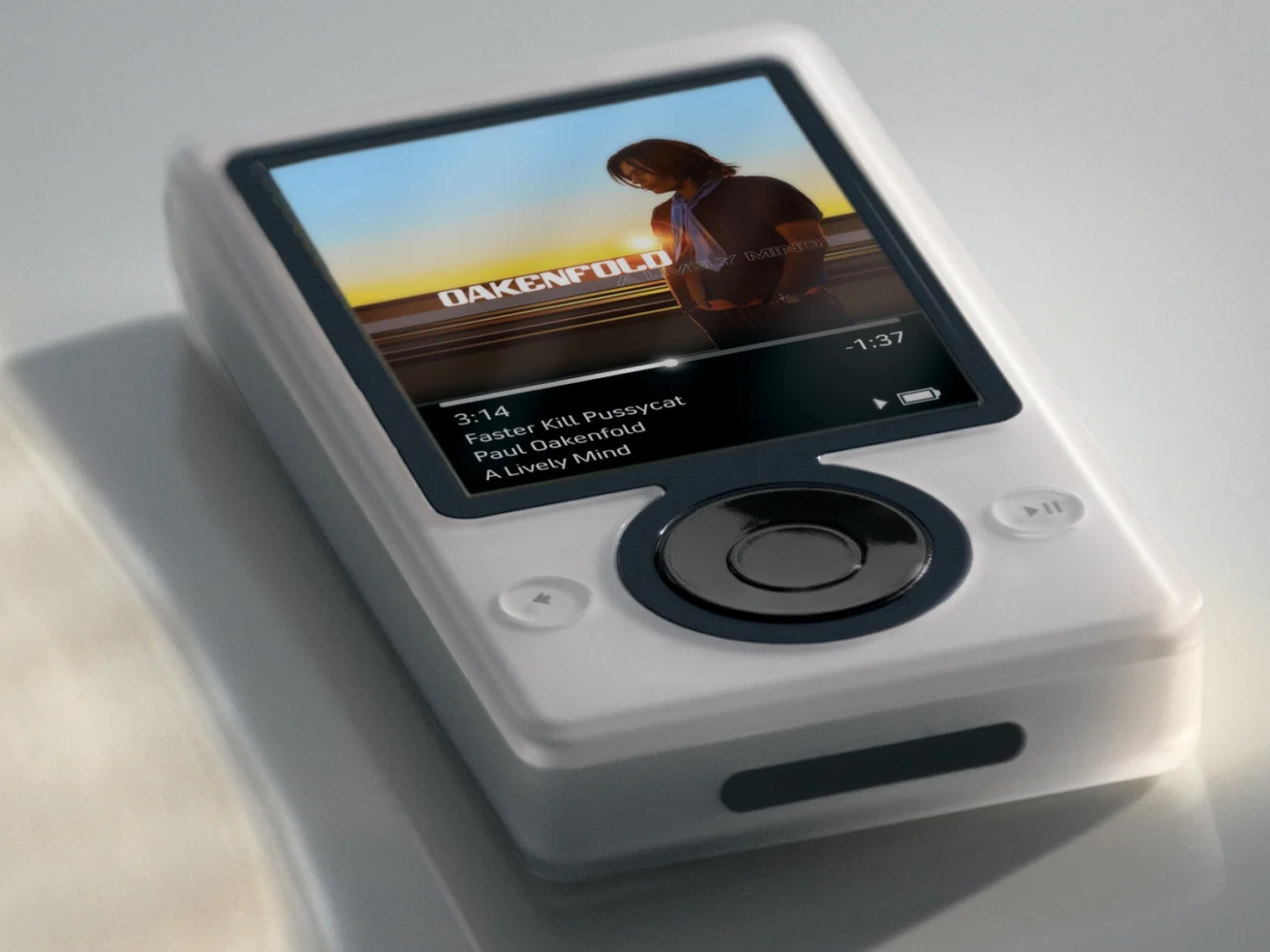
The original Zune shipped in three storage sizes with a 3-inch screen, an FM radio, and a feature Apple did not offer at the time: wireless song sharing between two Zunes over Wi-Fi, with a three-play or three-day limit on shared tracks. Reviewers generally found the hardware solid and the screen good for its era.
The Zune HD, released in 2009, was the strongest version of the product. It used an OLED touchscreen, ran a version of the interface that would later influence Windows Phone’s Metro design, and added HD Radio and a genuine web browser. People who owned one often describe it as underrated. None of that changed the market math.
2006: five years behind, and the gap was already the whole story
The iPod launched in October 2001. By the time Zune shipped in November 2006, Apple had five years of retail relationships, accessory partnerships, and, critically, iTunes, which had already become the default way a huge number of people bought digital music.
A late entrant into a hardware category can still win if it offers something the incumbent cannot match. Zune’s wireless sharing was a genuine point of difference, but it was a feature people had to be told about and then persuaded to use, competing against a habit, iTunes, that tens of millions of people had already built their whole music library around.
2007: the numbers, plainly
NPD Group’s retail tracking for December 2006, Zune’s first full month on shelves, put its share of the US hard-drive-based MP3 player market at around 10 percent by unit count in one measure and closer to 2 to 3 percent of the overall portable player market in another, against Apple’s 70-plus percent. By June 2007, Microsoft announced it had sold its one-millionth Zune, after roughly nine months on sale. In the same period, Apple had already sold more than 100 million iPods cumulatively since 2001, a comparison Apple made explicitly in its own announcements at the time.
Those two numbers, one million against one hundred million, were not close enough for Zune’s early performance to be read as a slow start. They read as a market that had already decided.
2009 to 2010: the best version arrives, and it does not matter
The Zune HD in 2009 is widely regarded, including by people who never bought one, as evidence that Microsoft’s hardware and software teams could build something genuinely good. It came out the same year Apple released the iPod touch, which did everything the Zune HD did and added App Store access, since it ran a full version of iOS.
By this point the underlying market itself had also started to shift. Smartphones, led by the iPhone, were beginning to absorb the standalone music player category entirely. A dedicated device for playing music was becoming a harder sell regardless of which company made it, which meant Zune was now competing against both Apple’s music player and the entire concept of carrying a phone that already did the job.
2011: Microsoft ends it, twice, six months apart
Microsoft made two separate announcements in 2011, and it is worth keeping them straight. On March 15, 2011, Microsoft confirmed that no new Zune hardware players would be developed, though existing models would keep selling through retail while stock lasted. On October 3, 2011, Microsoft announced the full end of Zune hardware and pointed existing owners toward Windows Phone as the successor for music and media on the go.
The Zune brand itself lingered a little longer in software form. In June 2012, Microsoft said it would retire the Zune name entirely from its media services, folding what remained into Xbox Music and Xbox Video across Windows 8, Xbox 360, and Windows Phone. The hardware, the software, and finally the name were each wound down on their own separate timeline over about eighteen months.
Does a Zune still work in 2026?
The device itself still plays music and video stored on it, and the screen and buttons function exactly as they did on release. What has gone is the connected layer around it. The Zune Marketplace, Microsoft’s store for buying and syncing music and video to the device, was shut down in stages as Microsoft moved its media business to Xbox and then to other services, so buying new content directly to a Zune is no longer possible through official channels. Wireless sharing between two Zunes, which depended on both devices and their software being current, is also not something most owners can rely on today.
A Zune loaded with your own music files before all of this happened will still play that music. It just cannot be resupplied the way it originally was.
What Zune actually proved
Zune is frequently retold as a story about Microsoft building a worse product than Apple’s, and the hardware itself does not support that reading. The Zune HD in particular was competitive, sometimes ahead, on pure specs and design. What Zune actually demonstrates is a harder lesson: a genuinely good product entering a category five years after the market has already formed around a different company’s ecosystem, in this case iTunes, does not get judged on its own merits. It gets judged against the switching cost of leaving a system people had already invested years into.
The wider set of Microsoft’s hardware misfires from the same era, and what each one actually reveals, is indexed at the dead gadgets of the 2000s and 2010s. For the product Zune was chasing and never caught, see why Apple discontinued the iPod after 20 years. For Microsoft’s other consumer hardware bet that ran into the same late-to-market problem from a different angle, see what happened to the Xbox Kinect and what happened to Windows Phone.
A note on the numbers
Zune’s early NPD-tracked market share, its one-million-unit milestone by June 2007, and Apple’s 100-million cumulative iPod figure from the same period are each attributable to contemporaneous company announcements and NPD’s published retail data, and are used here on that basis. A total lifetime Zune sales figure across all models and years is not something Microsoft ever published as a single confirmed number, and the totals that circulate today, often stated confidently as though they were official, are not traceable to a primary source. This article does not repeat one.
FAQ
When did Microsoft discontinue the Zune?
In two steps. Microsoft stopped developing new Zune hardware on March 15, 2011, and announced the end of all Zune hardware sales on October 3, 2011, directing customers to Windows Phone.
Why did the Zune fail against the iPod?
It launched five years after the iPod, into a market where Apple already controlled the retail relationships, accessory ecosystem, and, most importantly, the habit of buying music through iTunes. NPD Group’s retail tracking put Zune’s US market share in the low single digits to low double digits at best, against Apple’s 70-plus percent.
Was the Zune actually a bad product?
Reviewers at the time and owners since generally rate the hardware, especially the 2009 Zune HD, as competitive or better than comparable iPods on specs. The failure was about market timing and ecosystem, not build quality.
Can I still buy music for my Zune?
No. The Zune Marketplace, Microsoft’s store for the device, was shut down as Microsoft folded its media services into Xbox Music and Xbox Video. Music already loaded on the device will still play.
What replaced the Zune brand?
Microsoft retired the Zune name in June 2012 and moved its remaining media services into Xbox Music and Xbox Video, available across Windows 8, Xbox 360, and Windows Phone.