
Short answer: Kinect launched for the Xbox 360 in November 2010 and sold so fast that Guinness World Records credited it as the fastest-selling consumer electronics device of its time, at roughly 8 million units in its first 60 days and past 10 million within about 133 days. Microsoft bundled a second-generation Kinect with every Xbox One in 2013, which pushed the console’s price up and hurt sales against the PlayStation 4, so Microsoft unbundled it within a year. The Xbox One S dropped the built-in Kinect port in 2016, the USB adapter was discontinued at the end of 2017, and Microsoft stopped selling the Kinect sensor itself that same fall. The technology did not vanish. It moved into Azure Kinect DK, a developer and enterprise sensor, which Microsoft also discontinued, in August 2023.
Two separate products failed here, on two separate timelines, for two different reasons, and most retrospectives blur them into one story.
What Kinect actually was
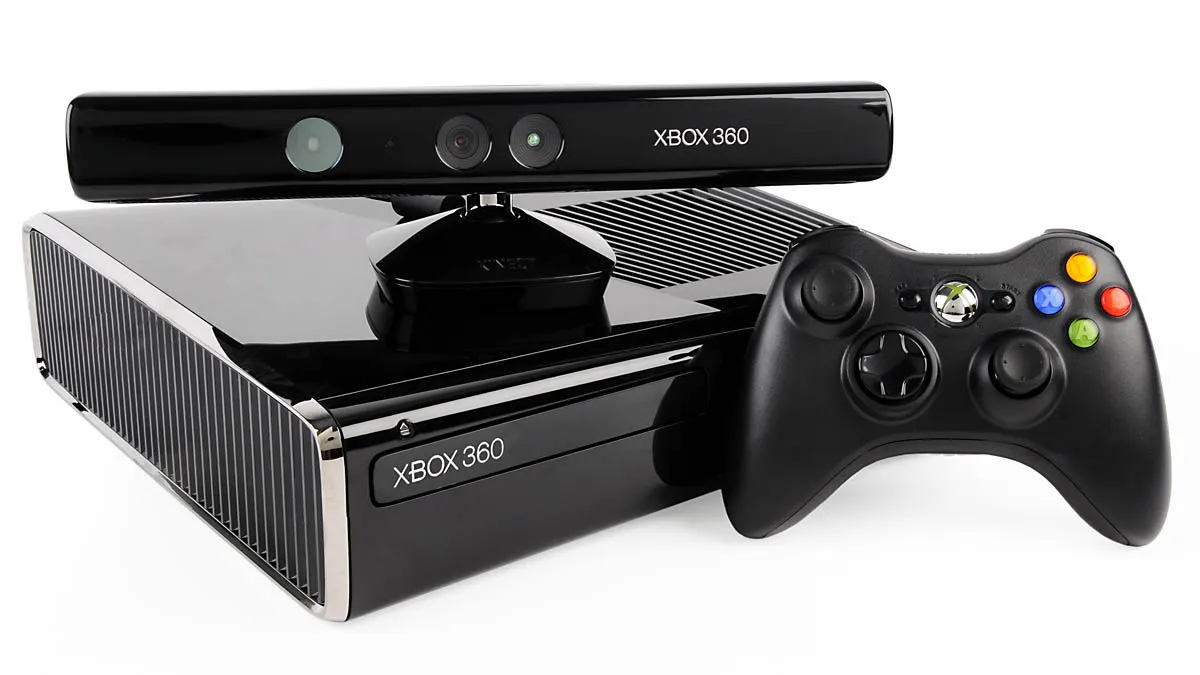
Kinect was a motion sensor bar that sat under the television and tracked a player’s full body, no controller required. It combined an RGB camera, an infrared depth sensor, and a microphone array, and it let Xbox 360 owners control games and menus with gestures and voice.
Microsoft revealed the project at E3 2009 under the codename Project Natal, named it Kinect at E3 2010, and shipped it that November alongside a launch lineup built around fitness, dance, and family games rather than the shooters and sports titles the console was known for. That was a deliberate bet: Kinect was aimed at living rooms Xbox had never reached, the same audience Nintendo’s Wii had already found with the Wii Remote.
2010 to 2011: the fastest-selling device nobody quite knew what to do with
The launch numbers were genuinely extraordinary. Guinness World Records confirmed in March 2011 that Kinect had sold roughly 8 million units between November 4, 2010, and January 3, 2011, an average of over 130,000 units a day, outpacing the launch-window sales of the original iPhone and iPad. By early March 2011 Microsoft had passed 10 million units sold.
What the sales figures did not show was engagement. Kinect worked best in a cleared space with good lighting, and the tracking could lag or misread fast movement, so the games that showed it off well, like dance and fitness titles, were exactly the ones a hardcore Xbox audience was least likely to buy on top of a controller-based library. Third-party developers were cautious about building for a peripheral most owners used a handful of times.
2013: the Xbox One bundle, and why it backfired
When Microsoft announced the Xbox One in 2013, it built the console around a second-generation Kinect from the start, not as an accessory but as a required part of the box. Every Xbox One shipped with a Kinect sensor, and Microsoft’s stated reasoning was that a guaranteed installed base would finally get developers building real Kinect-native experiences rather than optional add-ons.
The bundle also raised the console’s price to $499, a hundred dollars more than the Kinect-free PlayStation 4 launched the same November. Reviewers and buyers weighed a mandatory sensor most of them did not want against a straightforward hundred-dollar gap, and the PS4 won that comparison at retail through 2014. Microsoft unbundled Kinect from the Xbox One in 2014 and cut the console’s price to match Sony’s, an unusually fast reversal of a headline launch decision.
This is the same lesson that shows up across what happened to Windows Phone: forcing a platform’s success by bundling it with something people already wanted to buy does not create demand for the bundled thing, it just adds friction to the purchase people were already going to make.
2016 to 2017: the quiet removal
Microsoft did not announce Kinect’s death with a press release. It happened in three unglamorous steps.
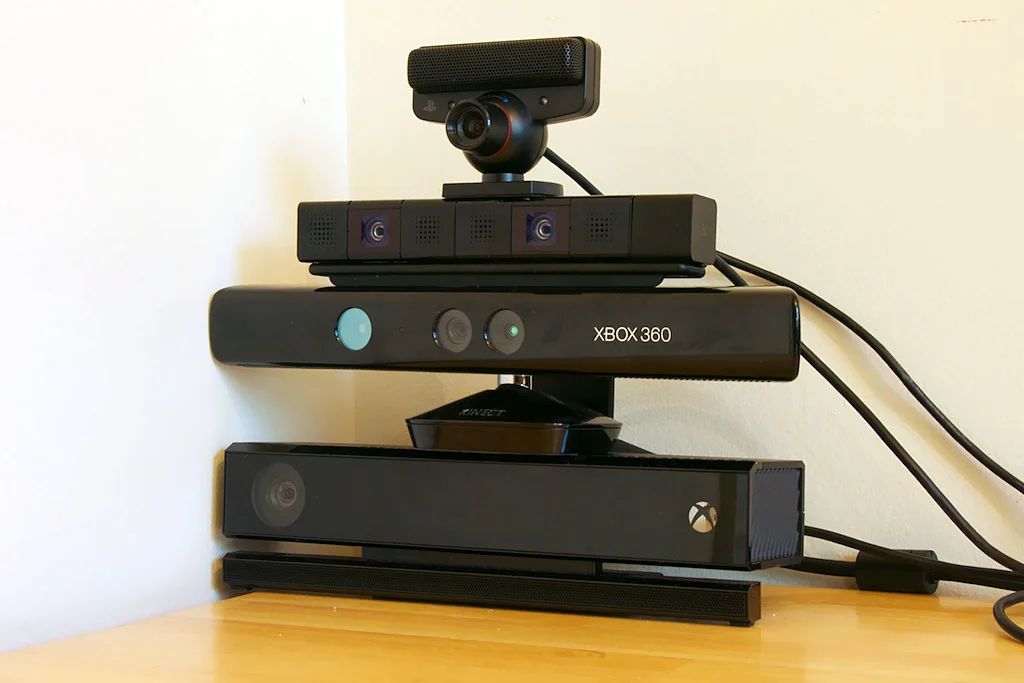
In 2016 the Xbox One S dropped the built-in Kinect port entirely, so connecting a sensor required a separate USB adapter Microsoft sold on the side. In October 2017, Microsoft discontinued that adapter. That same fall, Microsoft confirmed it had also stopped manufacturing the Kinect sensor itself, ending new production of the hardware for good. Existing units kept working with older consoles that still had the port, but new Xbox hardware had no path to plug one in at all.
Where the technology actually went
Kinect’s depth-sensing and skeletal-tracking technology did not die with the peripheral. Microsoft repackaged it as Azure Kinect DK, a developer kit aimed at businesses building computer vision, robotics, and retail-analytics applications rather than living-room games, announced in 2019.
That product had its own limited run. Microsoft discontinued the Azure Kinect DK in August 2023, which meant the underlying sensor technology had now been formally retired twice under two different names, first as a game accessory, then as a developer tool.
Does a Kinect still work in 2026?
If you still have an Xbox 360 or an original Xbox One with the built-in port, yes, a Kinect sensor plugs in and functions exactly as it did on release. Xbox Live services for the original Xbox 360 Kinect games have had a mixed history of shutdowns depending on the title, so check the specific game rather than assuming the whole library still connects online.
If your console is a newer Xbox One S, Xbox One X, Xbox Series S, or Xbox Series X, there is no port to use, and the USB adapter that once solved that problem is long out of production and now mostly found secondhand. There is no supported way to use a Kinect sensor with current Xbox hardware. This site does not cover resale value or where to source a used adapter; that is a buying question, not a history question.
What Kinect actually proved and what it did not
Kinect proved that a mainstream audience would buy a motion sensor in large numbers if the price and the pitch were right, which is exactly what the 2010 launch numbers show. What it did not prove is that people wanted to keep using one. The gap between a strong launch and sustained use is the real story here, and it is a gap Microsoft ran into twice with the same hardware family under two different names.
The full index of the era’s discontinued hardware, grouped by what actually ended each one, is at the dead gadgets of the 2000s and 2010s. For the story of Microsoft’s other hardware graveyard from the same decade, see what happened to the Zune.
A note on the numbers
The 8 million units in 60 days and 10 million-plus by early March 2011 figures come from Microsoft’s own sales announcements and Guinness World Records’ verification, and both are consistent across contemporaneous reporting, so they are used here as stated. Total lifetime Kinect sales across both Xbox 360 and Xbox One generations are not something Microsoft has published as a single confirmed figure, and the various totals that circulate online (often cited loosely as “35 million”) are not traceable to a single primary source, so this article does not repeat one.
FAQ
Did Microsoft ever officially discontinue the Kinect?
Yes, in stages. The Xbox One S removed the Kinect port in 2016, the USB adapter needed to connect one to newer consoles was discontinued at the end of 2017, and Microsoft stopped manufacturing the sensor itself that same fall.
Can I still buy a new Kinect sensor?
No. Kinect sensors are no longer manufactured. Any new-in-box unit found for sale today is old retail stock, not current production.
Why did the Xbox One originally require a Kinect?
Microsoft bundled Kinect with every Xbox One at launch in 2013 to guarantee developers a large installed base to build for. The bundle raised the console’s price above the Kinect-free PlayStation 4, and Microsoft unbundled it within a year.
Is Kinect technology used anywhere today?
The underlying depth-sensing technology was repackaged as Azure Kinect DK, a developer and enterprise sensor aimed at computer vision and robotics applications. Microsoft also discontinued that product, in August 2023.
Does Kinect work on Xbox Series X or Series S?
No. Neither console has a Kinect port, and the USB adapter that once bridged that gap is no longer in production.