
Short answer: the standalone dashboard GPS unit is a dead product category. It peaked around 2004 to 2008, was undercut by free smartphone navigation starting in 2009, and has never recovered as a mainstream consumer product. TomTom and Garmin, the two companies that built that category, are not dead, and they did not end up in the same place. Garmin is a materially bigger company today than it was at the height of the GPS era, because it moved into wearables, outdoor gear, aviation and marine electronics. TomTom is a much smaller company than it was in 2008, and it survived by becoming a supplier of maps and location data to automakers and other businesses rather than a seller of navigation hardware to drivers. Same category collapse, two different companies, two different endings.
What a standalone GPS unit actually was
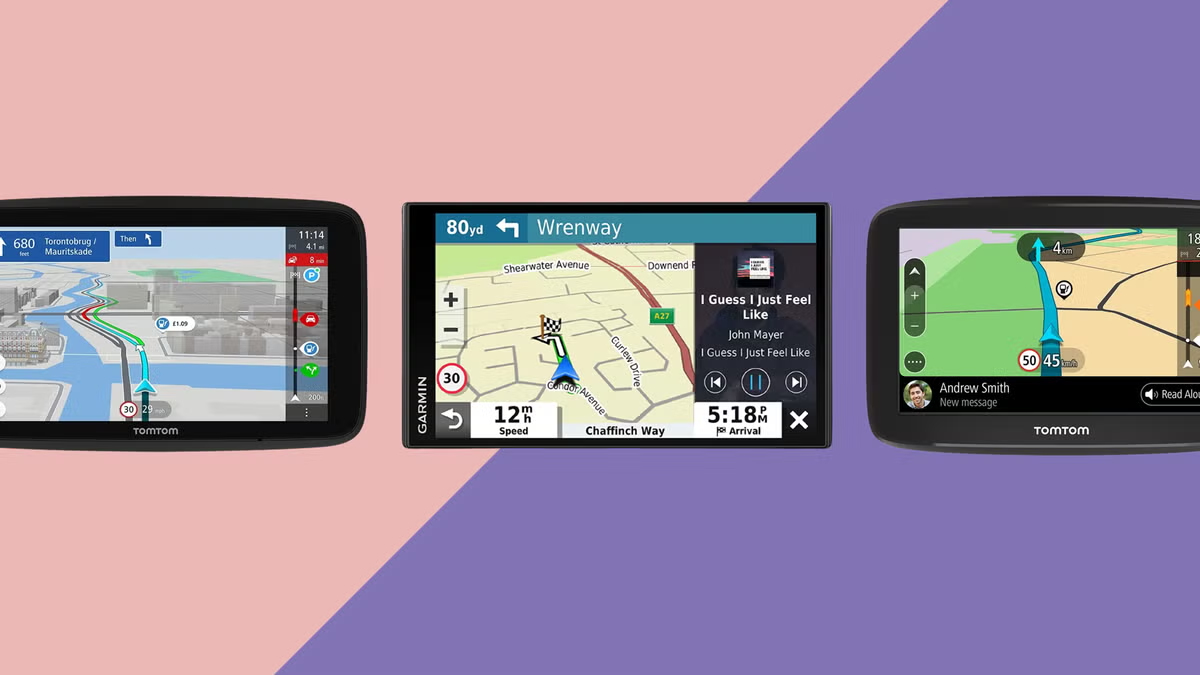
For roughly a decade, a “GPS” meant a specific object: a small screen on a suction-cup mount, stuck to a windshield, that calculated a route and spoke turns out loud. It ran on its own chip, held its own maps on internal memory, and had nothing to do with your phone.
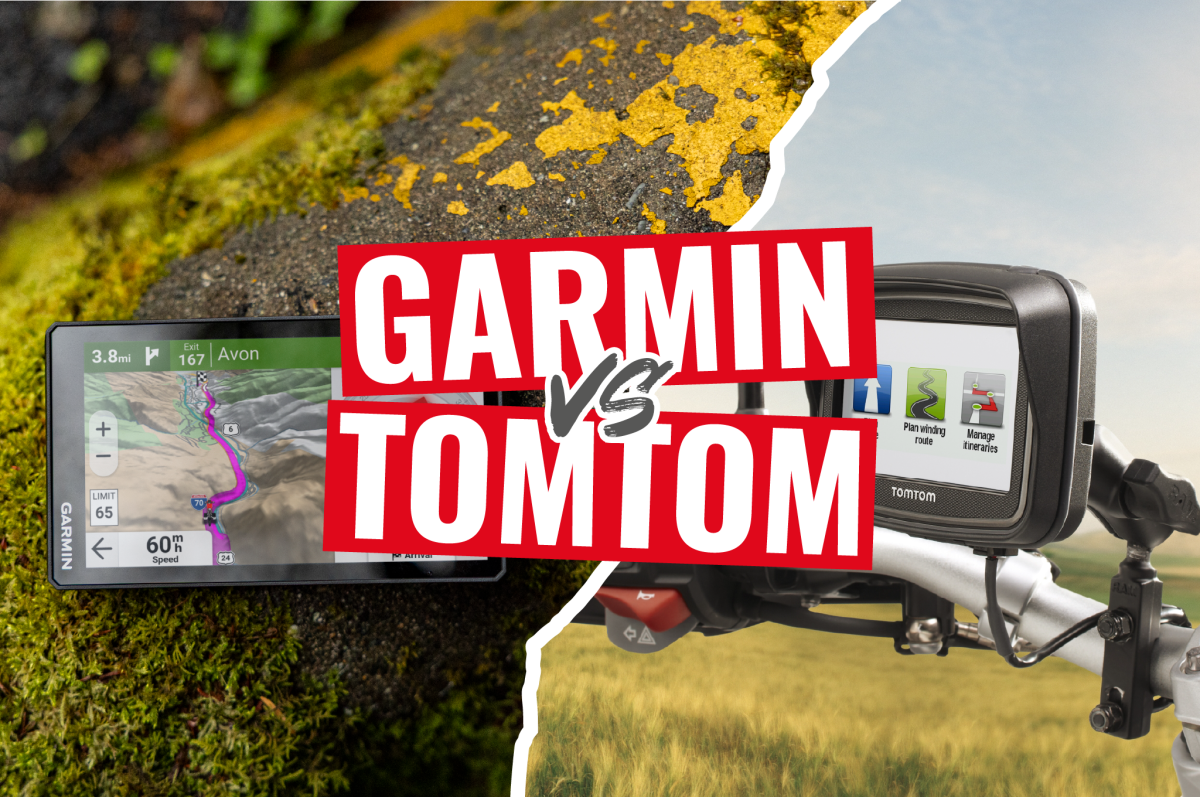
TomTom, a Dutch company, and Garmin, a US company originally built around aviation and marine navigation, were the two brands that owned this shelf at every electronics retailer. Between them they defined what a “personal navigation device,” or PND, looked like: a dashboard unit with a touchscreen, spoken directions, and a subscription or paid update for fresh maps.
The peak: roughly 2004 to 2008
The category grew fast and then very fast. Garmin’s own SEC Form 10-K for fiscal year 2008 reported total revenue of $3.49 billion and 16.9 million units delivered that year, both records at the time. TomTom’s 2008 revenue was reported at approximately €1.7 billion, as covered by CNBC citing the company’s own results, down from the company’s original guidance of €2.0 to €2.2 billion because of a weakening consumer market even before the real disruption hit.
Every car electronics aisle, every airport kiosk and every holiday gift guide had a GPS unit on it. It was, for a few years, one of the fastest-growing categories in consumer electronics.
October 28, 2009: the day free navigation arrived
The category’s ceiling arrived with a single announcement. On October 28, 2009, Google said that Android 2.0 would include turn-by-turn voice navigation built into Google Maps, at no additional cost. As reported by Fast Company and Bloomberg at the time, Garmin’s shares fell roughly 16 percent and TomTom’s fell roughly 20 percent on the news, wiping out an estimated $1.2 billion of Garmin’s market value in a single trading session.
The market’s reaction was really one question, restated as a stock price: if a phone most people already carried could do the same job for nothing, why would anyone keep buying a dedicated device to do it? Apple’s Maps app and, later, Waze made the same case on the other major phone platform. The dashboard GPS unit did not lose a feature war. It lost the argument for its own existence.
Garmin’s answer: go everywhere the phone can’t
Garmin’s response was to leave the fight rather than win it. Rather than defend the dashboard unit, the company pushed hardware into places a phone is a poor substitute: on your wrist during a run, on your bike, on a boat, in a small aircraft’s instrument panel.
That bet is now visible in the company’s own numbers. Garmin’s fourth-quarter and full-year 2025 results, announced by the company and reported via PR Newswire, put full-year 2025 total revenue at $7.245 billion, up 15 percent year over year, with record operating income of $1.876 billion. The segment breakdown tells the real story of where that revenue now comes from: Fitness revenue reached $2.357 billion, up 33 percent, the company’s largest and fastest-growing segment. Outdoor revenue was $2.054 billion, up 5 percent. Aviation revenue reached $987 million, up 13 percent. Marine revenue reached $1.183 billion, up 10 percent. Auto OEM, the segment that builds embedded navigation and driver-assistance systems for automakers rather than dashboard units for consumers, brought in $665 million, up 9 percent.
Put the two figures side by side. Garmin’s 2008 total revenue, at the absolute peak of the dashboard-GPS boom, was $3.49 billion. Its 2025 total revenue is $7.245 billion, more than double, and none of the five segments driving that number is “sell a screen that gives driving directions.” Garmin did not survive the death of the PND. It outgrew it.
TomTom’s answer: stop selling to drivers, start selling to automakers
TomTom took the opposite route, and it is the less flattering story, though not the one the SERP tells you either.
The company’s consumer navigation devices lingered in the US and Canadian market for years after the 2009 shock, at shrinking volumes, before TomTom told customers in January 2024 that its personal navigation devices would no longer be sold through its website or listed retailers in those two countries, as reported by autoevolution based on TomTom’s own customer communications. Its home market, Europe, kept a small dashboard-device business running longer, but that too has continued to shrink.
What replaced it, on TomTom’s own books, is a business built on licensing rather than retail. TomTom’s fourth-quarter and full-year 2025 results, published by the company, reported total group revenue of €555 million for 2025, down 3 percent from €574 million in 2024. Its Location Technology segment, the maps, software and location data TomTom sells to automakers, app developers and other businesses rather than to individual drivers, generated €482 million of that, roughly level with 2024’s €489 million. TomTom’s own results also point to a record automotive order backlog of €2.4 billion and highlighted the 2025 rollout of Orbis Maps, an open mapping platform aimed at automakers building higher levels of driving automation, as the company’s clearest area of new commercial traction.
Set that €555 million against TomTom’s own 2008 revenue of roughly €1.7 billion and the company is, by revenue, well under half the size it was at its peak. It is also, per its own reporting, cash-generating and carrying a net cash position rather than debt. TomTom did not disappear. It got smaller, and it got smaller on purpose, trading a consumer retail business it could not win against free phone apps for a supplier role that mapping and driving-automation companies are willing to pay for directly.
Two companies, one category, two different-sized survivals
This is the part almost nothing ranking for this query says out loud: “smartphones killed GPS devices” describes the product, not the businesses. Garmin’s answer to that death was to become several other, larger businesses. TomTom’s answer was to become one smaller, different, but genuinely profitable business.
| 2008 (PND-era peak) | FY2025 | Source | |
|---|---|---|---|
| Garmin, total revenue | $3.49 billion | $7.245 billion | Garmin FY2008 Form 10-K (SEC); Garmin Q4/full-year 2025 results (PR Newswire) |
| TomTom, total revenue | approx. €1.7 billion | €555 million | TomTom 2008 results, as reported by CNBC; TomTom Q4/full-year 2025 results |
Neither company is chasing the dashboard GPS market back. Both walked away from it deliberately, years before the shelf space actually disappeared, and neither one’s current size has much to do with how well it once made turn-by-turn directions.
Does an old TomTom or Garmin unit still work?
The hardware usually still turns on. What has changed is whether the maps and services behind it still do.
Garmin and TomTom have discontinued map updates and, in some cases, connected services for their oldest device lines over the years, the way any hardware maker eventually stops supporting old products. A unit with outdated maps will still calculate a route on the roads that existed when it was last updated, which is a real limitation on any road that has changed since, and it will not have live traffic or speed camera data if the service behind those features has been shut off for that model. Whether a specific model still receives updates is something both companies publish per-device, not something that can be answered for the category as a whole.
What an old unit is worth, or where to sell one, is a different question and not one this article covers.
What replaced the dashboard GPS
The direct answer is the smartphone, running Google Maps, Apple Maps or Waze, all of which do the core job for free and add live traffic, rerouting and search that a standalone unit’s static maps cannot match. The same pattern that ended the dashboard GPS ended the standalone MP3 player: a general-purpose device you already carried became good enough at a job a dedicated device used to do better, and good enough won.
For the fuller pattern behind this cluster of endings, including the other categories the smartphone absorbed rather than lost to a direct competitor, see the dead gadgets of the 2000s and 2010s. For a case where the hardware category ended but the company reinvented itself around a completely different market, see what happened to Segway. And for two more consumer electronics brands that survived their defining product’s decline by becoming suppliers or niche players rather than mass-market leaders, see what happened to Sony Xperia and what happened to HTC.
FAQ
Is Garmin still in business?
Yes. Garmin reported full-year 2025 total revenue of $7.245 billion and record operating income of $1.876 billion in its own fourth-quarter and full-year 2025 results, more than double its 2008 revenue at the peak of the dashboard-GPS era. Its growth now comes mainly from fitness wearables, outdoor devices, aviation and marine electronics, not from consumer car navigation units.
Is TomTom still in business?
Yes, but at a much smaller scale than its 2008 peak. TomTom’s own fourth-quarter and full-year 2025 results reported total group revenue of €555 million, down from roughly €1.7 billion in 2008. The company now sells maps and location technology to automakers and enterprise customers rather than navigation hardware to consumers.
When did TomTom stop selling GPS devices in the US?
TomTom told customers in January 2024, as reported by autoevolution, that its personal navigation devices would no longer be sold through its website or major retail listings in the United States and Canada. Devices already on shelves at some retailers remained available briefly afterward while supplies lasted.
Why did smartphones kill standalone GPS units?
The turning point was October 28, 2009, when Google announced free turn-by-turn navigation built into Google Maps for Android. As reported by Fast Company and Bloomberg, Garmin and TomTom shares both fell sharply the same day. Once a phone most people already carried could give live, free, constantly updated directions, a dedicated device that held static maps and cost money on top of the phone lost its reason to exist for most drivers.
Do old TomTom or Garmin GPS units still work?
The hardware generally still powers on and will navigate using whatever maps were last installed. What varies by model is whether the manufacturer still issues map updates or supports connected features like live traffic, which each company documents per device rather than for the category as a whole.