
Short answer: OPPO removed the 3.5mm headphone jack first, from the ultra-thin Finder in 2012 and the R5 in 2014, for reasons of pure industrial design. Motorola followed in June 2016 with the Moto Z, the first major US flagship without one. Apple made the move famous on September 7, 2016, when Phil Schiller told the iPhone 7 keynote audience it came down to “courage,” alongside stated reasons of internal space and water resistance, at the same event where Apple launched its own wireless AirPods. What the keynotes did not spend much time on is that Apple also runs a licensing program that accessory makers pay to join, and that the wireless-earbud market grew into a business worth billions in the years that followed. Both things are true: the engineering reasons were real, and they lined up with a wireless-accessory business every major phone maker wanted. Samsung’s own record, mocking the move for two years and then making it in 2019, is the clearest evidence of which motive won.

What the headphone jack was, and why it survived so long
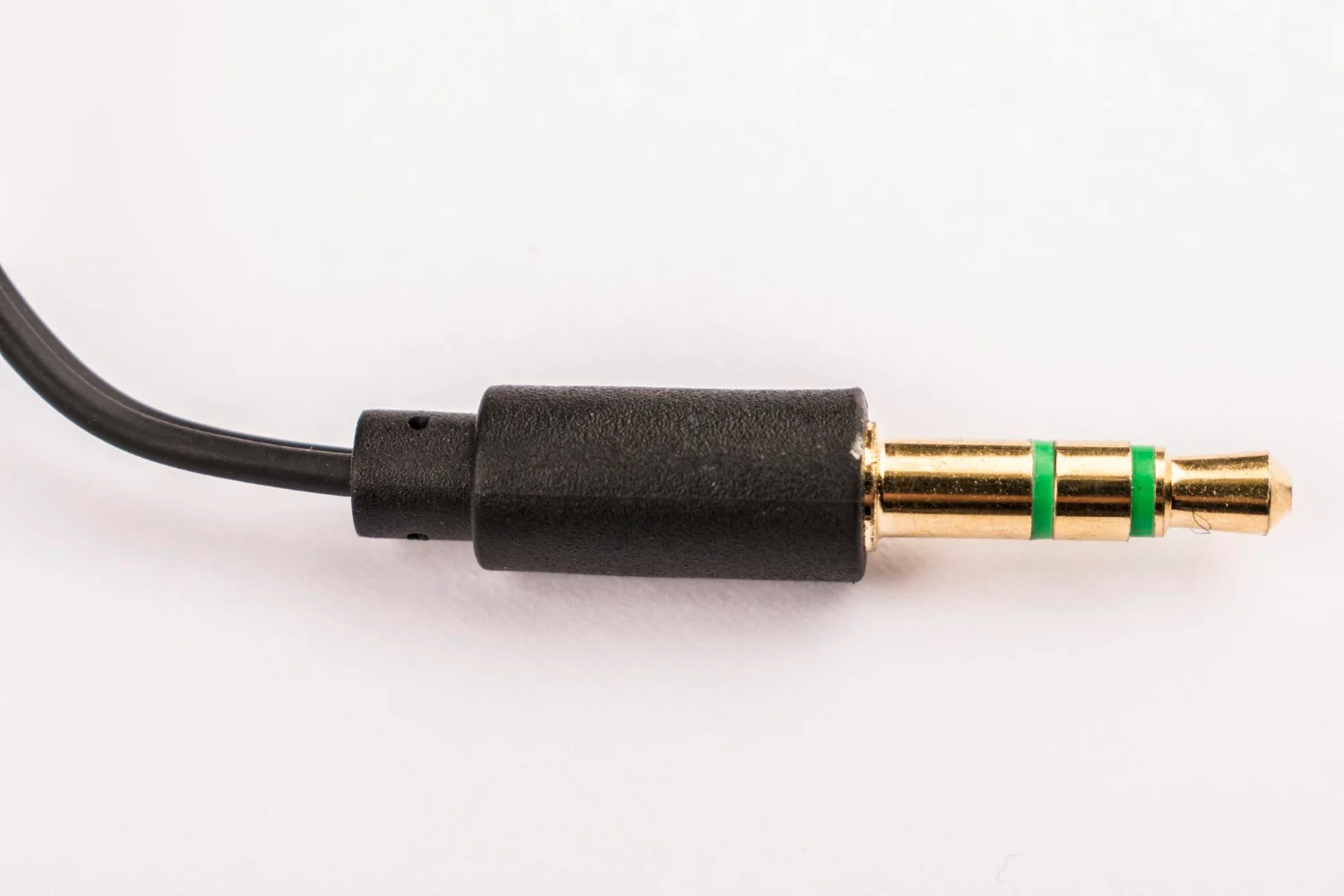
The 3.5mm jack is a passive analog connector standardized decades before smartphones existed, first popularized on portable devices by the Sony Walkman in 1979. Its appeal was that it needed no pairing, no battery in the headphones, no app, and it worked with practically every pair of headphones ever made, from the cheapest set to a studio pair. For most of the smartphone era, removing it looked like removing a feature with no real cost to the user and a real cost to the design. That is exactly why an explanation was expected when it started disappearing, and why the explanations offered became a small industry of their own.
2012 to 2016: the jack disappears before Apple touches it
Apple is the brand most associated with killing the headphone jack, but it was not first. OPPO removed it from the Finder in 2012, a phone marketed on being the world’s thinnest at 6.65mm, and did it again with the R5 in 2014, a phone barely thicker than the micro-USB port used to charge it, as reported by Android Authority. Neither device sold in volume outside parts of Asia, so the removal did not register as an industry story.
The first major flagship to drop the jack in the largest smartphone market was the Motorola Moto Z, unveiled in June 2016 as a Verizon exclusive, as reported by MacRumors and PhoneArena. Motorola’s stated reason was different from OPPO’s: the Moto Z’s modular Moto Mods system, which let a magnetic back panel snap onto the phone, needed the freed-up internal space and a thinner chassis. By the time Apple held its own September event three months later, two manufacturers had already made the case in public and been mostly ignored.
September 7, 2016: Apple’s iPhone 7 and the “courage” line
Apple’s iPhone 7 announcement, on September 7, 2016, is the event most people mean when they ask this question, because Apple’s volume made the change unavoidable rather than a niche curiosity. Phil Schiller, Apple’s marketing chief, told the keynote audience: “It really comes down to one word: courage. The courage to move on, do something new, that betters all of us,” as reported by The Ringer and Fast Company from the same keynote.
Schiller did not stop there. He also said Apple’s internal space was “at a premium” and pointed to the phone’s water resistance as a benefit of sealing the port. Apple included a Lightning-to-3.5mm adapter in the box for anyone with existing wired headphones, an accommodation that quietly conceded the transition would be inconvenient. At the same keynote, Apple introduced its own wireless earbuds, AirPods, originally slated to ship in late October 2016 and eventually delayed to a mid-December launch, as reported by MacRumors.
The stated reasons, checked one at a time
Internal space. This one holds up under scrutiny. The 3.5mm jack is a rigid metal cylinder that has to sit at a fixed depth inside the chassis, and it does compete for space with the battery and other components in a phone that keeps getting thinner. Teardown coverage from the period consistently showed the freed cavity being used for battery volume or additional hardware.
Water and dust resistance. Also defensible. A sealed port is genuinely easier to waterproof than a socket with an open cavity, and Apple did advertise IP67 water resistance for the iPhone 7 for the first time. It is true that manufacturers achieved water resistance around jacks before and after this era, so the jack was not strictly incompatible with sealing, but removing it did simplify the engineering.
The push to wireless. Apple, Motorola and OPPO all cited a shift toward Bluetooth audio as inevitable or already underway. In 2016 this was closer to a bet than a description of the present: wireless headphones existed but were a minority of the market. The bet turned out to be correct, which is a different thing from the reasoning being complete at the time it was made.
What the keynote didn’t say: the commercial side
None of the stated reasons above are false. What they leave out is what happened to the money once the jack was gone.
Apple’s Made for iPhone program, known as MFi, requires third-party accessory makers to license Apple’s connector technology to build certified cables and adapters. Coverage of the program’s fee structure, including from MacRumors and AppleInsider reporting on Apple’s 2014 rate changes, describes Apple settling on a flat per-connector licensing charge rather than a percentage of retail price. Every third-party Lightning or USB-C headphone adapter and every certified wired accessory sold into the post-jack iPhone lineup routes some revenue back to Apple through that program, in a way a passive 3.5mm jack never could.
The wireless side of the business grew alongside it. Counterpoint Research reported, as covered by GSMArena in May 2021, that worldwide true wireless stereo earbud shipments reached 233 million units in 2020, up 78 percent from the prior year, with a forecast of roughly 310 million units for 2021. That figure describes the market several years after the iPhone 7, not at the moment of the announcement, but it shows where the category Apple helped normalize in 2016 ended up: a mainstream, multi-hundred-million-unit-a-year business that Apple’s own AirPods line was positioned inside from day one.
None of this proves the engineering reasons were invented. It shows that the engineering reasons and the commercial upside were not in tension. A company does not need to be lying about a battery constraint to also benefit enormously from the accessory ecosystem that constraint’s removal opens up.
2017 to 2019: the rest of the industry follows, and Samsung’s reversal
Once Apple normalized the change at flagship scale, other manufacturers followed within a couple of years. HTC removed the jack from the HTC U11 in 2017, shipping a USB-C adapter in the box, as reported by GSMArena and TechTimes coverage of the launch. Google, Huawei, and most other Android flagship makers had dropped the jack from their top-tier phones by the end of the decade.
The clearest single piece of evidence that the commercial motive mattered, not just the engineering one, is Samsung’s own record. In November 2017, Samsung ran a “Growing Up” ad campaign for the Galaxy Note 8 that mocked Apple’s iPhone users for needing a dongle to use wired headphones after the jack’s removal, as reported by Android Authority, MacRumors and AppleInsider. On August 7, 2019, Samsung unveiled the Galaxy Note 10 without a headphone jack of its own, citing internal space for a larger battery, and included USB-C earbuds in the box alongside a separately sold USB-C-to-3.5mm adapter, as reported by CNBC and CNN. Samsung then quietly removed the “Growing Up” ad from its official YouTube channels, a move widely reported at the time, including by MacRumors and Android Authority, within days of the Note 10 launch. A company that spent two years telling the public the removal was a mistake made the identical decision once its own product cycle and its own wireless-earbud line, Galaxy Buds, were ready.
So was there ever a real reason, or was it money?
Both. The internal-space and water-resistance arguments were genuine engineering constraints, verifiable in teardowns and product specifications, not manufactured excuses. But every company that made this move also had a wireless-audio product to sell, a licensing program or an accessory ecosystem to benefit from, or both, and the timing of Samsung’s reversal, arriving exactly when its own Galaxy Buds line and battery-hungry Note lineup needed the same tradeoff, is difficult to explain as engineering alone. The honest answer to “was there ever a real reason” is that the stated reasons were real and incomplete, and the part left out of every keynote was where the wireless-audio money was going next.
For the fuller graveyard this decision sits inside, see the dead gadgets of the 2000s and 2010s. HTC and Sony’s Xperia line took opposite paths on this exact question, one following Apple quickly and the other holding onto the jack for years longer, and the jack’s disappearance sits alongside the decline of standalone portable media players and the loss of the physical keyboard as one of several phone-design fights the market, not any single announcement, ultimately settled. The jack’s other major casualty was the standalone MP3 player market it had already been squeezing since the iPod’s own decline.
FAQ
Did Apple remove the headphone jack first?
No. OPPO removed it from the Finder in 2012 and the R5 in 2014, and Motorola’s Moto Z followed in June 2016, three months before Apple’s iPhone 7. Apple’s move got the attention because of its market scale, not because it was first.
What did Apple actually say the reason was?
Phil Schiller cited internal space, water resistance, and, in his own word, “courage,” at Apple’s September 7, 2016 keynote. Apple included a Lightning-to-3.5mm adapter in the box at the time.
Did removing the headphone jack help Apple sell more AirPods?
Apple launched AirPods at the same event as the jack’s removal. Apple has never published a figure tying AirPods sales directly to the jack’s removal, and this article does not claim one exists, but the timing of the two announcements was not a coincidence.
Why did Samsung remove the headphone jack after mocking Apple for it?
Samsung ran ads in 2017 mocking Apple’s dongle requirement, then removed the jack from its own Galaxy Note 10 in August 2019, citing space for a larger battery, and quietly took the old ads down afterward.
Do any current flagship phones still have a headphone jack?
Some manufacturers, particularly in budget and mid-range lines, still include one. Which specific current models do is a moving target this article does not track; the history above covers how and why the mainstream flagship market moved away from it.