
Short answer: Physical keyboards did not vanish because they were bad. They lost because the iPhone (2007) and the first Android phones (2008) redefined a phone as a touchscreen computer, and by the end of 2009 more than half of all smartphones sold worldwide already used a touchscreen instead of a keypad, according to analyst firm Canalys. Nokia, HTC, Samsung and Sony Ericsson wound down their keyboard lines within about five years of the iPhone’s launch. BlackBerry held on longest through a licensing deal with TCL that ended in August 2020. The format is not fully extinct: a small group of niche manufacturers, including Unihertz and F(x)tec, still build keyboard phones in 2026, and a company called Clicks is developing a new one. But no mainstream phone maker treats a keyboard as a serious product line anymore.
That is the short version. What actually happened is a market shift that hit almost every keyboard-phone maker in the same narrow window, for closely related reasons, and it is worth walking through properly, because “touchscreens got better” is true but incomplete.
Quick timeline: when keyboard phones actually stopped
| Year | What happened |
|---|---|
| 2007-2008 | The iPhone (2007) and the first Android phone, HTC’s Dream (2008), launch the touchscreen-first template |
| Q4 2009 | 55 percent of smartphones sold worldwide are already touchscreen, not keypad, according to Canalys |
| 2011 | Nokia commits to Windows Phone over Symbian in February; Sony Ericsson ships the Xperia Pro, one of the last mainstream keyboard sliders |
| Aug 2011 | HP discontinues all webOS hardware, including the keyboard-equipped Palm Pre 3, 49 days after its flagship tablet launch |
| 2012 | HTC and Samsung’s keyboard sliders have largely disappeared from both companies’ flagship lineups |
| Dec 2016 | BlackBerry licenses its brand to TCL, which builds the KEYone and Key2 |
| Aug 2020 | TCL confirms it is ending the BlackBerry phone licensing deal, closing out the last mainstream-scale keyboard line |
| 2019-2026 | Niche makers (Unihertz, F(x)tec, and later Clicks) keep building keyboard phones for a small dedicated audience |
When every phone had a physical keyboard
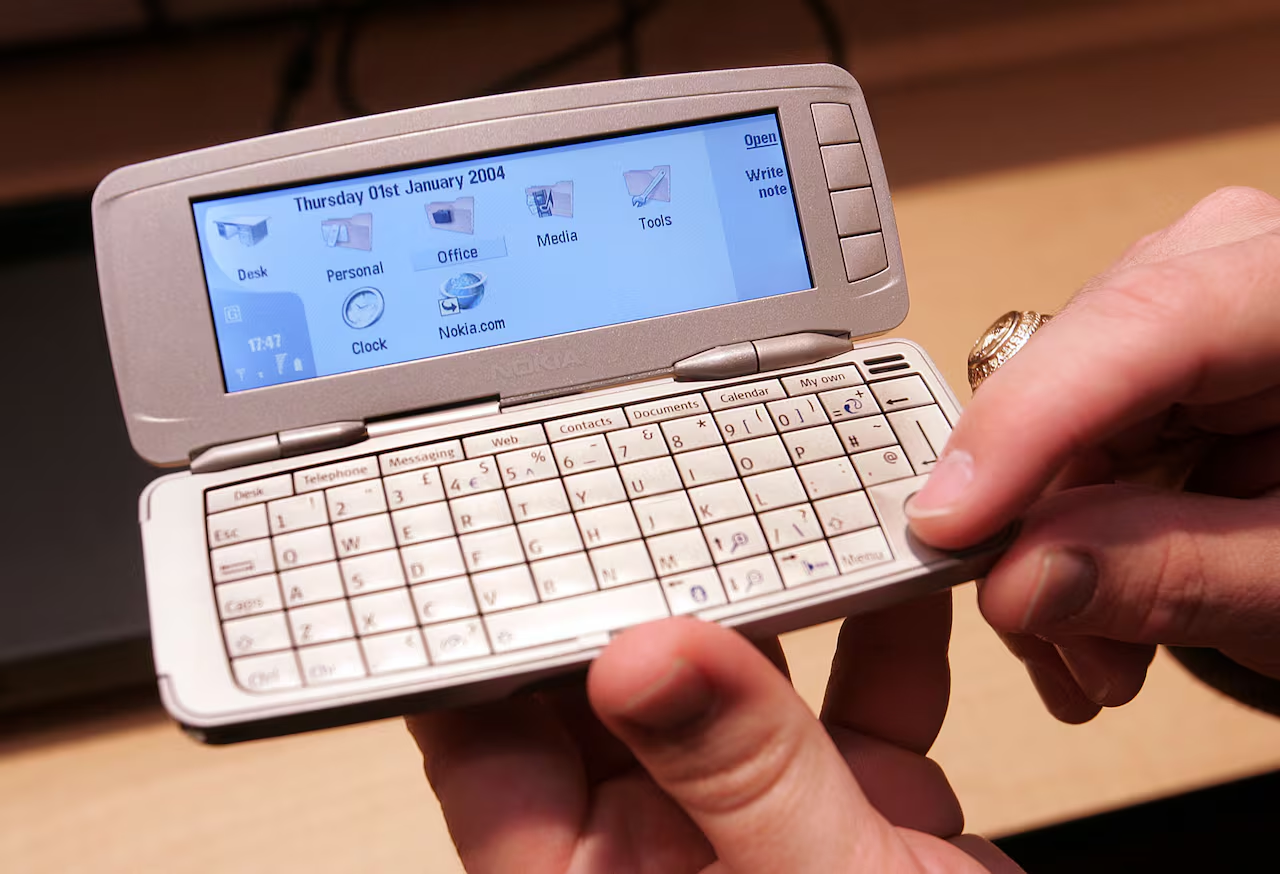
Rewind to the mid-to-late 2000s and a physical keyboard was not a niche feature. It was close to a default expectation on any phone marketed at serious typing or email use. BlackBerry, then made by Research In Motion, built its entire identity around a keyboard and instant push email, and by late 2009 it held roughly 20 percent of the global smartphone market and about 43 percent of the US smartphone market, according to figures widely cited from that period (BizTech Magazine, Statista). Nokia’s Symbian-powered E-series and later the Nokia E7 offered keyboards for its business-leaning customers. Palm’s webOS-powered Pre, launched in June 2009, paired a genuinely modern touch interface with a slide-out keyboard. HTC’s Dream, released in 2008 as the first commercially available Android phone, had a slide-out keyboard, and its 2010 follow-up, the HTC Desire Z, did too. Samsung and Sony Ericsson each sold multiple keyboard sliders through this period as well. A phone without a keyboard, in other words, was not yet the norm. It was one option among several hardware philosophies competing for the same buyer.
The touchscreen tipping point
Apple announced the iPhone in January 2007 and shipped it that June, with no physical keyboard at all, betting entirely on a software keyboard and a capacitive touchscreen. The first Android phone, HTC’s Dream, followed in 2008, and while it kept a physical keyboard as a fallback, its touchscreen-first interface pointed the same direction. Momentum built fast: touchscreen phones rose 138 percent in unit sales during 2009 compared with the overall smartphone market’s 41 percent growth that year, and 55 percent of all smartphones sold in the fourth quarter of 2009 used a touchscreen rather than a keypad, according to analyst firm Canalys. That is the real hinge point. Within roughly two and a half years of the iPhone’s launch, the touchscreen had already become the majority form factor, not a challenger format still trying to prove itself.
Why keyboards actually lost, not just “touchscreens were newer”
It is easy to say touchscreens won because they were new and shiny. The more useful explanation is a set of specific tradeoffs that stacked against the keyboard all at once.
A physical keyboard takes up space a touchscreen-only phone can give to the display, and every added millimeter of thickness or bulk to fit hinges, a slide mechanism, or a row of keys competed directly against the thing buyers increasingly wanted: a bigger, brighter screen. A touchscreen keyboard, unlike a fixed physical one, could change shape for every context, showing a number pad, an emoji picker, or a full alphabet as needed, and it could be updated in software rather than requiring new hardware. App stores rewarded that flexibility: touch gestures, multi-finger input and on-screen controls became core to how games and apps worked, and a hardware keyboard added nothing to that experience while adding weight and moving parts that could fail. None of this means physical keyboards were objectively inferior at their one job, fast, accurate typing without looking at the screen. It means the phone stopped being judged on that one job alone, and on every other axis the touchscreen-only design had the advantage.
The exit timeline: who stopped, and when
The mainstream makers did not all quit on the same day, but they quit inside a surprisingly tight window once the shift became obvious.
Nokia’s own keyboard-equipped Symbian line lost relevance as the company’s broader smartphone business collapsed after it committed to Windows Phone in February 2011, a decision covered in full in our Nokia retrospective. HTC and Samsung’s Android keyboard sliders, popular from roughly 2008 to 2011, quietly disappeared from both companies’ flagship lineups by around 2012 as slab touchscreen phones became each brand’s default design, a shift traced in our HTC history. Sony Ericsson’s Xperia Pro, one of the last mainstream Android sliders with a dedicated keyboard, shipped in 2011 and was not meaningfully followed up. Palm’s webOS-powered Pre, keyboard included, effectively ended when HP discontinued all webOS hardware on August 18, 2011, just 49 days after its flagship tablet launched, a story told fully in our Palm and webOS piece.
BlackBerry is the exception that proves how long a determined holdout could last. It kept shipping keyboard phones years after everyone else had stopped, moving through the Bold, Curve, Passport and Classic lines, and then, after it stopped designing phones in-house, through a licensing partnership with TCL that produced the KEYone and Key2 devices starting in December 2016. That licensing deal ended on August 31, 2020, when TCL confirmed it would stop making BlackBerry-branded phones, closing out the last mainstream-scale keyboard phone effort. The fuller BlackBerry story, including the January 2022 shutdown of its legacy network services, is covered in our BlackBerry retrospective.
Why this happened to almost everyone in the same five-year window
Here is the part most keyboard-phone writeups skip past: this was not six separate companies independently deciding keyboards were unfashionable. It was one shared input, the same touchscreen-first product template proven out by the iPhone and then Android, propagating through an entire industry’s supply chain and app ecosystem at once. Once component makers, app developers and carriers all optimized around a large touchscreen as the default phone shape, every manufacturer still selling a keyboard model was fighting the whole ecosystem’s momentum, not just a design trend. That is why Nokia, HTC, Samsung and Sony Ericsson all wound down their keyboard lines within roughly the same 2011-to-2012 stretch despite being unrelated companies with different strategies going in. BlackBerry lasted longer only because its keyboard was tied to an entrenched enterprise and government customer base with a genuinely different set of requirements, security and physical typing speed, that touchscreens were slower to satisfy. Even that advantage eventually ran out.
This is the same pattern this site has traced elsewhere: a phone feature does not usually disappear because engineers decided it was wrong. It disappears when the rest of the industry converges on a different default and the holdouts run out of reasons to stay different, the same dynamic covered in our look at why phones lost the headphone jack.
Is the category actually dead? No, but it is a niche now
It would be inaccurate to describe physical keyboard phones as extinct in 2026. They are not mainstream, but a small set of manufacturers still make or are actively developing them, aimed at a specific audience rather than the general phone-buying public.
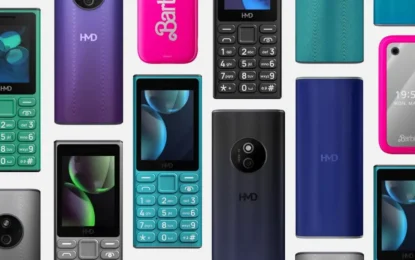
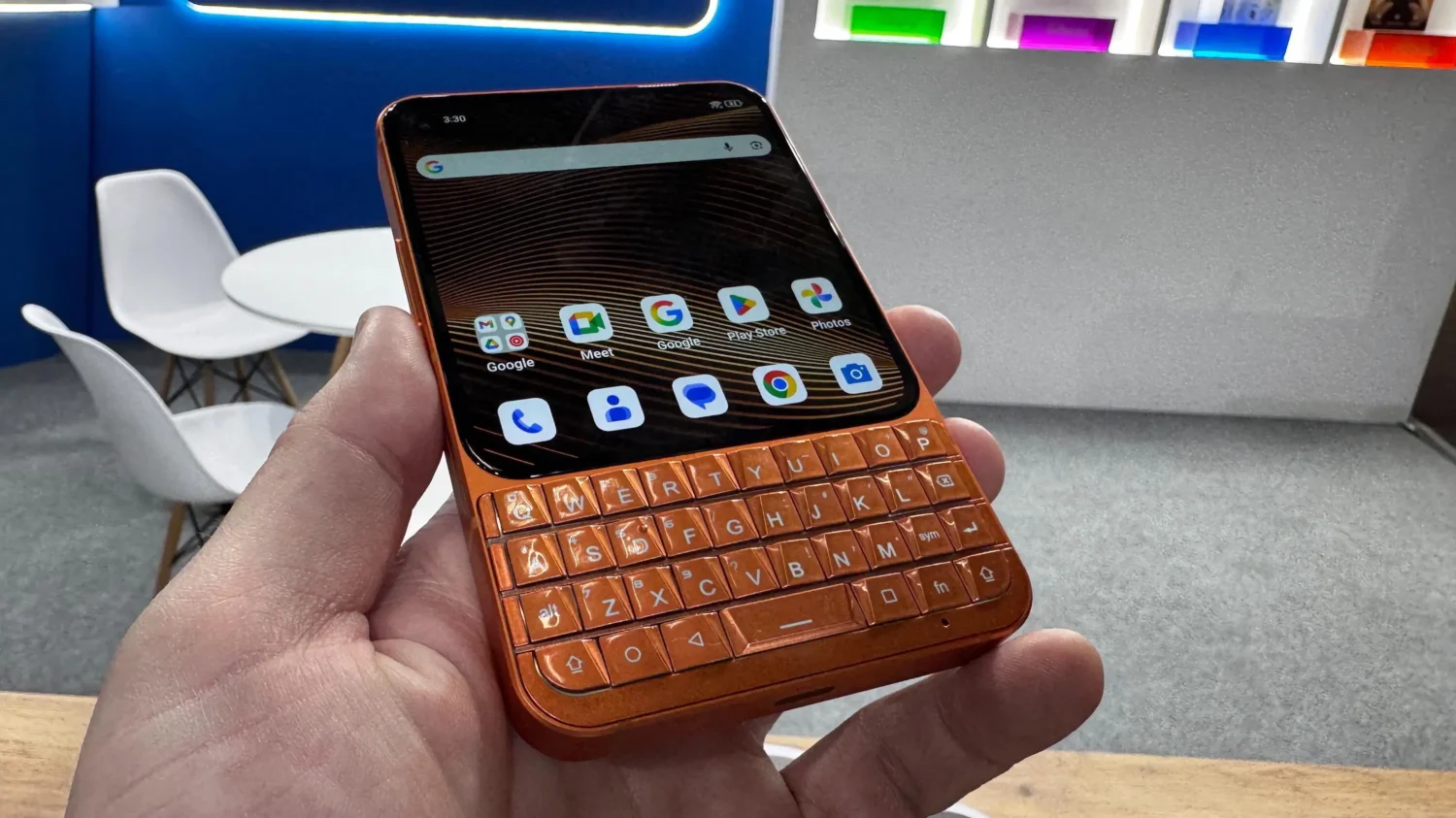
Unihertz has been the most consistent modern producer, shipping its original Titan phone in 2019 and continuing the line with newer models in 2026. F(x)tec, a UK-based company, built the Pro1 and the delayed Pro1-X around a slide-out keyboard for Android. A company called Clicks began by selling keyboard cases that attach to existing phones and has since moved toward a dedicated device, the Clicks Communicator, described by outlets including GSMArena as BlackBerry-inspired, with certification and testing reported for the third quarter of 2026. A smaller player, Minimal Company, has combined a physical keyboard with an E Ink display aimed at reducing screen time rather than replicating a mainstream smartphone. None of these companies operates at anything close to the scale BlackBerry, Nokia or Samsung once did, and none of the major phone makers, Apple, Samsung, Google or Xiaomi among them, has signaled any plan to bring a keyboard back into its mainstream lineup. The category survives as a deliberate choice for a specific kind of user, not as a mass-market option anymore.
Why the story still gets told
Physical keyboards on phones are one of the cleanest examples of an entire product category being reshaped by one company’s bet rather than a slow, even evolution. The iPhone did not just introduce a new phone. It reset what “phone” meant for every competitor, and manufacturers that had built genuine strengths around the keyboard, fast typing, tactile confidence, business trust, found that the market had simply stopped weighting those strengths the way it used to. That is a different failure than a bad product, and it is why the keyboard phone keeps coming up in conversations about how technology categories actually die: not with a single verdict, but with an entire ecosystem quietly agreeing to move on at close to the same time.
Frequently asked questions
When did phones with physical keyboards stop being made?
There was no single end date. Most mainstream makers, including Nokia, HTC, Samsung and Sony Ericsson, wound down their keyboard lines by around 2012. BlackBerry kept going longest, through a TCL licensing deal that ended on August 31, 2020.
Why did physical keyboards lose to touchscreens?
Touchscreens let a phone give more space to the display, changed shape for different apps, and matched the gesture-driven, app-store-based experience the whole industry converged on after the iPhone (2007) and the first Android phone (2008). By late 2009, touchscreen phones already made up the majority of smartphones sold worldwide, according to Canalys.
Do any phones with physical keyboards still exist in 2026?
Yes. A small group of niche manufacturers, including Unihertz and F(x)tec, still make keyboard phones, and a company called Clicks is developing a new one, the Clicks Communicator. None of the major mainstream phone makers currently sells one.
Was BlackBerry the last company to make keyboard phones?
Among mainstream, mass-market manufacturers, yes. BlackBerry’s licensing partner TCL made the last widely distributed keyboard phones under that name, ending in 2020. Smaller, hobbyist-scale companies have continued making keyboard phones since, but at a fraction of that scale.
Is a physical keyboard phone worth buying today?
This site does not sell phones or make buying recommendations. If you are deciding whether to buy or hold onto a specific device, that is a purchasing decision, not a history question, and belongs on a site built for exactly that comparison.
Sources: Canalys touchscreen-adoption data as reported in industry coverage of Q4 2009 smartphone sales; BizTech Magazine and Statista on BlackBerry/RIM’s 2009 US and global smartphone share; contemporary and later reporting from GSMArena, Android Authority, How-To-Geek, Android Police, PhoneArena and 9to5Google on the 2026 keyboard-phone niche (Unihertz, F(x)tec, Clicks, Minimal Company); TCL’s August 2020 confirmation of the end of its BlackBerry phone licensing deal. Market-share and adoption figures reflect widely cited reporting from the periods noted.