
Short answer: Palm, once the dominant maker of handheld organizers and an early smartphone pioneer, released webOS in 2009 on the Palm Pre to strong reviews but weak sales. HP acquired Palm for approximately $1.2 billion in a deal announced in April 2010 and completed that July, planning to put webOS across phones, tablets, and even printers. HP launched its flagship webOS device, the TouchPad tablet, in July 2011. On August 18, 2011, just 49 days later, HP announced it was discontinuing all webOS hardware, including the TouchPad and the Pre 3 phone that had barely reached shelves. HP later open-sourced webOS and sold it to LG in 2013, where it found a genuinely successful second life powering LG’s smart TVs, a use case that has quietly outlasted every phone or tablet the software was originally built for.
The software people praised was good. The company betting on it changed its mind faster than almost any hardware launch in this era.
What webOS actually was, and why reviewers liked it
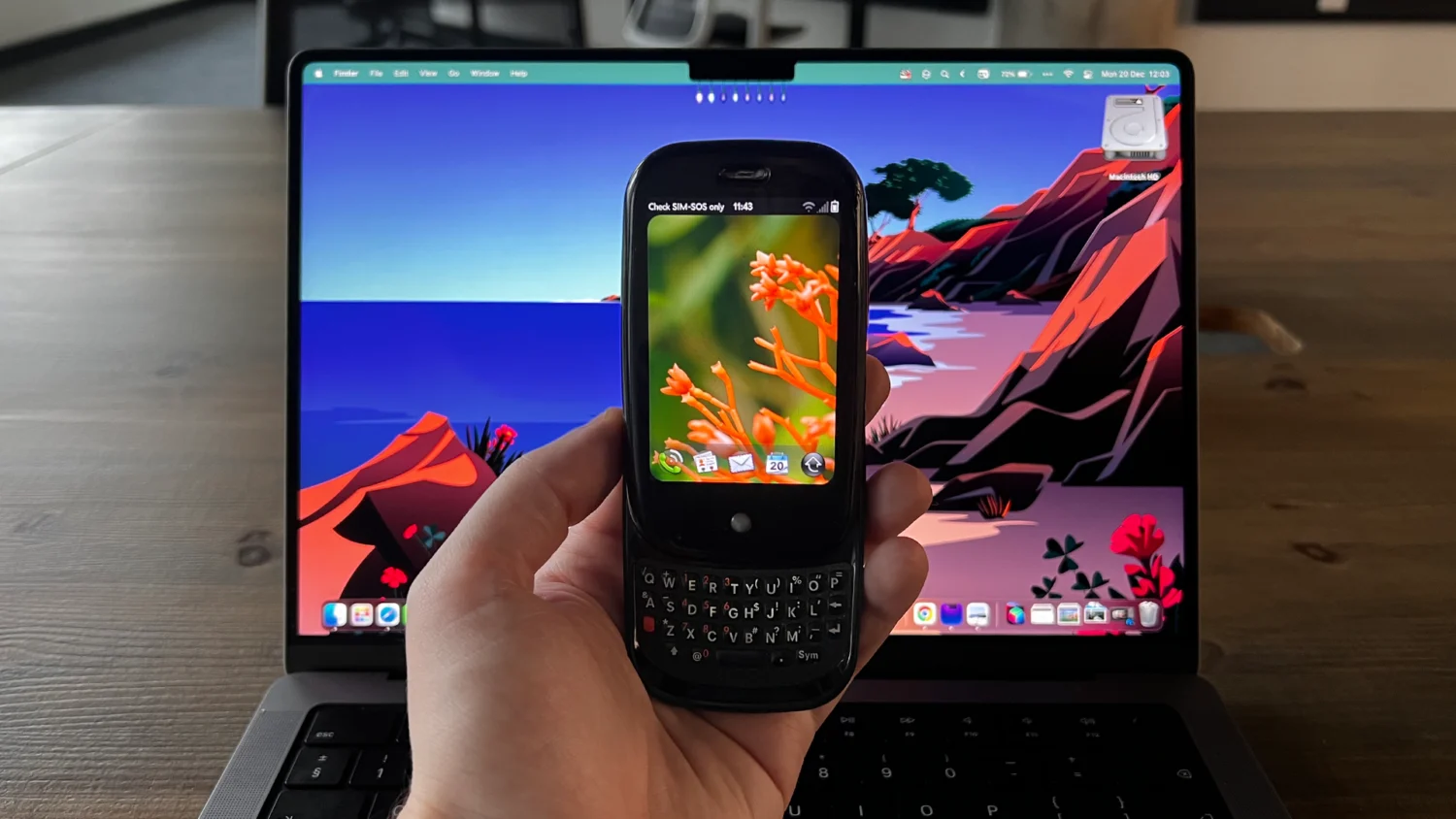
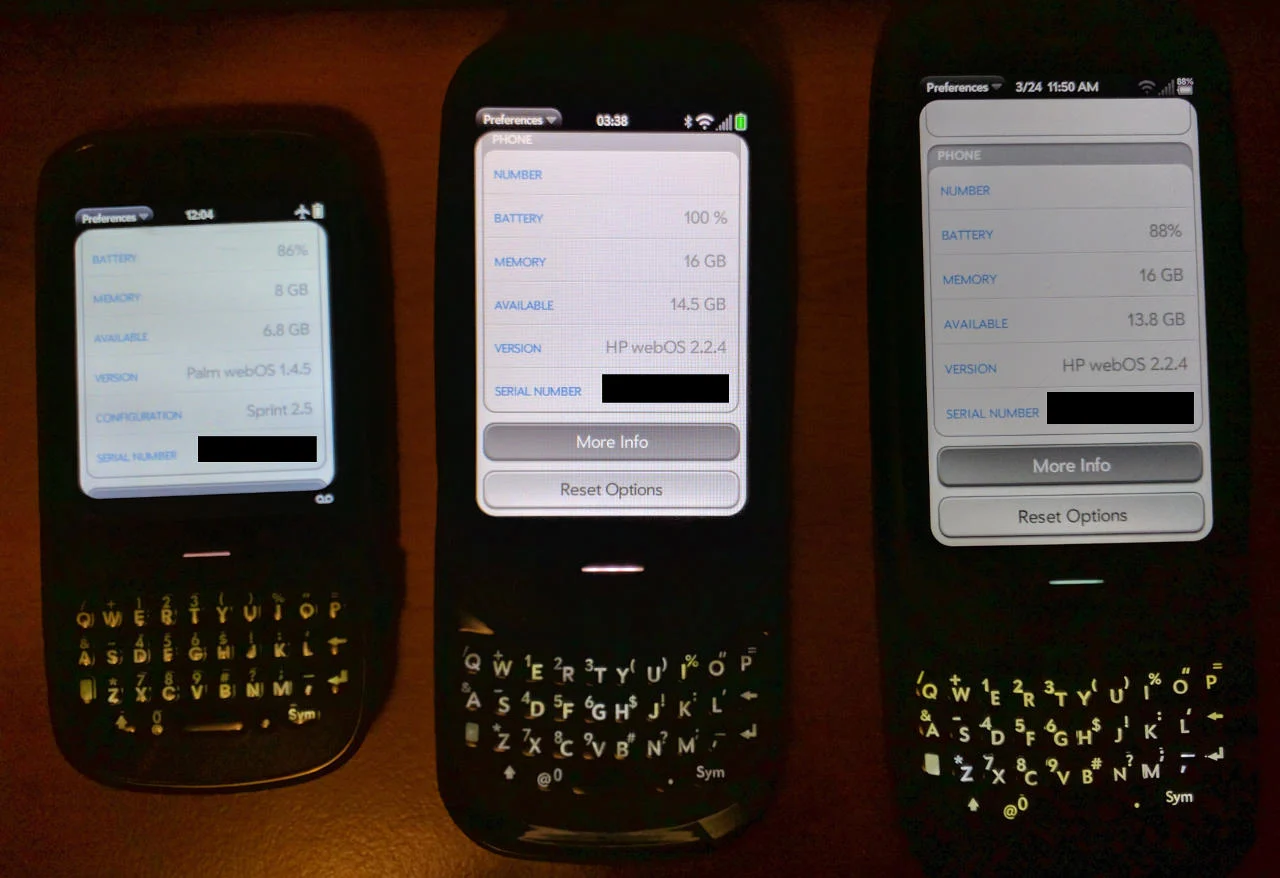
webOS, launched on the original Palm Pre in June 2009, was a genuinely forward-looking mobile operating system for its time. It introduced true multitasking presented as “cards,” where open apps appeared as physical-feeling stacked windows a user could flick between, a metaphor competitors would later echo in different forms. It supported real push notifications and a unified inbox before those were standard elsewhere, and its gesture-based navigation, using a touch-sensitive strip below the screen, was praised as intuitive.
The Pre’s hardware was less admired. It shipped with a small screen and a physical slide-out keyboard at a moment when the market was rapidly moving toward larger, keyboard-free touchscreens, and build-quality complaints, particularly about the sliding hinge, were common in early reviews.
Why Palm needed a buyer at all
Palm had been the dominant name in personal digital assistants through the late 1990s and early 2000s with its PalmPilot and Treo lines, but it had fallen far behind by the time webOS shipped. The iPhone had launched two years earlier, in 2007, and Android phones were already spreading fast by 2009. webOS was a genuinely competitive answer to both, arriving on time for once instead of years late, but Palm itself was a small company without the marketing budget, carrier relationships, or manufacturing scale to make that technical strength count against Apple and Google. Sales of the Pre and its successors were consistently modest, and Palm’s financial position weakened through 2009 and into 2010.
April 2010: HP buys Palm for webOS specifically
HP announced on April 28, 2010 that it would acquire Palm for $5.70 per share in cash, an enterprise value of approximately $1.2 billion, a roughly 23 percent premium over Palm’s stock price the day before. HP’s own statements at the time made clear the acquisition was about webOS itself, not Palm’s existing phone business: HP wanted a modern, owned mobile operating system it could put across its entire hardware lineup, since it had no equivalent of its own and did not want to depend entirely on Google’s Android or Microsoft’s mobile software. The deal closed in July 2010.
February 2011: the “webOS everywhere” plan
HP announced in February 2011 that webOS would become the standard platform across its personal computing devices going forward, including phones, tablets, and eventually printers, a strategy sometimes summarized at the time as “webOS everywhere.” HP unveiled the HP Veer, a small webOS phone, the HP Pre 3, a more conventional webOS smartphone, and the HP TouchPad, a full-size tablet meant to be HP’s answer to the iPad, all built on webOS 2.2 or 3.0.
This was a genuinely ambitious plan on paper. In practice it meant HP was staking its consumer strategy on a platform with a tiny existing app catalog and almost no developer momentum, competing against an iPad that already had hundreds of thousands of apps built specifically for it.
July 2011: the TouchPad launches, and August 2011: it is over
The HP TouchPad launched on July 1, 2011, priced to compete directly with Apple’s iPad. Reviews were mixed, citing sluggish performance and software that felt unfinished, and early sales were weak enough that retailers began discounting the tablet within weeks of release.
On August 18, 2011, just 49 days after the TouchPad’s launch, HP announced it would discontinue all webOS-based hardware, including the TouchPad and the freshly launched Pre 3, and consider strategic alternatives for the webOS software itself. It was an unusually fast reversal of a strategy the company had announced with considerable fanfare only six months earlier, and it effectively ended Palm as a phone and tablet brand less than fourteen months after HP had bought it specifically to build one.
HP did briefly manufacture one more TouchPad production run at clearance prices, in the tens of dollars rather than hundreds, which sold out rapidly and became a well-known footnote: a device that could not sell at its intended price sold out instantly once it was effectively given away.
This is the same shape of failure that closed out what happened to Windows Phone a few years later: a technically sound platform arriving with real institutional backing, undone by a market that had already formed strong app-ecosystem habits around two other companies.
2013: webOS goes to LG, and finds an actual second act
HP open-sourced parts of webOS in 2011 and 2012 rather than simply shelving it, and in February 2013, LG acquired webOS from HP to use as the operating system for its smart televisions. That decision has held up unusually well. WebOS has powered LG’s smart TV lineup continuously since, with LG maintaining and expanding it as its primary television software platform. A user interface built for switching between phone apps with a swipe turned out to translate well to switching between a TV’s menus, streaming apps, and inputs, a use case nobody discussed when the software was designed for the Palm Pre in 2009.
Does a Palm Pre or HP TouchPad still work in 2026?
The hardware itself still turns on and runs its stored apps and media. What has gone is the connected layer: the webOS App Catalog, Palm and HP’s store for downloading webOS apps, was shut down years ago, so installing new official apps is no longer possible through the device itself. A community of enthusiasts has kept unofficial software repositories and patches alive for these devices well past HP’s own support, but that is a hobbyist project rather than an official channel, and this site does not cover installing unofficial software or where to source one of these devices secondhand.
What actually survived
Palm the brand and webOS the operating system both technically still exist, just not attached to a phone. HP sold the Palm trademark itself to a separate licensing venture years later, which briefly put the Palm name on a small Android-based companion device around 2018, a minor footnote unrelated to the original webOS story. The software itself is the more interesting survivor: it is running today, largely unchanged in its core interaction concepts, inside millions of LG televisions, a genuinely successful outcome for a platform that failed twice as a phone and tablet operating system before anyone found the right screen for it.
The full index of the era’s discontinued hardware, grouped by what actually ended each one, is at the dead gadgets of the 2000s and 2010s. For another company whose mobile platform was undone by the exact same app-ecosystem gap, see what happened to Nokia and Symbian and what happened to BlackBerry phones.
A note on the numbers
The $1.2 billion acquisition price and the April 28, 2010 announcement date come directly from HP’s own investor announcement and were reported consistently by CNN, TechCrunch, and other outlets at the time. The August 18, 2011 discontinuation date, 49 days after the TouchPad’s July 1 launch, is drawn from HP’s own announcement and contemporaneous reporting. Some later retrospective pieces cite a different Palm acquisition figure, closer to $1.8 billion; that number is not traceable to HP’s own investor disclosures and appears to conflate the headline price with other transaction costs, so this article uses the $1.2 billion figure HP itself announced.
FAQ
Why did HP kill webOS so soon after launching the TouchPad?
HP announced the shutdown on August 18, 2011, just 49 days after the TouchPad’s release, citing the tablet’s weak sales and the broader difficulty of building a competitive app ecosystem against the iPad. HP’s leadership changed around the same period, which also contributed to the strategy reversal.
How much did HP pay for Palm?
Approximately $1.2 billion, in a deal HP announced on April 28, 2010 and completed that July.
Does webOS still exist?
Yes. LG acquired webOS from HP in February 2013 and has used it as the operating system for its smart TVs ever since, where it remains actively developed.
Can I still download apps on an old Palm Pre or HP TouchPad?
Not through the official webOS App Catalog, which HP shut down. Community-maintained unofficial repositories exist for enthusiasts, but that is outside what this site covers.
Is the Palm brand still used on any product?
HP sold the Palm trademark to a separate company that briefly released a small Android-based device under the Palm name around 2018. It had no relation to webOS or the original Palm Pre line.