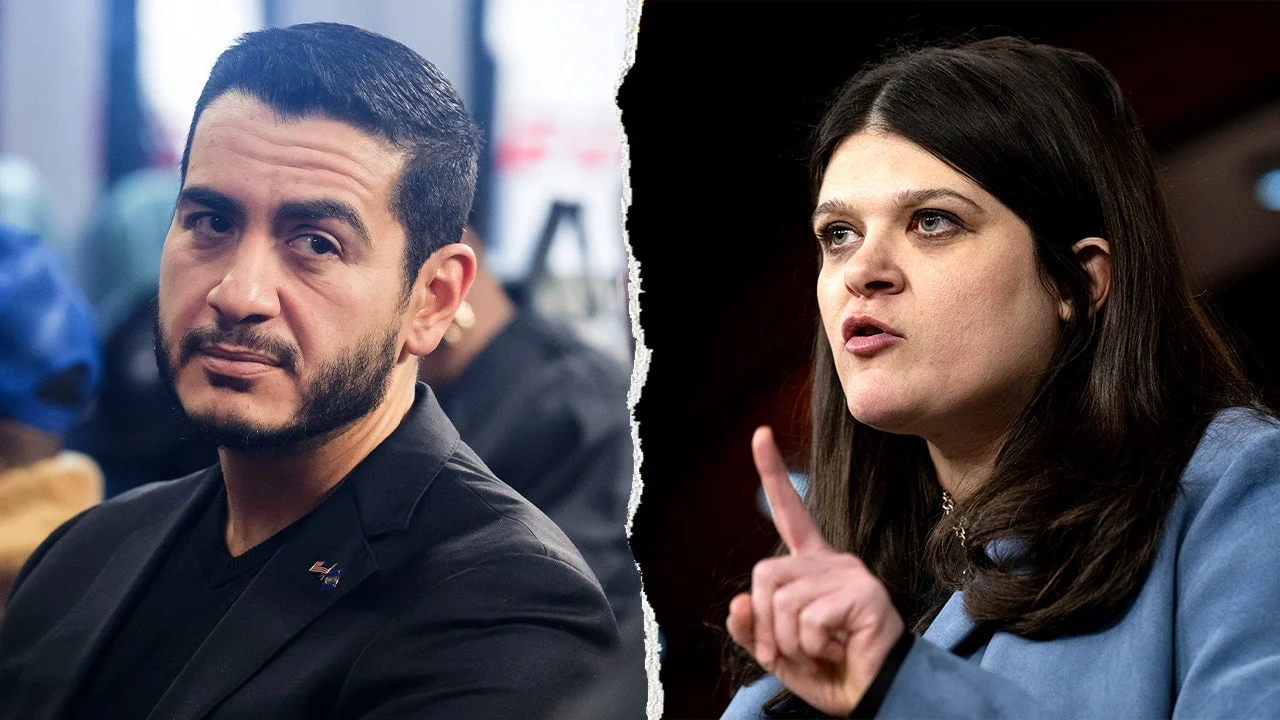

Democrat Abdul El-Sayed and Republican Mike Rogers offer starkly different platforms as voters prepare to decide a contest that could determine Senate control.
Control of the U.S. Senate could hinge on Michigan on Tuesday as Democrat Abdul El-Sayed and Republican Mike Rogers make their final appeals to voters, CBS News reported. The contest to succeed retiring Democratic Senator Gary Peters pits El-Sayed, a 42-year-old physician and former Detroit health director seeking to become the country’s first Muslim senator, against Rogers, a 63-year-old former congressman and FBI agent aiming to become the state’s first Republican senator in 25 years.
The race tests whether a progressive platform can prevail in a Midwestern battleground and whether a Republican can overcome national political headwinds. Voters head to the polls following months of sharp attacks between the candidates over healthcare, economic priorities, Donald Trump’s administration and foreign affairs.
Two contrasting platforms
El-Sayed, the son of Egyptian immigrants, won his primary by less than one percentage point and has campaigned on sweeping structural economic reforms. He has identified corporate monopolies and artificial intelligence as leading voter concerns, proposing a Cabinet-level agency to regulate AI along with a complete pause on frontier AI research. He also backs a version of Medicare for All funded by taxes on billionaire wealth that retains private insurance options. “I’m a capitalist who understands the idea that you should have guaranteed healthcare in the country, anybody who tells you that’s anti-capitalist is not really understanding how capitalism works,” El-Sayed said.
Rogers has tried to keep his pitch focused on state issues, arguing Michigan needs a change after decades without a Republican in the Senate. A former Army officer, Rogers said his top bipartisan priority would be addressing childhood literacy after noticing that young Americans were failing military entrance exams. On the campaign trail, he has visited predominantly Black communities to argue that Democrats take their votes for granted, pointing to El-Sayed’s appearances with Representative Alexandria Ocasio-Cortez.
Clashing over Trump and foreign policy
The candidates have split sharply over President Donald Trump and foreign affairs. Trump’s tariffs on Canada have cost Michigan an estimated $23 billion since January 2025, according to the National Taxpayers Union Foundation. Rogers said he raised objections to the tariffs directly with Commerce Secretary Howard Lutnick and would vote to override the president on trade policy if negotiations fail. Rogers also backed Donald Trump’s Iran war before saying it should wind down, while El-Sayed has repeatedly criticized the conflict.
Middle East policy has featured prominently in the contest. El-Sayed called for an arms embargo on Israel, accused the Israeli government of genocide in Gaza and argued that foreign military assistance should be redirected toward domestic healthcare and infrastructure. Rogers has pledged unconditional support for Israel, accusing his opponent of prioritizing foreign causes over Michigan. At a joint rally with Rogers in Port Huron, Trump attacked El-Sayed’s faith and background, telling the crowd, “I’m here to keep a jihadist Muslim Brotherhood member from becoming a United States senator.” Rogers similarly pointed to a 2012 letter El-Sayed signed following the Arab Spring, though El-Sayed disavowed the Muslim Brotherhood and argued Republicans are attacking his religion.
Late party rifts and the final sprint
Tensions within the Democratic party flared just before the election after Democratic Rep. Haley Stevens endorsed Republican Mike Rogers at a Detroit church service on Sunday, CBS News noted. Stevens, who lost to El-Sayed in the primary by fewer than 15,000 votes, appeared alongside Rogers after her fiance had also backed the Republican candidate, drawing criticism from Democratic Senate Minority Leader Chuck Schumer, who called her move a betrayal.
The campaign has drawn nearly $300 million in spending from both parties and aligned political action committees, according to Al Jazeera. Most recent polls gave El-Sayed a narrow lead between four and seven percentage points, but nonpartisan analysts at the Cook Political Report rate the contest as a toss-up, with both campaigns warning supporters that the outcome could come down to several thousand votes.