

Google Plus was shut down for consumers on April 2, 2019, and the closure date was brought forward twice because of two separate data exposures Google disclosed in the space of nine weeks. Google announced the wind-down on October 8, 2018, the same day The Wall Street Journal reported that Google had found and patched a bug months earlier without telling the people affected. The original plan was to close in August 2019. A second bug, disclosed on December 10, 2018, moved it to April.
“Nobody used it” is the version everyone repeats. It is partly true, Google published a number that supports it, and it is not why the shutdown happened when it happened.
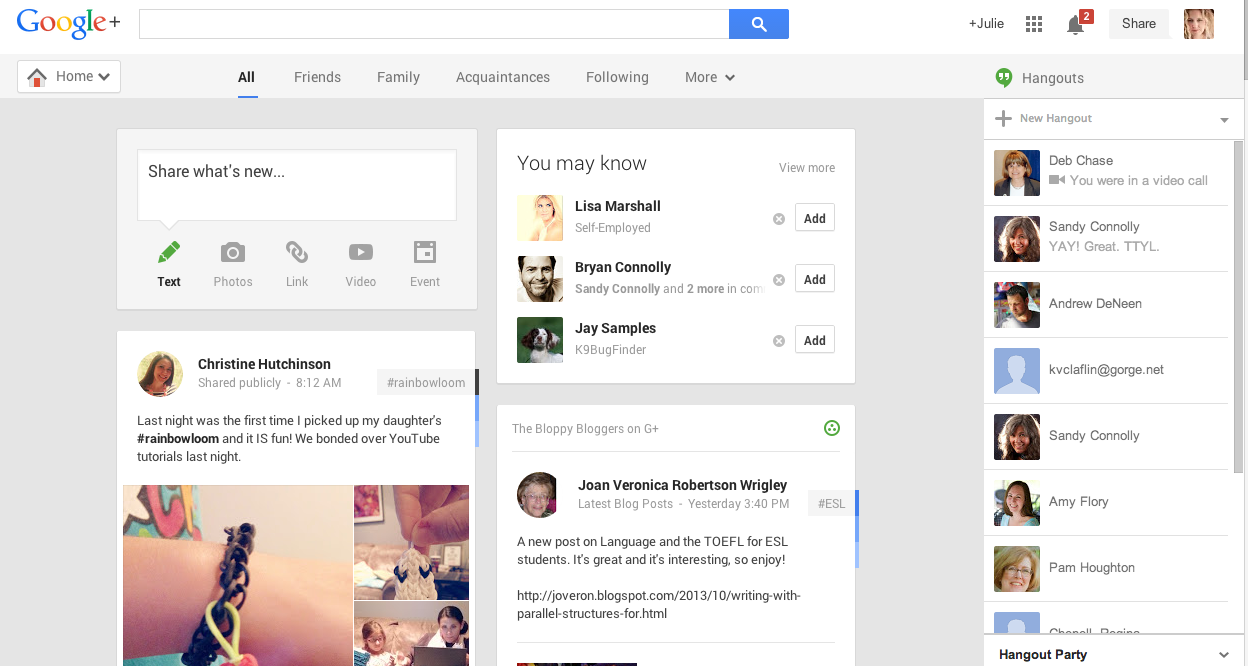
What Google Plus Was Meant to Be
Google unveiled Google+, written as a plus sign and spoken as Google Plus, on June 28, 2011, in a post on the Official Google Blog by Vic Gundotra, then senior vice president of engineering, titled “Introducing the Google+ project: Real-life sharing, rethought for the web.” It launched as an invitation-only field trial.
The pitch was Circles. Instead of one undifferentiated friends list, you sorted people into groups and chose which group saw what, on the argument that real life works that way and existing social tools did not. It was a genuinely reasonable critique of how Facebook worked in 2011.
It was also Google’s third attempt at this. Orkut had launched in 2004 and Google Buzz in 2010.
The User Numbers, and What They Were Counting
This is where the popular account and the record separate.
In October 2013, Vic Gundotra said that 540 million people were active across Google each month, and 300 million were active “in just the stream,” as reported by Marketing Land and The Next Web at the time. The 540 million figure was repeated everywhere and it became the standard evidence that Google Plus was bigger than anyone thought.
The problem is the phrase “across Google.” The larger figure counted people engaging with Google+ as a layer inside other Google products, not people visiting the social network. In February 2014, The New York Times described Google+ as a ghost town while citing the same 540 million figure, noting that close to half of those people did not visit the site itself. Reporting at the time distinguished Google+ as a destination, measured at roughly 100 million monthly active users, from Google+ as a social layer, which counted actions such as pressing a +1 button inside another product.
Both numbers were real. They were measuring different things, and only one of them describes a social network people were using as a social network.
Four years later Google published a figure of its own that settles the argument, and it is the harshest one available: in the October 2018 announcement, Google stated that 90 percent of Google+ user sessions lasted less than five seconds.
October 8, 2018: What Was Actually Announced
Google’s blog post that day was called “Project Strobe: Protecting your data, improving our third-party APIs, and sunsetting consumer Google+.” It disclosed three things at once.
- A bug in a Google+ People API could have let outside developers see profile data that users had set to non-public. Up to 500,000 Google+ accounts were potentially affected.
- Google said it had discovered and patched the bug in March 2018.
- Google announced it would sunset the consumer version of Google+ over a ten month period, ending in August 2019, citing the low usage figure above and the difficulty of maintaining a product that met expectations.
The reason it was announced on that particular day was not internal. The Wall Street Journal published a story the same day reporting that Google had chosen not to disclose the March 2018 discovery, and citing an internal memo prepared by Google’s legal and policy staff warning that disclosure would likely draw immediate regulatory interest and invite comparison to Facebook’s Cambridge Analytica episode. The story described developer access to non-public profile data running from 2015 until the March 2018 fix.
That memo then became a matter of public record in its own way: the leaders of the US Senate Commerce Committee formally requested it from Google in October 2018.

December 10, 2018: The Date Moves Again
Nine weeks later, Google published a second post, “Expediting changes to Google+.”
A software update introduced in November had created a new bug in a Google+ API affecting approximately 52.5 million users, under which apps granted permission to view profile information could see it even where the user had set it to non-public. Google said it found the bug through standard testing and fixed it within a week, and that it had found no evidence a third party had misused it.
Google moved the consumer shutdown forward from August 2019 to April 2019, and said all Google+ APIs would be shut down within 90 days.
Consumer Google Plus closed on April 2, 2019.
In 2020, Google agreed to pay $7.5 million to settle a consumer class action in the Northern District of California over the two disclosed bugs, an outcome reported by Bloomberg Law, Law360 and others, with individual class members set to receive between $5 and $12.
The Part That Outlived It by Four Years
Google Plus did not fully end in 2019. The enterprise version continued for business customers, was renamed Google Currents, and ran on.
Google retired Currents on July 5, 2023, per its own Workspace announcement and support documentation, migrating customers to Google Chat spaces and beginning deletion of remaining Currents data on August 8, 2023.
So the honest lifespan of the product is June 28, 2011 to July 5, 2023, twelve years, of which the last four were a business tool almost nobody outside a company Workspace account ever saw.
Why This Is Not the Simple Story
The story that ranks for this question is that Google Plus failed because Circles were confusing and nobody wanted a Facebook made by Google. There is real evidence for that, and Google’s own five second session figure is the strongest piece of it.
But the shutdown itself is a different event from the failure, and it has its own documented causes:
| Claim | What the record shows |
|---|---|
| “It shut down because nobody used it” | Low usage was Google’s stated reason, backed by its own 90 percent under five seconds figure |
| “It shut down in 2019” | Consumer Google+ closed April 2, 2019. The enterprise version ran until July 5, 2023 |
| “The 2019 date was the plan” | The original plan was August 2019, announced October 8, 2018, and moved forward after the December 10, 2018 disclosure |
| “Google announced it on its own timing” | Google’s announcement came the same day The Wall Street Journal reported the undisclosed March 2018 bug |
| “It had 540 million users” | That figure counted activity across Google products, not visits to Google+. Contemporary reporting put Google+ as a destination near 100 million monthly active users |
A platform can be both unloved and closed for a specific reason on a specific day. Google Plus is the clearest case in this cluster of a shutdown where the “why” and the “when” have different answers, and where merging them, as most retellings do, loses the part with documents behind it.
It is also a familiar shape for anyone who followed Google’s hardware. The pattern in what happened to Google Glass is the same: not beaten by a competitor, withdrawn by the company that built it. The wider version of that pattern, across a dozen platforms, is set out in the platforms that shaped the internet and then vanished.
What Happened to the Content
Google gave consumer users a window to download their Google+ data through Google Takeout before the April 2, 2019 closure, and photos already in Google Photos were unaffected. Posts, comments and Circles were not migrated anywhere.
Compared to the alternatives that is a relatively orderly ending, which is worth saying, because it is not how these usually go. What happened to Yahoo Answers ended in deletion and a homepage redirect, and what happened to MySpace ended in a data loss the company never put a number on. Google announced the closing date months ahead, moved it once with a public explanation, and provided an export tool. The bar is low, and Google Plus cleared it.
FAQ
When did Google Plus shut down?
Consumer Google+ closed on April 2, 2019. The enterprise version, renamed Google Currents, ran until July 5, 2023, with remaining data deletion beginning August 8, 2023.
Why did Google shut down Google Plus?
Google’s stated reasons were low usage and the challenges of maintaining the product, and it published the figure that 90 percent of Google+ user sessions lasted under five seconds. The announcement came alongside the disclosure of a data bug affecting up to 500,000 accounts, and the closing date was later brought forward after a second bug affecting about 52.5 million users.
Was there a Google Plus data breach?
Google disclosed two separate bugs. The first, announced October 8, 2018, could have exposed non-public profile data of up to 500,000 accounts and had been patched in March 2018. The second, announced December 10, 2018, affected around 52.5 million users. Google said it found no evidence of misuse in the second case. Google later agreed to a $7.5 million class action settlement over the two incidents.
Did Google Plus really have 540 million users?
That figure, given by Google in October 2013, counted people active across Google products with a Google+ component each month rather than people using Google+ itself. Contemporary reporting put Google+ as a destination at roughly 100 million monthly active users.
Can I get my old Google Plus posts back?
Only if you exported them with Google Takeout before the April 2, 2019 shutdown. Photos stored in Google Photos were not affected by the closure, but Google+ posts, comments and Circles were not moved to another product.