
The Harlem Shake went viral in February 2013 because it was a format, not a performance. Every video ran about 30 seconds, used one fixed camera and one jump cut, and needed no dance skill: one masked person moves alone, the bass drops, and the whole room erupts in costume chaos. Anyone could copy it in an afternoon. Baauer’s record label also let fan videos stay up and earned ad revenue from them, and Billboard began counting YouTube views that same month, which pushed the song to No. 1.
That is the short answer. The longer one explains why the craze burned so hot, why the numbers you will find online disagree, and why it vanished almost as fast as it arrived.
What a Harlem Shake video actually looked like
If you missed it, the template was rigid, and that rigidity was the point.
- Seconds 0 to 15: A room full of people carries on as normal: working, studying, sitting still. One person, usually in a helmet, mask or costume, dances alone. Nobody reacts.
- The drop: The track’s bass hits, the vocal sample shouts “do the Harlem Shake,” and the video jump-cuts.
- Seconds 15 to 30: Everyone is suddenly in costume, flailing, climbing on furniture, waving props. Then it ends.
The song underneath was “Harlem Shake” by Baauer, an American producer. According to the song’s documented release history on Wikipedia, it first came out as a free download on May 22, 2012, through Jeffree’s, an imprint of the label Mad Decent. For about eight months it was a club track with a modest following. Nothing about it predicted what came next.
Timeline: how the Harlem Shake spread
| Date | What happened | Source |
|---|---|---|
| May 22, 2012 | Baauer’s “Harlem Shake” released as a free download via Jeffree’s / Mad Decent | Wikipedia, song page (Billboard dates the commercial release to June 2012) |
| Late Jan / early Feb 2013 | The comedy YouTube channel Filthy Frank posts a sketch of costumed people dancing to the track | YouTube Trends credits this as the first spark; exact upload date varies by source (Wikipedia gives January 30) |
| February 2, 2013 | Australian skaters TheSunnyCoastSkate post a version with the helmet, the solo dancer and the jump cut | Wikipedia, YouTube Trends |
| February 11, 2013 | About 12,000 videos uploaded since the start of the month, watched more than 44 million times; over 4,000 new uploads per day | YouTube Trends blog |
| February 15, 2013 | About 40,000 videos and 175 million views | YouTube Trends blog update |
| February 20 to 21, 2013 | Billboard adds U.S. YouTube views to the Hot 100; “Harlem Shake” debuts at No. 1 | Billboard |
| March 2013 | Five weeks at No. 1; brand and corporate versions flood in; interest starts to fade | Billboard |
The key moment is the second row to the third. Filthy Frank’s sketch had the energy, but YouTube’s own trends team said it was TheSunnyCoastSkate video that established the form: the helmet, the solo dancer, the cut. The format, not the first video, is what went viral.
Why did the Harlem Shake go viral? Five reasons that worked together
No single factor explains it. Five did, at the same time.
1. It took an afternoon to make
A Harlem Shake needed a phone or camera on a table, one cut, and a costume box. There was no choreography to learn and no talent to prove. Compare that with a dance challenge that asks you to learn steps: the barrier here was close to zero, so the pool of people who could join was close to everyone.
2. The payoff was built in
Every video had the same structure: tension, then release. Viewers knew the drop was coming, which made the first 15 seconds oddly suspenseful and the second 15 seconds satisfying. At 30 seconds, you could watch ten in five minutes, and many people did exactly that.
3. It rewarded groups, not stars
Most viral videos of the era, like Gangnam Style’s rise in 2012, centered on one performer. The Harlem Shake inverted that. The fun came from the group: the office, the dorm floor, the swim team, the army unit. That turned it into a social event. Making one was something you did with people, and sharing it tagged a whole community.
4. Each version could still be different
The template was fixed, but the setting was open. The YouTube Trends post from February 2013 lists versions from college swim teams, U.S. service academies, and media companies including Maker Studios, CollegeHumor and BuzzFeed. The format held still while the location, costumes and scale changed, so every new video felt like a fresh riff rather than a copy.
5. The platforms were ready for it
Early 2013 sat at a hinge point. Smartphone cameras were good enough, YouTube uploads were easy, and sharing to Facebook and Twitter was routine. Twitter had launched its six-second video app in January 2013, a platform we trace in our history of Vine’s rise and shutdown. Short, loopable, group-made video was about to become a genre, and the Harlem Shake was one of its first mass hits.
The part most explanations skip: the label let it happen, and got paid
Most “why it went viral” pieces stop at the format. That leaves out the business decision that allowed the format to survive.
In 2013, the default move for a record label seeing tens of thousands of unlicensed uploads of its track would have been to file takedowns. Mad Decent did the opposite. Using YouTube’s Content ID system, the label (working with a small company called INDmusic, according to Billboard’s reporting at the time) claimed fan videos and placed ads on them instead of removing them. Billboard reported that the biggest clips, including the University of Georgia swim team version and the Norwegian army version, were claimed within days, often within hours.
This matters for the “why” question. A takedown strategy would have cut the craze off at its peak. A monetization strategy meant every new upload stayed live, stayed searchable, and fed the next one. Mad Decent’s label manager Jasper Goggins told Time in 2013 that the label favored letting people use its music freely as long as it could monetize it.
Not everyone sees this as generosity. In a 2016 paper in the journal Social Media + Society, researchers Michael Soha and Zachary J. McDowell argued that Content ID let the label profit from a very large amount of unpaid creative work by ordinary uploaders, because the audio was the only part of each video that could be claimed as owned. Both readings can be true: the open policy helped the meme spread, and it paid the rights holder for it.
Why the Harlem Shake numbers never agree
Search for Harlem Shake statistics and you will see figures that contradict each other. Here is why.
The primary source is the YouTube Trends blog post “The Harlem Shake Has Exploded”, written by YouTube trends manager Kevin Allocca and posted on February 12, 2013, then updated on February 15 (we read it on September 23, 2026). It reports about 12,000 videos and more than 44 million views as of February 11, and about 40,000 videos and 175 million views by the February 15 update.
Other retellings put the February 15 view total at over 700 million, a figure that appears in Wikipedia’s meme article. That is four times YouTube’s own number for the same date. The most likely explanation is that different counts measured different things (views of all Harlem Shake videos versus views of a narrower set, or different cutoff times), but we could not find a primary source for the 700 million figure. We treat YouTube’s own 175 million as the reliable number.
A third figure comes from the charts. When Billboard reported the song’s No. 1 debut (we checked it on September 23, 2026), it credited the track with 103 million U.S. YouTube views in the tracking week plus 262,000 downloads. That counts views of videos using the authorized audio in the United States only, so it will not match the global YouTube Trends totals either.
The lesson: when you see a Harlem Shake number, ask who measured it, where, and on what date.
The Billboard rule change: cause or coincidence?
On February 20, 2013, Billboard and Nielsen announced that U.S. YouTube streams would count toward the Hot 100. The next chart had “Harlem Shake” at No. 1 in its debut week. According to Billboard, it was only the 21st song ever to debut at the top, and the first by an artist essentially unknown before charting.
Billboard also noted that the song’s download sales alone would have placed it roughly inside the top 15 without the YouTube data. So the meme was already driving real sales; the rule change turned a hit into a No. 1. The song held the top spot for five weeks.
Some readers objected at the time, arguing in letters to Billboard that most of those views were a 30-second meme rather than people listening to a song. Billboard acknowledged that weighting user-generated video differently was a fair point still under discussion. That debate, over what a “play” actually means, has never fully gone away.
What the meme left out: the original Harlem shake
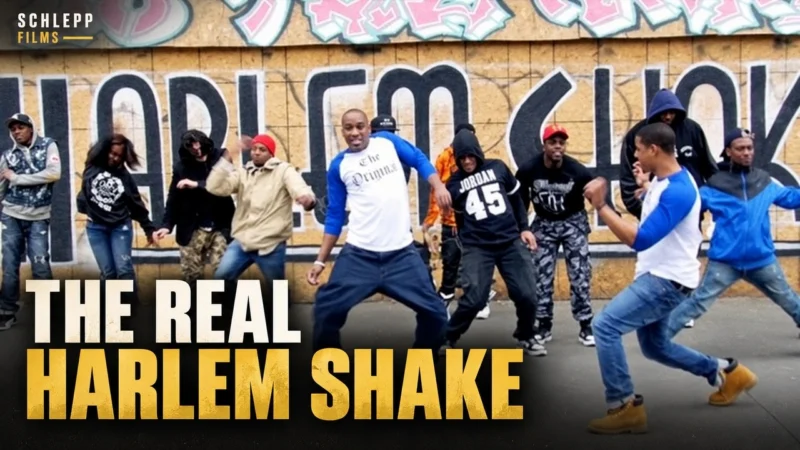
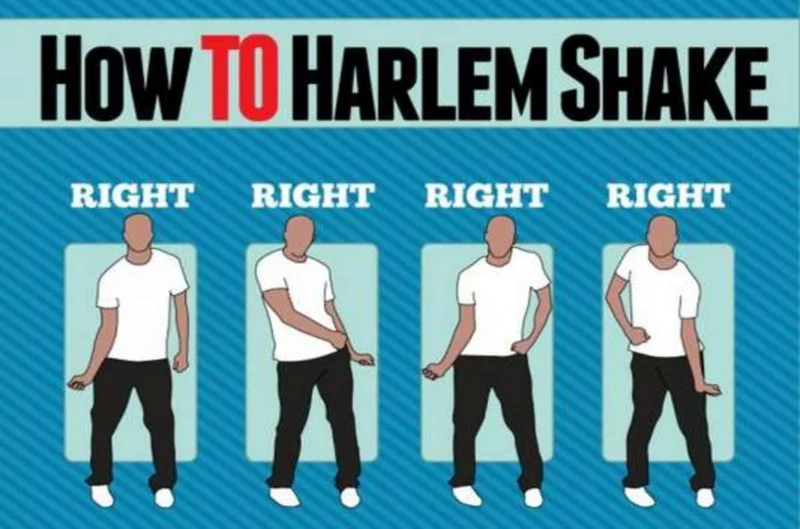
There was a real dance called the Harlem shake long before 2013. It came out of Harlem in the early 1980s, is credited to a local dancer known as Al B., and was a controlled, shoulder-driven move that spread through hip-hop videos in the early 2000s. The 2013 videos had almost nothing to do with it; the name came only from the song’s vocal sample.
In February 2013, a widely shared street-interview video filmed on 125th Street, reported by Slate, showed Harlem residents watching the meme. Many were unimpressed, and several described it as mocking a dance their community had created. The complaint did not slow the trend, but it is part of the honest record: a neighborhood’s name became a global joke that most participants never connected to its origin.
Why it ended so quickly
The Harlem Shake peaked within weeks. Three things wore it out.
- Brands arrived. By mid-February, companies were posting their own versions. When marketers adopt a format, it stops feeling like an inside joke.
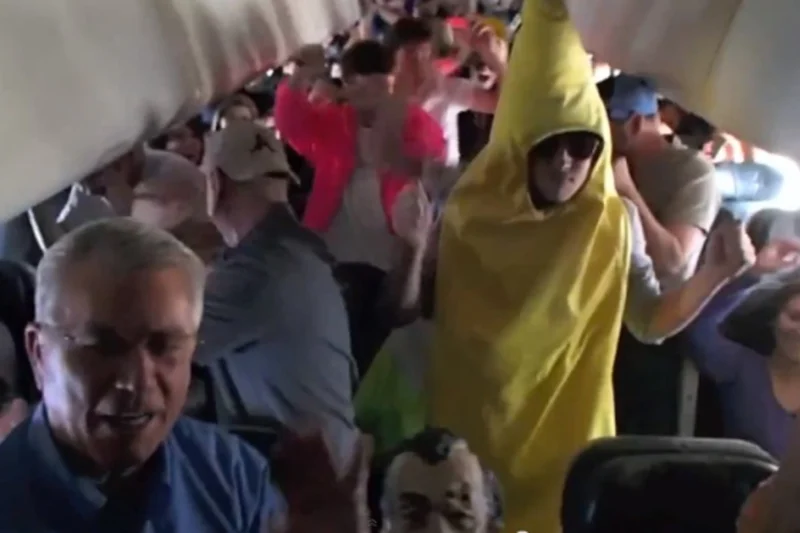
- Consequences made news. NPR reported in March 2013 that 15 miners in Australia were fired after filming a version underground, in breach of safety rules. A version filmed on a commercial flight led to a Federal Aviation Administration inquiry, according to contemporary reports summarized on Wikipedia. The format started to look like a liability.
- Saturation. Once there were tens of thousands of nearly identical videos, the surprise of the drop was gone. A format that depends on surprise cannot survive being everywhere.
This fast rise and fall became a pattern. A similar arc played out a year later with a mobile game, as our account of the Flappy Bird craze of early 2014 shows.
What the Harlem Shake changed
The meme itself is long gone, but it left three lasting marks.
- Charts count video. The Hot 100 has included YouTube data since February 2013, and the Harlem Shake is the song most associated with that change.
- Labels monetize memes instead of blocking them. Claiming and monetizing fan uploads became a standard way to handle viral use of a track.
- The format template became the norm. Short, repeatable, participatory formats built around a single audio clip describe much of how short-form video platforms work today. Vice’s retrospective put it plainly: the Harlem Shake walked so TikTok could run.
It also belongs in the wider history of an internet that moved fast and left little behind, much like the platforms that shaped the web and then vanished.
Frequently asked questions
When did the Harlem Shake go viral?
It exploded in the first two weeks of February 2013. According to YouTube’s own trends blog, about 12,000 versions had been uploaded by February 11, 2013, with more than 4,000 new ones arriving each day.
Who started the Harlem Shake meme?
The first known video came from the comedy YouTube channel Filthy Frank in late January or early February 2013 (sources give different dates). YouTube credited a February 2, 2013 video by the Australian group TheSunnyCoastSkate with establishing the familiar format: the helmet, the solo dancer and the jump cut.
Was the Harlem Shake song a No. 1 hit?
Yes. Baauer’s “Harlem Shake” debuted at No. 1 on the Billboard Hot 100 in February 2013, in the first week Billboard counted U.S. YouTube views, and it stayed there for five weeks.
Is the meme the same as the real Harlem shake dance?
No. The original Harlem shake is a 1980s dance from Harlem, New York, built on rhythmic shoulder movement. The 2013 meme shared only the name, which came from a vocal sample in Baauer’s song.
Why did the Harlem Shake die out so fast?
It depended on surprise, and tens of thousands of near-identical videos used up that surprise within weeks. Corporate versions and a string of news stories about people disciplined over their videos finished it off by spring 2013.